
24/7 Customer Support

Free returns

Same-day & Next-day Delivery

Quality Guaranteed

Unlock Your Welcome Offers: FREE Delivery | Up to 80% OFF | Free 30-day JoyPlus trial
Download the APP
An electric juicer can make breakfast preparation quicker, but the wrong design may create more work than it saves. UK shoppers often focus on motor wattage or attractive claims about extraction, while overlooking cleaning, capacity and compatibility with the fruit they actually buy.
Before choosing a citrus juicer, centrifugal model or general fruit and vegetable juicer, watch for these common purchasing traps.
A powerful motor may help process firm produce, but wattage alone does not tell you how easy the appliance is to use. Feed-chute size, speed control, sieve design and pulp collection can be just as important.
A centrifugal juicer with an 800W motor may suit apples, carrots and other firm ingredients, while a 30W electric press can be more appropriate for oranges and lemons. Match the appliance to your usual recipes rather than paying for power you may not need.
A “large-capacity juicer” may list a generous pulp basin but have a much smaller juice jug. Check both measurements. A large pulp container reduces interruptions, but it does not necessarily mean you can collect a large batch of juice in one go.
For family use, consider the juice container capacity, pulp basin size and whether the container includes a lid for storage.
Juice residue can dry quickly around sieves, cones and spouts. Look for removable components, a cleaning brush and clearly stated dishwasher-safe parts. A motor base should not be immersed in water; it normally requires wiping with a damp cloth.
A simple citrus press may have fewer parts than a centrifugal appliance, but a removable pulp filter still needs rinsing after each session.
A lemon juicer or orange juicer uses a cone or press mechanism designed for halved citrus fruit. These appliances are generally suited to oranges, lemons, limes and similar produce. A blade-free press can be a practical choice for users who mainly want citrus juice and prefer straightforward operation.
A centrifugal juicer uses a rotating sieve to separate juice from pulp. It is more versatile for apples, carrots, celery and some leafy ingredients. However, it usually has more removable components and requires preparation such as trimming, removing stones and cutting produce to fit the chute.
Power should be assessed alongside the ingredients you plan to use. Two speed settings can help users select a lower setting for softer produce and a higher setting for firmer fruit and vegetables.
A wide chute can reduce chopping. For example, a 3-inch or 7.6cm opening may accommodate some whole or larger pieces of produce, but fruit still needs to be prepared according to the instruction manual. Never place hands or utensils into a feed chute; use the supplied food pusher.
A pulp separation juicer should collect fibrous waste in a dedicated basin while directing liquid into a jug or cup. Check whether the pulp container is easy to remove and whether the sieve can be cleaned without excessive scrubbing.
For convenience, look for dishwasher-safe parts, but confirm exactly which components qualify. Motor housings, electrical connections and cords should remain dry. Also check whether the appliance has a no-drip spout, stable feet and a lid for the juice container.
Before ordering, verify the appliance’s voltage, frequency, plug type and included instructions. Products listed with global voltage information may have different regional variants, so check the specific listing and product label for UK use.
Look for appropriate conformity information, a traceable seller or responsible person where applicable and clear safety instructions. Unplug the appliance before disassembly or cleaning, and keep rotating components away from children during operation.
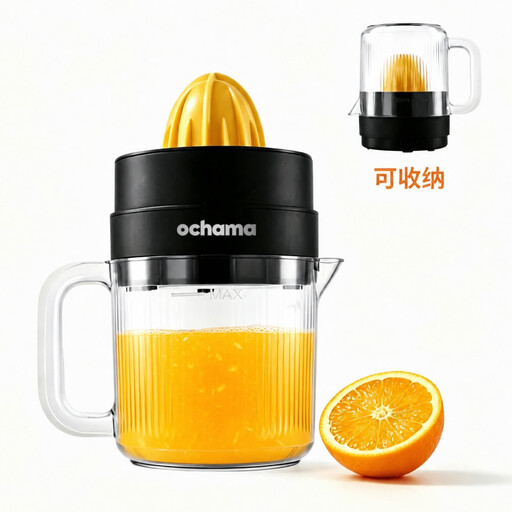
Why This Fits Their Persona: Its 1.4L container and electric pressing design suit households that mainly prepare orange, lemon or tangerine juice without needing a full fruit and vegetable juicer.
The blade-free citrus press avoids paying for a high-powered centrifugal mechanism when the main requirement is citrus juice. Its removable parts are designed for straightforward cleaning.
1.4L capacity; 30W motor; pulp separation; removable components.
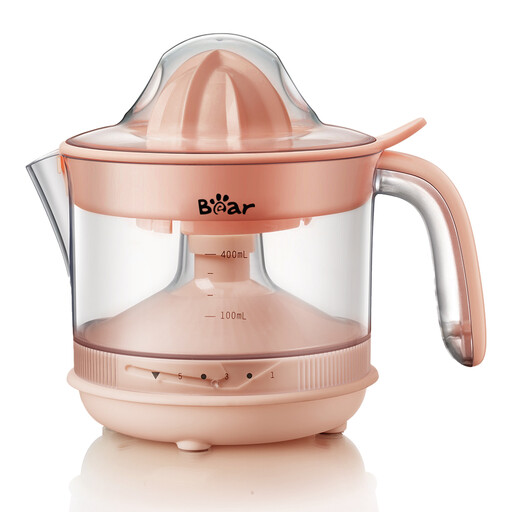
Why This Fits Their Persona: Users wanting a compact citrus appliance for a smaller kitchen or occasional breakfast preparation may value its portable format and one-touch operation.
The product specifies five adjustable pulp levels, helping users choose a more filtered or pulpier drink rather than relying on a fixed filter setting.
110mm feed opening; five pulp levels; one-touch control; 24-month warranty stated in the listing.

Why This Fits Their Persona: Families and home cooks making mixed fruit and vegetable juice may prefer a centrifugal model with dual speeds, a wide chute and a separate large pulp basin.
The 1.5L pulp basin addresses the inconvenience of frequent emptying, while dishwasher-safe sieve, basin and jug parts reduce manual washing. Confirm the appliance’s voltage variant before ordering.
800W motor; 1.5L pulp basin; 800ml jug; two speed settings; 3-inch feed chute.
Use produce that is fresh and suitable for the appliance. Remove stones, hard seeds, thick rinds and stems where the instructions advise. Feed ingredients gradually rather than forcing them down the chute, as excessive pressure can affect operation.
Rinse the sieve, pulp basin, cone and spout soon after use. If juice residue dries, soaking removable parts may make cleaning easier. Check seals and moving parts periodically, and stop using the appliance if it becomes unusually hot, produces smoke or makes abnormal noises.
We have compiled a complete, real-time list of products that fully satisfy these strict selection criteria and UK safety regulations.
Running cost depends on the appliance’s wattage, operating time and household electricity tariff. A 30W citrus press typically uses less electricity during a short session than an 800W centrifugal juicer, but actual cost also depends on how long the motor runs. Compare the rated power with your expected use rather than treating wattage as a quality score.
No. Dishwasher suitability varies by component and model. Some products specify dishwasher-safe sieves, pulp basins and jugs, while the motor base must be wiped clean. Always follow the supplied care instructions and allow parts to dry fully before reassembly.
Lifespan depends on frequency of use, cleaning, storage and whether the appliance is used within its intended limits. Avoid overloading the chute, forcing produce or operating with loose parts. A stated warranty can provide useful after-sales cover, but it does not replace checking the appliance’s construction, instructions and replacement-part availability.