
24/7 Customer Support

Free returns

Same-day & Next-day Delivery

Quality Guaranteed

Unlock Your Welcome Offers: FREE Delivery | Up to 80% OFF | Free 30-day JoyPlus trial
Download the APP
From the first morning brew to a late-night cuppa, the electric kettle is an undisputed cornerstone of the British kitchen. Yet, choosing a new one can feel surprisingly complicated. With endless claims about speed, efficiency and design, it’s easy to end up with a kettle that looks good on the worktop but becomes a daily frustration. As a Joybuy Product Recommendation Officer, my role is to help you see past the marketing jargon and focus on what truly matters.
Before you buy, let's look at the common pitfalls that lead to disappointment.
To avoid these traps, focus on a few core parameters. These are the non-negotiable details that determine whether a kettle will be a reliable workhorse or a short-lived frustration.
For a typical household, a 1.7L kettle is the standard, providing enough water for about 6-7 cups. The key specification to check is the power, measured in watts (W).
Always pair this with a clear, easy-to-read water level indicator to ensure you only boil what you need.
The material of your kettle affects its durability, weight and how it looks over time.
Regardless of the material, look for a cordless kettle with a 360° swivel base. This allows you to pick it up and set it down from any angle, a simple feature that makes a big difference in daily use.
Instead of a generic list, we've matched specific models to the people they are most suited for.
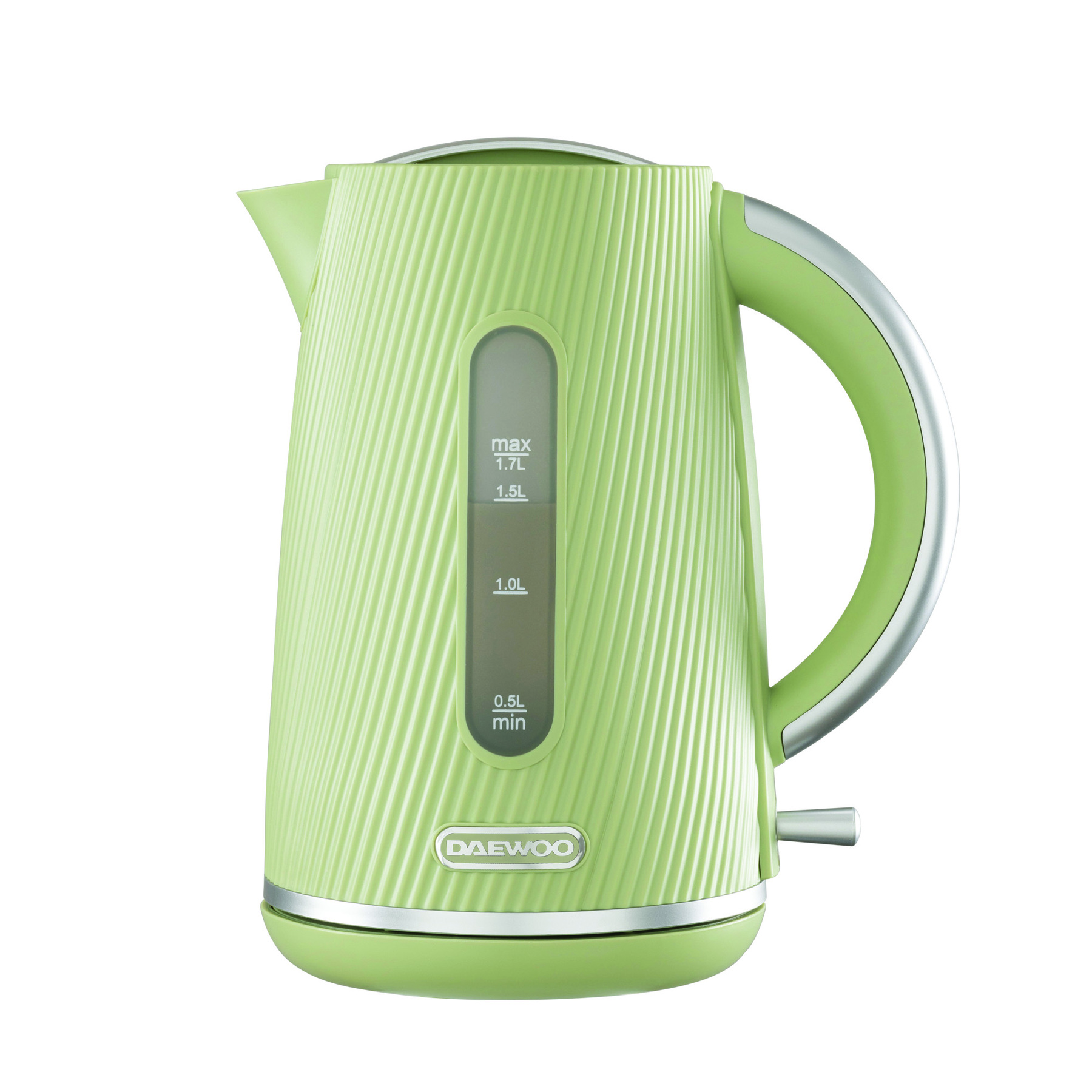
Why This Fits Their Persona: For those who see their kitchen appliances as part of the décor, this sage green kettle delivers. The ribbed texture and matte finish are on-trend, adding a touch of modern elegance to the worktop without compromising on the essentials needed for a busy family kitchen.
It avoids the "style over substance" pitfall by pairing its distinctive look with a powerful 3000W rapid boil element, a removable limescale filter and a clear water window—proving that good looks and great performance can coexist.
Combines a fashionable textured finish with family-friendly functionality, including a large 1.7L kettle capacity and essential safety features like auto shut-off.

Why This Fits Their Persona: For a busy household where the kettle is always on, reliability is key. This no-fuss stainless steel kettle is built to be a workhorse. Its priorities are speed, durability and ease of cleaning—perfect for someone who just wants a great cup of tea without any hassle.
It directly counters the "limescale nightmare" by focusing on what works: a concealed element and a removable, washable filter. This practical approach to maintenance is far more valuable than any unproven "anti-scale" coating.
A powerful 3000W rapid boil system combined with a durable brushed stainless steel body makes it a dependable and efficient choice for high-frequency use.
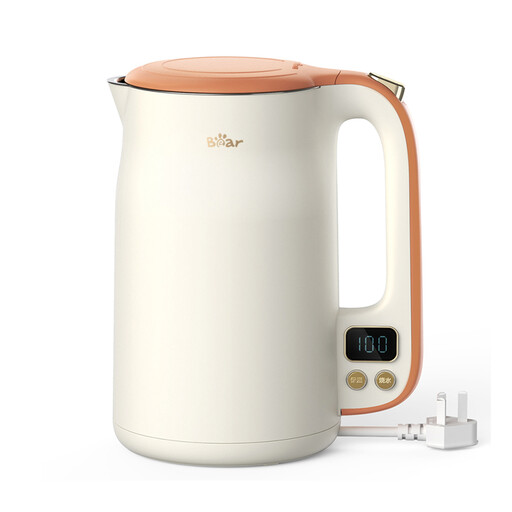
Why This Fits Their Persona: This user needs more than just boiling water. Whether it's 80°C for green tea, 90°C for coffee or a specific temperature for baby formula, precision is essential. This kettle with temperature control provides the flexibility that a standard kettle lacks.
It avoids the trap of one-size-fits-all boiling. By allowing you to heat water to the precise temperature required, it not only improves the taste of speciality drinks but also saves energy by not needlessly heating to a full 100°C every time.
Offers a wide range of selectable temperatures (from 40°C to 100°C) via a clear touch panel, plus a keep-warm function, all within a large 1.7L body.
We have compiled a complete, real-time list of products that fully satisfy these strict selection criteria and UK safety regulations.
1. How often should I descale my electric kettle in the UK? This depends entirely on the water hardness in your area. For those in hard water regions like London and the South East, descaling every one to two months is advisable to maintain performance. In soft water areas, such as much of Scotland and Wales, you may only need to do it every three to six months. The first sign is usually a layer of white scale on the base or a slower boiling time.
2. Is a glass kettle or a stainless steel kettle a better choice? There is no single "better" option; it comes down to your priorities. A stainless steel kettle is generally more durable and forgiving of knocks and its opaque body hides any limescale build-up between cleans. A glass kettle allows you to see exactly how much water is inside and watch it boil, and it makes it obvious when descaling is needed. However, glass is heavier and more susceptible to breakage.
3. How much does it cost to boil a full kettle? The cost can be estimated easily. A typical 3kW kettle takes approximately 3-4 minutes to boil a full 1.7L load. Based on an average electricity rate of 28p per kilowatt-hour (kWh), a single full boil costs around 5-6 pence. The most effective way to manage running costs is to only boil the amount of water you intend to use.