
24/7 Customer Support

Free returns

Same-day & Next-day Delivery

Quality Guaranteed

Unlock Your Welcome Offers: FREE Delivery | Up to 80% OFF | Free 30-day JoyPlus trial
Download the APP
A reliable electric kettle is the heart of many UK kitchens, powering everything from the morning cuppa to a quick pot of pasta. Yet, choosing a new one can feel like navigating a minefield of marketing jargon and features that sound impressive but fail to deliver. Before you buy, it's worth understanding the common pitfalls that lead to disappointment and wasted money.
As a Joybuy Product Recommendation Officer, my role is to help you see past the hype. Here, we'll break down what truly matters when selecting an electric kettle, ensuring you find a model that fits your daily routine perfectly.
Many kettles look good on the shelf but reveal their flaws after a few weeks of use. Watch out for these common issues:
To avoid these traps, focus on a few key specifications. These non-negotiable factors determine a kettle's performance, safety and durability.
The balance between these three elements is crucial.
The two most popular materials each offer distinct advantages.
Modern kettles offer more than just boiling water.
Based on these practical criteria, here are a few options tailored to different needs and households.

Why This Fits Their Persona: For those who value clean aesthetics, this glass kettle adds a touch of modern elegance to the kitchen. The blue LED illumination provides a satisfying visual as the water boils, fitting perfectly in a contemporary home.
Its 2200W power rating delivers a genuine fast boil, avoiding the marketing illusion. The transparent borosilicate glass body makes it impossible for limescale to hide, prompting timely cleaning.
Stylish visual design with LED indicator. The large 1.7 litre kettle capacity is practical for everyday use.
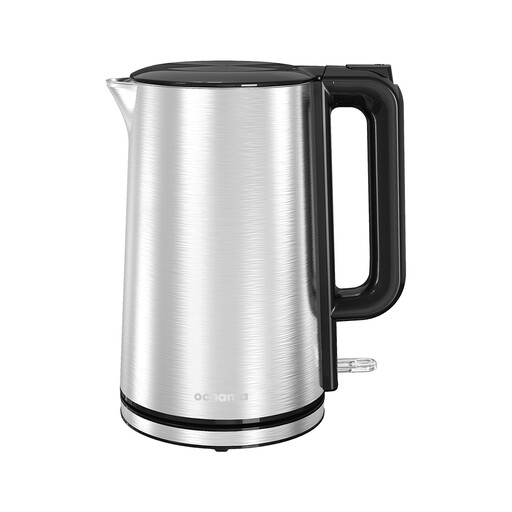
Why This Fits Their Persona: Safety is paramount in a busy family home. The double-wall construction creates an effective anti-scald exterior, providing peace of mind when children are around the kitchen.
It directly tackles the limescale and material traps with a seamless, food-grade stainless steel kettle liner. This design eliminates crevices where scale can build up and ensures water never touches plastic.
Cool-touch exterior for enhanced safety. The seamless inner pot makes it exceptionally easy to clean and maintain.
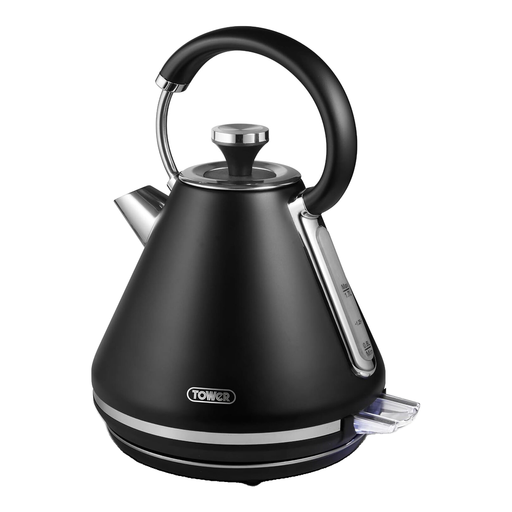
Why This Fits Their Persona: For the person who knows their oolong from their Earl Grey, precision is key. This digital kettle offers adjustable temperature control from 40°C to 100°C, unlocking the perfect flavour for any hot beverage.
It moves beyond the simple "fast boil" claim by offering genuine, useful technology. The kettle with temperature control provides a tangible benefit that improves the user's daily routine, justifying its advanced features.
Precise, customisable temperature settings. It also features a 3kW element for a true rapid boil when speed is needed.
We have compiled a complete, real-time list of products that fully satisfy these strict selection criteria and UK safety regulations.
This depends entirely on the water hardness in your area. For those in hard water regions (much of southern and eastern England), descaling every one to two months is recommended to maintain performance and taste. In soft water areas, every three to four months should be sufficient. You can use a commercial descaling product or a simple solution of white vinegar and water.
Neither is inherently "better"—it comes down to your priorities. A glass kettle offers a modern look and lets you easily monitor water levels and limescale build-up. A stainless steel kettle provides superior durability and, if it's a double-wall model, better insulation and a cool-touch anti-scald surface. Both are excellent choices, provided they are made from high-quality materials like borosilicate glass or 304-grade stainless steel.
A rapid boil kettle with a high wattage (e.g., 3kW) consumes more power per second than a standard 2.2kW model. However, because it boils the water much faster, the total amount of energy used for a full boil is often very similar. The primary benefit is saving time, not necessarily electricity. For boiling just one or two cups, a high-power kettle can be more efficient as it completes the job in a fraction of the time.