
24/7 Customer Support

Free returns

Same-day & Next-day Delivery

Quality Guaranteed

Unlock Your Welcome Offers: FREE Delivery | Up to 80% OFF | Free 30-day JoyPlus trial
Download the APP
From the first cup of tea in the morning to a quick coffee break, the electric kettle is an undisputed cornerstone of the British kitchen. Yet, choosing a new one can be surprisingly tricky. The market is flooded with models promising the world, but many fall short, leaving you with a leaky spout, a limescale-caked interior or a deafening roar every time you fancy a brew.
As a Joybuy Product Recommendation Officer, my role is to help you cut through the clutter. Before you spend your hard-earned money, let's look at the common pitfalls that catch out UK shoppers and what to look for instead.
To ensure you get a kettle that performs well for years, focus on these core parameters.
For most households, a 1.7L kettle is the standard, providing enough water for about 6-7 cups. If you're looking for speed, a model with a 3kW (3000W) heating element is what you need. These are typically marketed as rapid boil kettles and can boil a full capacity in just a few minutes. For individuals, students or those with limited space, a smaller 1L model or a compact travel kettle can be a more practical and energy-efficient choice.
The material of your kettle's interior is crucial for both taste and durability. A stainless steel kettle is often a reliable choice. It's robust, resists staining and odours and doesn't impart a 'plastic' taste to the water. Look for models with a concealed heating element—a flat metal base inside the kettle—as this design prevents direct limescale build-up on the element and makes cleaning much simpler.
Modern kettles come with features designed for convenience and safety. A cordless kettle with a 360° swivel base is now standard, allowing you to lift and replace it from any angle, which is great for both left- and right-handed users.
Your choice of style, whether a modern jug kettle, a classic matt black kettle or a colourful retro kettle, is a matter of personal taste. For tea or coffee aficionados, a kettle with temperature control offers a significant advantage, allowing you to heat water to the precise temperature required for delicate green teas or pour-over coffee.
Based on these practical considerations, here are a few options matched to different needs and households.
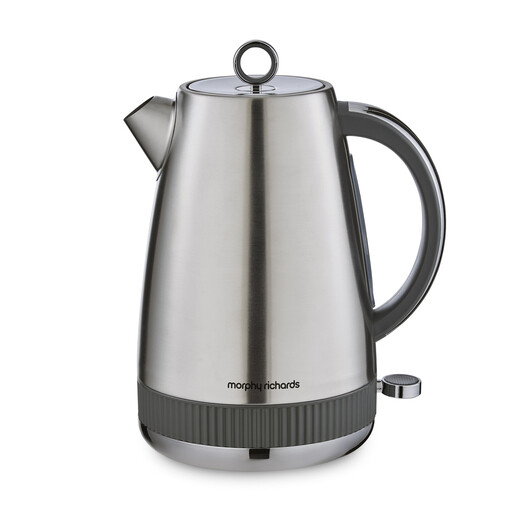
Why This Fits Their Persona: This is a dependable workhorse for busy families or shared homes. It combines a trusted brand name with the essential features needed for daily, high-frequency use without unnecessary complications.
It features a well-shaped spout for controlled pouring and the removable limescale filter and stainless steel body directly combat the hard water problem.
A generous 1.7L capacity serves the whole family, while the cordless kettle base and external water gauge offer straightforward usability.
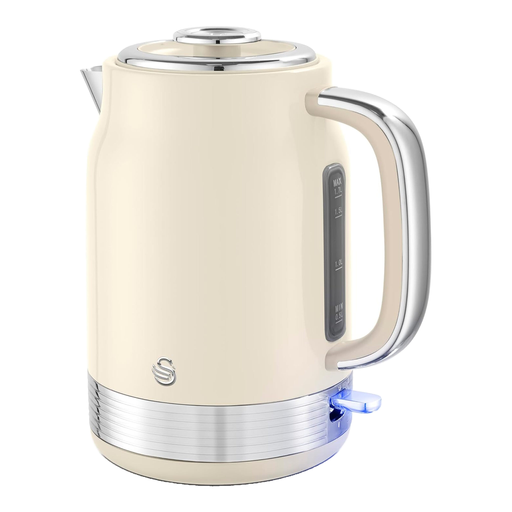
Why This Fits Their Persona: For those who view kitchen appliances as part of their decor, this retro kettle makes a statement. The classic cream kettle finish and chrome details are perfect for both modern and traditional kitchens.
It combines style with substance, featuring an easy-pour spout to prevent spills and a removable, washable filter to manage limescale build-up effectively.
The powerful 3kW rapid boil element ensures performance matches its looks, while the coated stainless steel body provides durability.
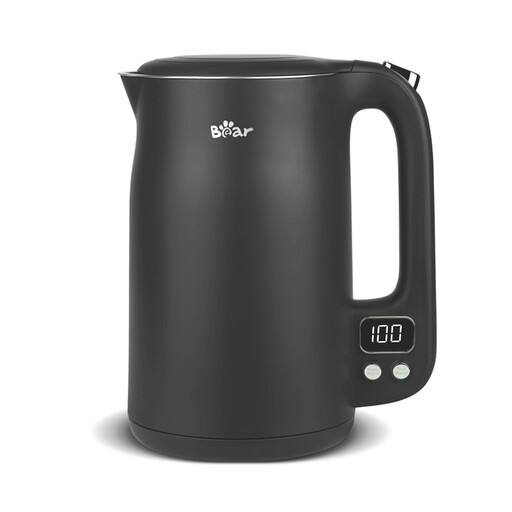
Why This Fits Their Persona: If you take your tea and coffee seriously, precision is key. This kettle with temperature control is for the user who wants to extract the perfect flavour from a delicate white tea (80°C) or a French press coffee (95°C).
It moves beyond the simple "boil" function, focusing on controlled heating. The food-grade 304 stainless steel interior and BPA-free construction address material quality concerns head-on.
The microprocessor touch panel offers 6 precise temperature settings, giving you complete control over your brewing process for a superior-tasting beverage.
We have compiled a complete, real-time list of products that fully satisfy these strict selection criteria and UK safety regulations.
This largely depends on the water hardness in your area. For those living in hard water regions, like much of southern and eastern England, descaling every 4-8 weeks is a good practice to maintain performance and taste. In soft water areas, every 3-4 months should suffice. A good rule of thumb is to descale whenever you see a visible layer of white mineral deposits forming inside.
While a 3kW rapid boil kettle has a higher power rating, it runs for a much shorter period to boil the same amount of water as a lower-wattage model. The actual difference in electricity cost per boil is usually minimal—often just a fraction of a penny. The most effective way to save energy is to only boil the amount of water you need, which is where a clear water level indicator becomes very useful.
The main difference is their shape and handle placement. A jug kettle is typically tall and slim with a handle on the side, similar to a pitcher. This design is often easier to fill from a tap and can have a smaller footprint on your worktop. A dome kettle (sometimes called a pyramid kettle) has a more traditional, rounded shape with a handle positioned over the top. The choice between them is primarily based on aesthetics and which style you find more comfortable to handle and pour from.