
24/7 Customer Support

Free returns

Same-day & Next-day Delivery

Quality Guaranteed

Unlock Your Welcome Offers: FREE Delivery | Up to 80% OFF | Free 30-day JoyPlus trial
Download the APP
The humble electric kettle is a cornerstone of the British kitchen, but choosing a new one has become surprisingly complex. With endless claims of "rapid boiling" and a dizzying array of styles, it's easy to end up with a kettle that looks great but fails on the basics. As the Joybuy Product Recommendation Officer, my role is to help you see past the marketing jargon and focus on what truly matters for your daily cuppa.
Before you buy, be aware of these common pitfalls that can lead to disappointment:
To avoid these traps, focus on a few key specifications. These are the non-negotiable details that determine a kettle's performance, safety and longevity.
The material that comes into contact with your water is critical. You have three main choices:
Beyond the material, consider how the kettle will fit into your daily routine:
Based on these practical criteria, here are a few models suited to different UK households.
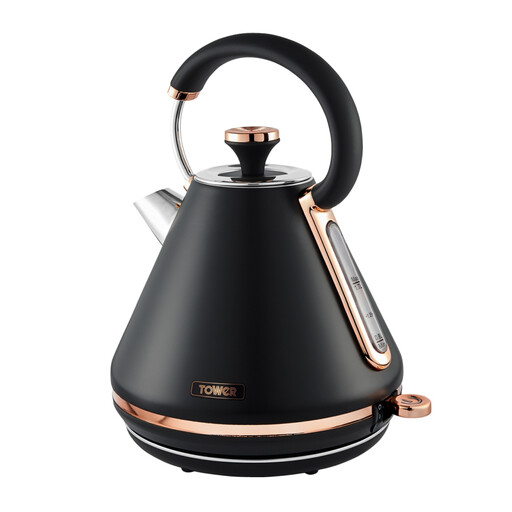
Why This Fits Their Persona: This kettle's iconic pyramid shape and black with rose gold accents make it a statement piece. It's for those who see their kitchen appliances as part of their home's decor, blending a vintage aesthetic with modern performance.
It avoids the 'style over substance' pitfall by combining its retro kettle design with a durable stainless steel body and a detachable anti-scale filter, addressing both material quality and limescale management.
Features a powerful 3000W rapid boil system and a generous 1.7L capacity, making it as practical as it is stylish. The 360° swivel base is convenient for all users.
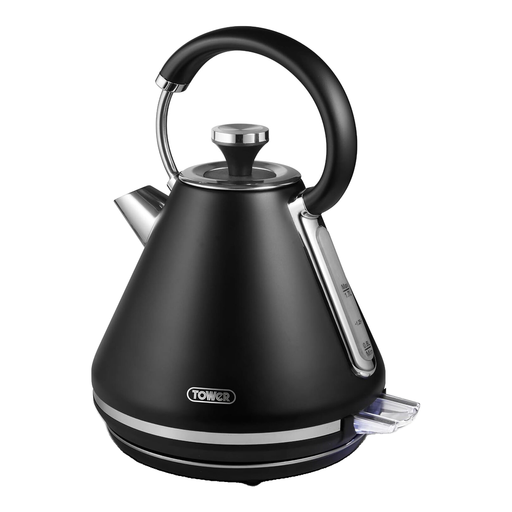
Why This Fits Their Persona: For the person who takes their tea and coffee seriously, precision is key. This variable temperature kettle allows for tailored heating from 40°C to 100°C, ensuring the perfect brew every time, from delicate white teas to rich French press coffee.
This isn't just a gadget. It backs up its tech features with solid fundamentals: a 3kW rapid boil capability, a clear viewing window to prevent energy waste and a removable limescale filter for easy maintenance.
The digital control panel provides precise temperature selection in 5°C increments. The innovative temperature projection onto the worktop is a unique and practical touch.
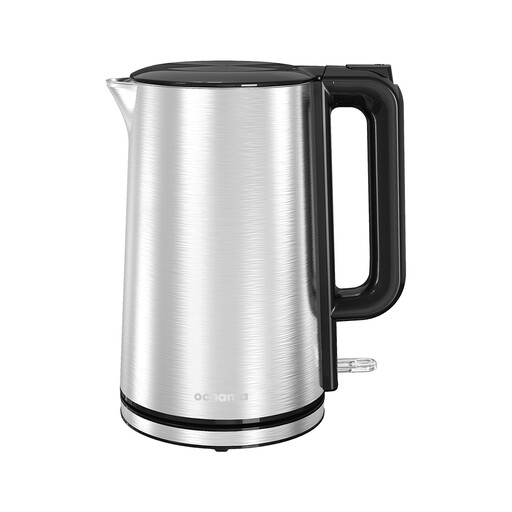
Why This Fits Their Persona: For a busy family, safety, capacity and durability are paramount. This kettle's double-wall construction keeps the exterior cool to the touch, reducing the risk of burns. Its large 1.7L capacity serves everyone at once.
It directly counters the limescale trap with a seamless stainless steel inner liner, which is easy to wipe clean. The focus on the anti-scald design prioritises a crucial safety feature often overlooked in purely aesthetic models.
The dual-layer insulation not only provides safety but also helps with heat retention. The 2100W power offers a good balance between boiling speed and energy consumption.
We have compiled a complete, real-time list of products that fully satisfy these strict selection criteria and UK safety regulations.
This depends heavily on your location. In hard water areas like London and the South East, you may need to descale your kettle every 4-8 weeks. In soft water areas, every 3-6 months may be sufficient. The best indicator is visual: if you see a chalky white layer forming on the base, it's time to descale. Using a kettle with a removable filter and a smooth stainless steel or glass interior makes this process much easier.
Neither is definitively "better"; it depends on your priorities. A glass kettle is great for visibility, allowing you to easily monitor water levels and limescale build-up. A stainless steel kettle is generally more durable and less prone to breakage from accidental knocks. Both are excellent for avoiding the plastic taste some people are sensitive to. If you choose glass, ensure it's high borosilicate. If you choose steel, look for a seamless interior.
The cost depends on the kettle's wattage and your electricity tariff. A typical 3kW kettle will use 0.1kWh of energy to boil 1 litre of water, which takes about 2 minutes. Based on an average electricity rate of 25p per kWh, a single boil would cost approximately 2.5p. While a higher-wattage kettle uses more power, it runs for a shorter time, so the cost per boil is often very similar to a lower-wattage model. The biggest way to save money is to only boil the amount of water you actually need.