
24/7 Customer Support

Free returns

Same-day & Next-day Delivery

Quality Guaranteed

Unlock Your Welcome Offers: FREE Delivery | Up to 80% OFF | Free 30-day JoyPlus trial
Download the APP
A reliable electric kettle is the cornerstone of any British kitchen, working tirelessly from the first morning brew to the last evening cuppa. Yet, choosing a new one can be surprisingly difficult. The market is flooded with models that promise the world but often fall short. Many of us have been caught out by a kettle that looks great on the box but quickly becomes a daily frustration.
As a Joybuy Product Recommendation Officer, my role is to help you see past the marketing clutter. Before you spend your money, it's crucial to understand the common pitfalls that lead to buyer's remorse.
Navigating these issues is simple when you know what to look for. This guide will break down the essential features to check, ensuring your next electric kettle is a valuable addition to your home, not a source of regret.
To avoid the common traps, focus on a few key technical specifications. These are the non-negotiable factors that determine a kettle's performance, longevity and safety.
The speed of an electric kettle is directly related to its power, measured in kilowatts (kW). For a genuine rapid boil kettle, look for a power rating of 3kW. These models can typically boil a single cup (around 235ml) of water in under 50 seconds. Kettles with lower power ratings, such as 1.5kW or 2.2kW, will still boil water effectively but will take noticeably longer, which can be a drawback for busy households. While a 3kW model uses more power, it does so for a much shorter period, meaning the cost per boil is often very similar to a less powerful model, but with the significant benefit of saving you time.
The material of your kettle's interior is critical for both the taste of your water and the appliance's lifespan.
Consider your household's needs when it comes to size and features.
Based on these practical criteria, we have matched several models to different user needs. These recommendations focus on products that deliver on their promises and avoid the common pitfalls.
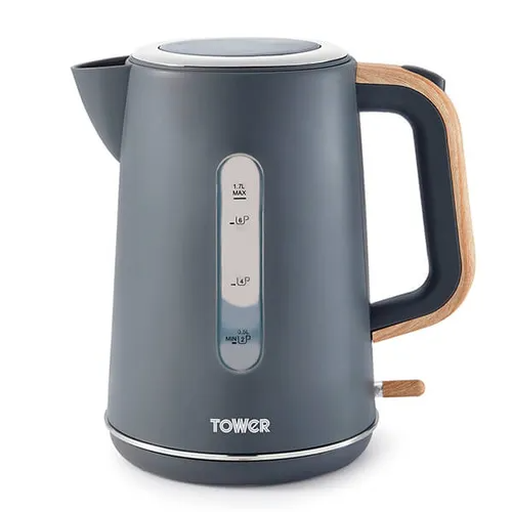
Why This Fits Their Persona: This Scandi kettle is for those who see their kitchen appliances as part of their home's decor. The minimalist grey finish and wood-effect accents offer a contemporary look without compromising on performance for daily use.
It sidesteps the "rapid boil" illusion by being equipped with a genuine 3kW heating element. The pull-up lid and well-designed spout also address the common ergonomic design flaws.
Powerful 3kW element boils one cup in under 45 seconds. Features a removable limescale filter for easy maintenance.
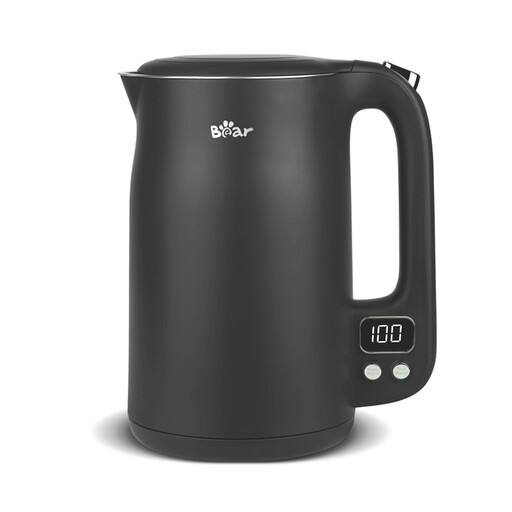
Why This Fits Their Persona: This is a kettle with temperature control for those serious about their tea and coffee. It allows for precise heating, which is essential for extracting the correct flavour from delicate green teas or for preparing pour-over coffee.
It avoids the tainted taste trap with a full food-grade 304 stainless steel interior, ensuring no plastic comes into contact with the water. The microprocessor control offers genuine, accurate temperature settings, not just a gimmick.
Features 6 precise temperature presets and a real-time digital display. The entire interior is BPA-free stainless steel.
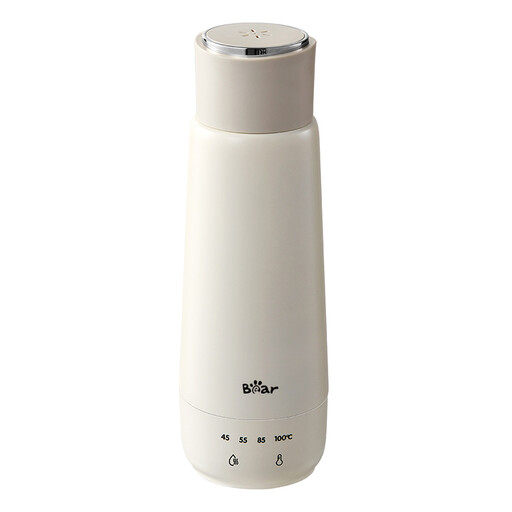
Why This Fits Their Persona: This compact travel kettle is ideal for those who travel frequently, work in an office or have a very small living space. Its flask-like design is leak-proof, making it safe to pack in a bag.
It avoids the flimsy material trap common in small appliances by using a double-layer 304 stainless steel construction. This makes it durable for travel and provides good insulation.
Highly portable 300ml capacity with a leak-proof design. Also includes four temperature control settings for versatility.
We have compiled a complete, real-time list of products that fully satisfy these strict selection criteria and UK safety regulations.
This largely depends on whether you live in a hard or soft water area. In hard water areas like London and the South East, limescale builds up quickly. It is advisable to descale your kettle every one to two months. In softer water areas, descaling every three to four months should be sufficient. Regular descaling maintains boiling efficiency and prolongs the life of the heating element.
Not necessarily. While a 3kW kettle has a higher power draw than a 2.2kW model, it runs for a significantly shorter time to boil the same amount of water. The total energy consumed (and therefore the cost) for a single boil is very similar. The main benefit of a 3kW kettle is the time it saves you.
Yes, modern glass kettles are designed for safety. They are made from high borosilicate glass, a type of toughened glass that is highly resistant to thermal shock (sudden temperature changes). This means it will not crack when you fill it with cold water after it has just boiled. While they are durable for everyday use, they are inherently more fragile than a stainless steel kettle and should be handled with a bit more care to avoid knocks against hard surfaces.