
24/7 Customer Support

Free returns

Same-day & Next-day Delivery

Quality Guaranteed

Unlock Your Welcome Offers: FREE Delivery | Up to 80% OFF | Free 30-day JoyPlus trial
Download the APP
Electric kettles are a daily essential in many UK homes, but choosing one based only on wattage or appearance can lead to wasted money. A kettle may advertise rapid boiling yet use more energy than necessary if you regularly heat far more water than you need. Another model may offer temperature control, but only through a small set of presets that do not suit your preferred tea or coffee.
There are also practical details that are easy to overlook: difficult-to-clean filters, unclear minimum-fill markings, hot outer surfaces and keep-warm functions that consume electricity for longer than expected. The right choice depends on how much water you boil, which drinks you prepare and how much control you want.
A 3kW rapid boil kettle can heat a small amount of water quickly, but boiling a full 1.7L still takes longer than boiling one mug. Higher power also does not compensate for overfilling. Look for a clear water-level window and use the minimum practical amount for each drink.
A digital kettle or temperature control kettle can be useful for green tea, coffee and drinks requiring water below boiling point. However, some models only offer a few fixed temperatures. If precision matters, check the adjustment range and increments. A variable temperature kettle with settings from 40°C to 100°C offers more flexibility than a basic preset system.
Limescale is a routine issue in many parts of the UK. A removable, washable filter and a wide opening can make regular maintenance easier. Also check for automatic shut-off, boil-dry protection, a stable base and clear maximum-fill markings. No electric kettle should be operated empty, overfilled or immersed in water.
A 1.5L kettle is generally suitable for one or two people, a small office or users who prefer a compact appliance. A 1.7L kettle can provide several mugs from one fill and is more convenient for families or entertaining. Larger capacity is not automatically more economical: boiling surplus water increases energy use and waiting time.
Check both the minimum and maximum markings. If you usually make one cup at a time, a precise single-cup indicator can help reduce unnecessary boiling.
For standard black tea, boiling water is commonly used, while more delicate drinks may suit lower temperatures. A temperature control kettle should clearly state:
A keep-warm kettle is convenient when several drinks are prepared over a longer period, but it may use more electricity than reheating a smaller quantity when needed. Consider whether the feature can be switched off.
A stainless steel kettle can offer a durable-feeling interior, while a glass kettle makes the water level and boiling process easy to see. Borosilicate glass is commonly used in models designed for hot liquids. For either material, inspect the lid opening, spout filter and heating plate access.
Products described as “health kettles” or multifunction kettles may include tea infusers and cooking programmes. Treat these terms as product-category descriptions rather than medical claims. For everyday use, focus on food-contact materials, cleaning instructions, temperature settings and the intended household purpose.
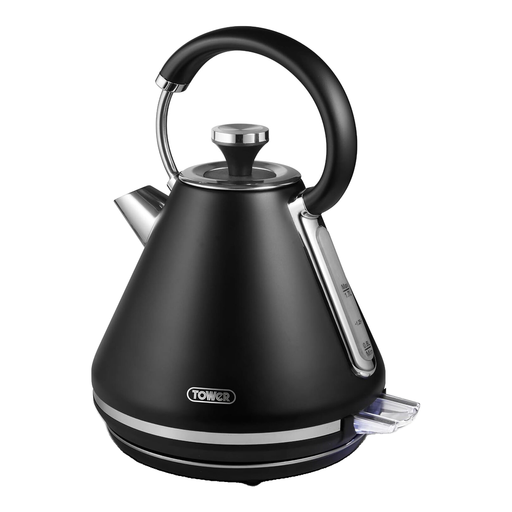
Why This Fits Their Persona: A practical option for households wanting one appliance for everyday boiling and occasional lower-temperature drinks, without moving to a multifunction tea maker kettle.
The 40–100°C range is adjustable in 5-degree increments, while the visible water window helps prevent unnecessary overfilling.
3kW power, 1.7L capacity, 360° swivel base and removable washable limescale filter.
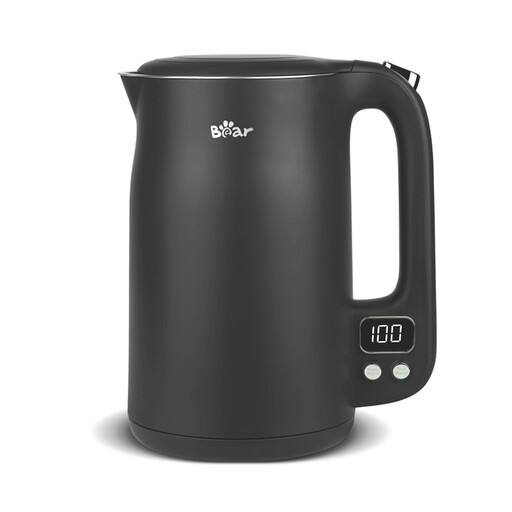
Why This Fits Their Persona: Suits tea and coffee drinkers who value a stainless steel interior, digital monitoring and repeatable temperature selection for different beverages.
The listed six temperature settings and real-time display make the control system clearer than a simple on/off kettle.
1.7L volume, 1800–2200W rated power, boil-dry protection and automatic shut-off.
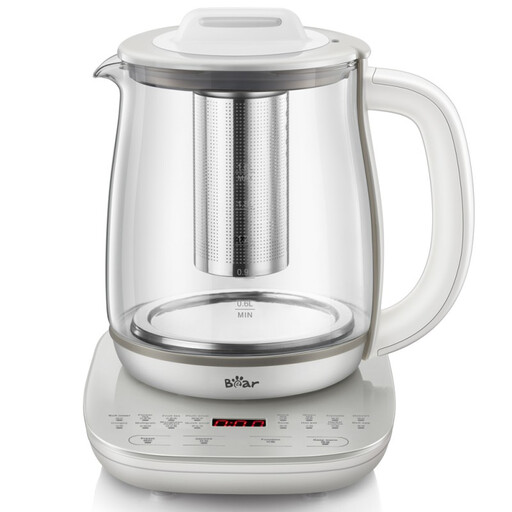
Why This Fits Their Persona: Designed for users preparing more than hot water, including flower tea, fruit tea, soups and other preset recipes for a busy household.
Its wide glass body, stainless steel infuser and washable filter address the cleaning and residue concerns associated with multifunction brewing.
1.8L borosilicate glass body, 16 smart presets, keep-warm scheduling and 360° cordless base.
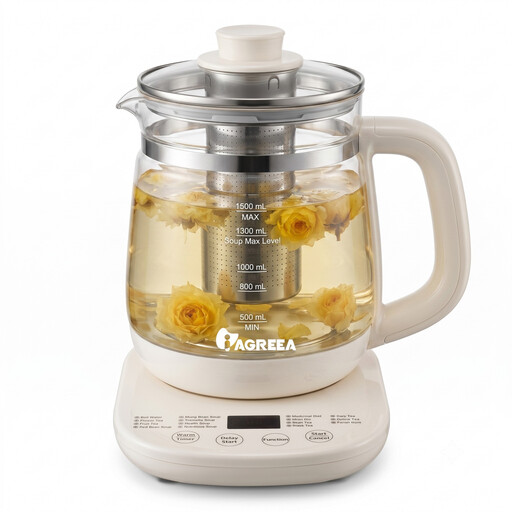
Why This Fits Their Persona: A compact choice for users who prepare herbal infusions, fruit drinks and hot mixtures rather than only boiling water for tea.
The wide opening, detachable parts and large stainless steel infuser make residue easier to access during cleaning.
14 preset modes, six constant-temperature settings from 40–90°C, delayed start and automatic keep-warm.
We have compiled a complete, real-time list of products that fully satisfy these strict selection criteria and UK safety regulations.
Descale according to the manufacturer’s instructions and local water hardness. A kettle that develops scale may boil less efficiently and can affect pouring through the filter. Always unplug before filling, cleaning or moving the appliance, and allow glass or stainless steel surfaces to cool.
To estimate electricity use, multiply the kettle’s power in kilowatts by its running time in hours. For example, a 3kW kettle used for two minutes consumes approximately 0.1kWh. Your actual cost depends on your electricity tariff, fill level and frequency of use. Boiling only the water required remains the simplest way to reduce waste.
Often, an electric kettle can heat a small quantity of water efficiently because the heating element transfers heat directly to the water. Actual costs depend on appliance power, time, fill level and your tariff. Avoid comparing wattage alone; usage habits matter.
Lifespan varies with build quality, frequency of use, water hardness, cleaning and handling. Regular descaling, avoiding dry boiling and not exceeding the maximum line can help maintain operation. Check the warranty period and whether replacement filters are available before buying.
It can be useful if you prepare different drinks or want water below boiling point for delicate tea and coffee. If you only make standard black tea, a basic rapid boil kettle may provide all the functionality required. Compare the extra controls and keep-warm power use with your normal routine.