
24/7 Customer Support

Free returns

Same-day & Next-day Delivery

Quality Guaranteed

Unlock Your Welcome Offers: FREE Delivery | Up to 80% OFF | Free 30-day JoyPlus trial
Download the APP
Choosing between kettles can seem straightforward until you compare capacity, power, materials, temperature settings and safety functions. A low-priced model may appear attractive, while a highly featured appliance may include settings you rarely use. The right choice depends on how many people you serve, what you drink and how much worktop space you have.
This guide explains the specifications that matter, highlights common buying traps and matches selected models with different UK household needs.
A 3kW rapid boil kettle can heat water quickly, but boiling time also depends on the amount of water, starting temperature and the kettle’s design. A 3kW model may be useful for busy mornings, but boiling a full 1.7L every time can use more electricity than heating only the amount required.
Look for a water-level window and minimum-fill marking. Some models also state a one-cup boiling time, but treat this as a guide rather than a guarantee for every kitchen.
A 1.7L kettle can make several cups in one fill and suits families, shared homes and office kitchens. However, a large jug can be unnecessarily bulky for one person. Smaller specialist models, such as a 600ml gooseneck coffee kettle, are designed for controlled pouring rather than family-sized batches.
Do not fill beyond the MAX line, and avoid operating below the MIN mark. These markings are practical safety limits, not optional suggestions.
Stainless steel may refer to the internal water-contact tank, the outer shell or decorative trim. Check which part uses the material. A glass kettle can make the water level easy to see, but its body and steam outlet can become very hot.
Likewise, a health kettle is generally a multifunction appliance for hot drinks, infusions or simmer-style preparation. It should not automatically be treated as a medical or therapeutic product. Check the manual for permitted ingredients, cleaning instructions and household-use restrictions.
For many UK households, 1.5L to 1.7L is a practical range. It can cover several mugs, tea rounds or hot water for cooking. A 600ml kettle is more suitable for pour-over coffee or individual preparation.
Power ratings commonly range from 1,000W to 3,000W. A 2,100W or 3kW electric kettle can offer quicker heating than a 1,000W model under comparable conditions, but actual performance varies with fill level and water temperature.
A 304 stainless steel inner tank, where specified, provides a clearly stated food-contact material. Double-wall construction can reduce heat transfer to the outer casing, although the lid, spout and steam outlet may still become hot.
For glass kettles, inspect the lid opening and removable parts. For stainless steel kettle models, look for a removable limescale filter and a wide opening. This is particularly useful in hard-water areas, where regular descaling can help maintain heating performance.
Useful features include:
These functions are safeguards or conveniences, not replacements for supervision. Always place the kettle on a stable, heat-resistant surface, keep the base and plug dry, and follow the supplied instructions.
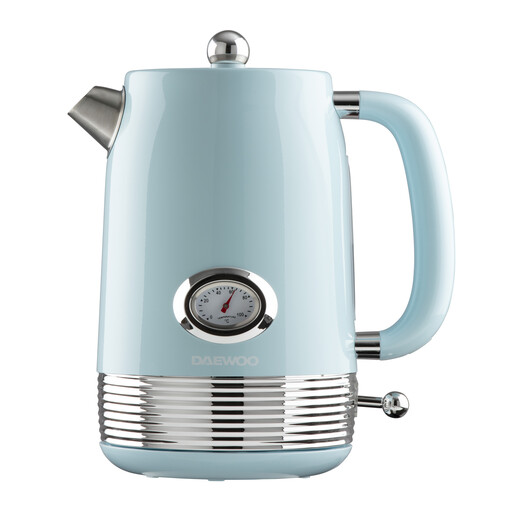
Why This Fits Their Persona: A practical option for a small family, flat or home office where a moderate capacity and straightforward controls are more important than advanced settings.
The 1.5L capacity avoids routinely boiling a larger volume than needed, while the concealed element and removable filter support easier maintenance.
1.5L capacity, rapid-boil function, 360° swivel base, automatic shut-off and boil-dry protection.
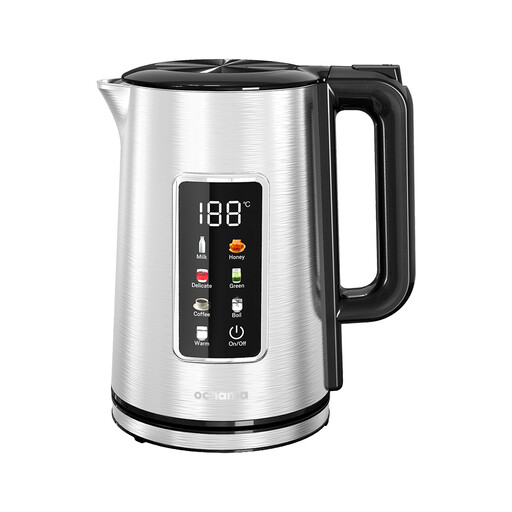
Why This Fits Their Persona: Suitable for families and shared kitchens that want a larger stainless steel kettle with visible temperature information and keep warm functionality.
The stated double-wall construction addresses the concern that an outer casing may become as hot as the water-contact chamber. Automatic power cut-off is also specified.
1.7L capacity, 2,100W heating, 304 inner tank specification, colour temperature display and keep warm function.
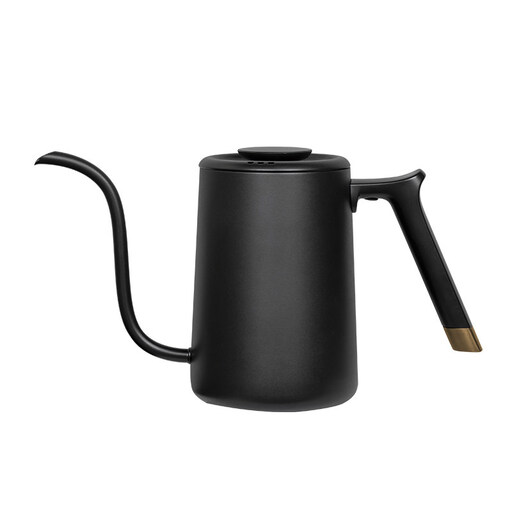
Why This Fits Their Persona: Designed for coffee drinkers who prioritise a controlled pour over large household capacity when preparing filter coffee.
Its 600ml format makes its intended specialist use clear, helping buyers avoid paying for a family-sized appliance when precise coffee pouring is the priority.
Gooseneck spout and compact 600ml capacity for measured pour-over preparation.
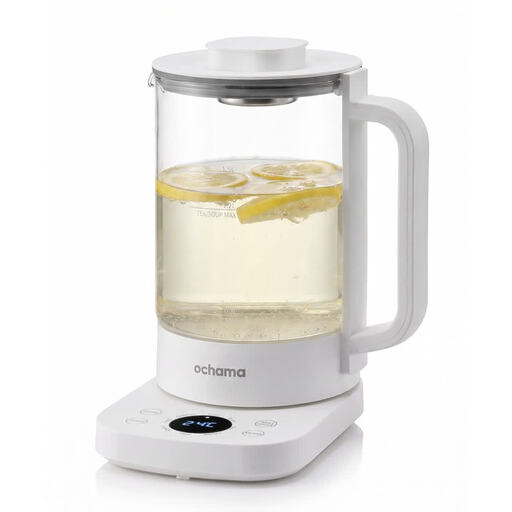
Why This Fits Their Persona: A multifunction choice for households preparing herbal tea, fruit infusions, porridge or several types of hot drink using one appliance.
The functions are specified individually, including 11 keep-warm levels and a 24-hour appointment setting, rather than relying only on vague multifunction wording.
1.5L capacity, eight preset modes, 11-level keep warm, 24-hour scheduling and boil-dry protection.
We have compiled a complete, real-time list of products that fully satisfy these strict selection criteria and UK safety regulations.
Before buying, compare the following details on the product page and packaging:
Running cost depends on the kettle’s wattage, the amount of water heated and your electricity tariff. A full 1.7L boil generally uses more energy than heating one mug. To reduce unnecessary consumption, measure water with the cup you intend to use and avoid repeated reboiling.
Lifespan varies with construction, frequency of use, water hardness and maintenance. Regular descaling, emptying unused water and keeping the electrical base dry can support reliable everyday operation. Replace the appliance if the cord, plug, switch or housing shows damage.
Neither material is automatically easier in every kitchen. Glass makes the water level and limescale visible, while stainless steel can offer a durable water-contact chamber. The more important checks are access for cleaning, filter removal and whether the manual gives clear descaling instructions.