For frequent lime squeezing, choose an electric citrus juicer with a cone explicitly suitable for limes, then check its dimensions against your available worktop and storage space. A 500 ml jug with adjustable pulp control suits smaller, texture-sensitive batches, while a 1 L jug gives larger recipes more room; either size still needs to fit where you will use and store it.
Who this choice matters to
Lime-first drink and recipe makers
If you mainly squeeze limes for drinks, dressings, marinades or baking, check the cone rather than assuming an orange-sized reamer will suit your fruit. Salter and Progress each describe a smaller cone for lemons and limes on the models discussed below.
Small-kitchen users
When counter and cupboard space are tight, compare the appliance’s dimensions with the space available for using, pouring from and storing it. Kenwood specifies dimensions and cord storage for the JE290A; Dimensions are listed for the Salter EK5878.
People who care about pulp and clean-up
If juice texture and washing up affect how often you will use the juicer, look at pulp-control settings and which parts detach. Keep the electrical base out of water and follow the cleaning instructions for the exact model.
What to check before buying
Start with lime suitability and a measured fit for your kitchen, then choose the jug size and cleaning arrangement that match your usual batches.
| Concern |
What to check |
Who this matters to |
| Footprint and storage |
Compare the stated dimensions with your worktop and cupboard space, allowing room to lift the jug and route the cable. |
I need to put the juicer away without crowding a narrow counter. Around 36% of consumers put fit and storage first. |
| Lime fit and texture |
Check whether the exact model has a cone intended for limes and whether its pulp setting or filter suits the juice you want. |
For lime-led drinks or recipes, I want the reamer to suit smaller fruit and the juice texture to suit what I am making. Lime fit and texture come first for around 29% of consumers. |
| Cleaning and upkeep |
Identify the removable parts and follow the model’s instructions for washing them and cleaning the electrical base. |
I will use the juicer more readily if I can dismantle and clean its food-contact parts without washing the motor base. Around 21% of consumers prioritise cleaning and upkeep. |
| Batch capacity |
Compare jug capacity with your usual recipe volume; Salter lists 500 ml for the EK5878, Progress 700 ml for the EK5881P and Kenwood 1 L for the JE290A. |
When I make cordial or drinks for several people, I want enough jug space to avoid frequent emptying. Batch capacity is the primary concern for around 14% of consumers. |
Buying pitfalls
-
Assuming every citrus cone suits limes
A cone intended for larger citrus may not be the arrangement you want for frequent lime squeezing. Salter and Progress specify separate smaller cones for lemons and limes on the EK5878 and EK5881P.
Check the exact model’s listing or manual for its supplied cone and intended fruit sizes.
-
Relying on the word compact
Jug capacity and a compact description cannot tell you whether a juicer fits a particular shelf or counter. The Salter EK5878 is listed at 175 × 157 × 157 mm, while Progress describes the EK5881P as compact without giving external dimensions in its product description.
Measure your space and compare width, depth and height, including clearance to remove the jug and manage the cable.
-
Washing the motor base with the jug
Detachable food-contact parts and electrical components need different treatment. Salter’s instructions say not to immerse electrical components in water.
Switch off and unplug the juicer before dismantling it, clean only the parts permitted by its manual and keep the electrical base out of water.
-
Choosing the largest jug by default
A 1 L container may be useful for larger recipes, but a smaller usual batch does not require that capacity. The jug also needs room in the place where you plan to keep the appliance.
Choose capacity around your typical recipe and measure the complete appliance rather than judging storage fit from the jug volume.
Brands and models to consider
Salter
The EK5878 is worth considering if smaller lime batches and control over pulp matter more to you than a large jug.
- Salter specifies a small cone for lemons and limes, five pulp-control levels and a 500 ml jug for the EK5878.
- A 500 ml jug needs emptying if your recipe calls for more juice; compare its listed dimensions with your space before choosing it.
Kenwood
The JE290A offers a measured 1 L container and cord storage for people who make larger citrus batches.
- Kenwood specifies two-way rotation, cord storage and dimensions of 21.2 × 16 × 21.9 cm for the JE290A.
- If your priority is squeezing small limes, check whether its reamer suits the size of fruit you normally use.
Progress
The EK5881P offers a 700 ml measured jug between the capacities of the Salter and Kenwood models discussed here.
- Progress specifies separate cones for smaller lemons and limes and for larger citrus, plus a detachable jug and base.
- Check the external dimensions before choosing it for a particularly narrow worktop or cupboard.
Joybuy product choices
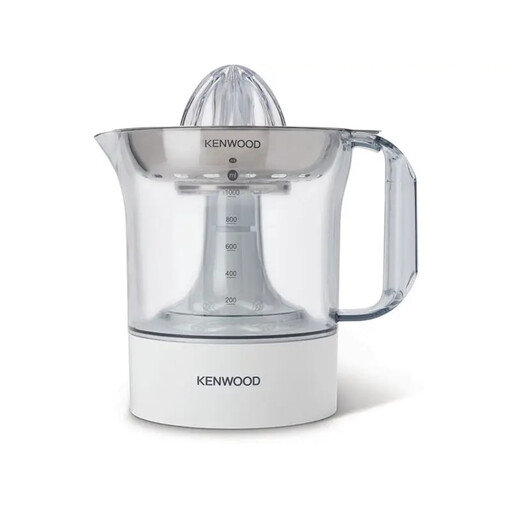
The Kenwood option here is a citrus juicer with a larger measured jug and cord storage. If you mostly squeeze just a few limes, check its reamer and dimensions against your fruit and available space before choosing it.
 No image available
Kenwood JE290A Citrus Juicer, White
Consider this model if you want a larger container for lime and other citrus recipes rather than a small-batch jug.
Kenwood specifies a 1 L measuring container, two-way rotation, cord storage and dimensions of 21.2 × 16 × 21.9 cm for the JE290A.
The product listing describes a universal reamer for limes and a stainless-steel pulp-and-seed filter. Check that the reamer suits the size of limes you usually squeeze; it is not described as a separate small cone.
View on Joybuy
Frequently asked questions
Do I need a juicer made only for limes?
No: a citrus juicer can suit limes if its supplied cone is intended for fruit that small. Salter specifies a small cone for lemons and limes on the EK5878, as does Progress on the EK5881P; check the arrangement on any other model you consider.
How do I clean an electric citrus juicer safely?
Switch it off and unplug it before dismantling or cleaning it. Follow the model’s instructions for its removable parts, do not immerse electrical components in water and let the cleaned parts dry before reuse, as Salter’s instruction manual advises.
What should I check before plugging in a citrus juicer?
Check the voltage on the appliance’s rating plate against the local mains supply and inspect the cord and plug before use. Salter’s instruction manual advises against using an appliance that is damaged.
Can I register a Salter juicer for extended cover?
Salter offers registration for an extended guarantee, but check that the terms cover the exact model you buy. Salter’s registration guidance says to register within 30 days of purchase.


