
24/7 Customer Support

Free returns

Same-day & Next-day Delivery

Quality Guaranteed

Unlock Your Welcome Offers: FREE Delivery | Up to 80% OFF | Free 30-day JoyPlus trial
Download the APP
From easing post-workout soreness to melting away the tension of a long day at the desk, an electric massager can be a valuable tool for modern life. Yet, the market is flooded with options, all promising remarkable results. Navigating the technical jargon and marketing hype can be confusing, often leading to a purchase that gathers dust in a cupboard.
As the Joybuy Product Recommendation Officer, my role is to help you sidestep common buying mistakes. Before you spend your money, be aware of these frequent pitfalls:
To make a smart choice, focus on the core features that directly impact performance and usability. Here are the key parameters to check.
Not all massagers are created equal. The underlying technology determines what it does best.
For a massage gun, the two most important power metrics are amplitude and speed (RPM).
A practical handheld massager should be easy to use. Consider the weight (anything under 1kg is generally considered portable) and the ergonomics of the handle. For a portable massager, check the battery life and charging method—a USB-C port is a convenient, modern standard.
Finally, look for value-adding features like a heated massager function, which can help to relax muscles and improve blood flow, making the massage more effective.
Based on these practical criteria, we've matched several devices to different user needs, helping you find a suitable option without the guesswork.
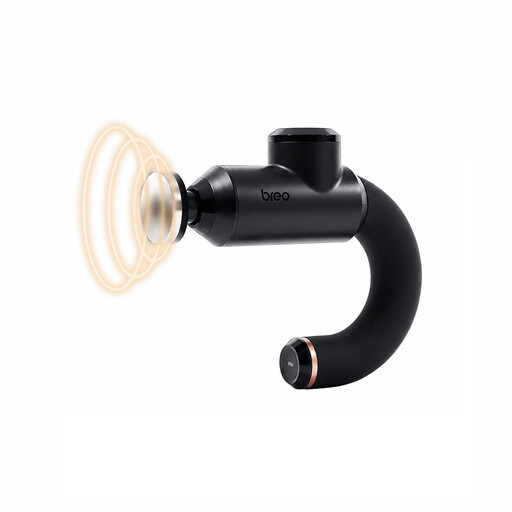
Why This Fits Their Persona: This user needs a serious muscle recovery tool for post-gym sessions. The combination of deep tissue percussion and heat therapy is ideal for accelerating recovery and relieving soreness in large muscle groups.
It sidesteps the "power for power's sake" trap by offering a meaningful 12mm amplitude for true deep-tissue work, combined with a useful heated head, rather than just chasing high RPMs.
The fast-heating function and six specialised heads, including a blade-shaped head for fascia, provide a versatile and professional-grade recovery experience.
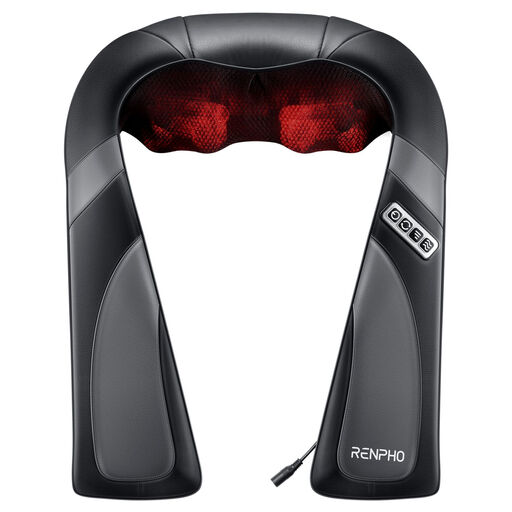
Why This Fits Their Persona: For those spending hours at a desk, neck and shoulder tension is a constant battle. This user needs something convenient and targeted for that specific area, which can be used while watching TV or relaxing after work.
It solves the "ergonomic oversight" trap. Unlike a massage gun, its U-shaped, hands-free design is purpose-built for the neck and shoulders, ensuring it's easy and comfortable to use without assistance.
The eight deep-kneading shiatsu nodes, combined with optional heat and adjustable intensity, provide a customisable and highly effective massage for relieving postural strain.
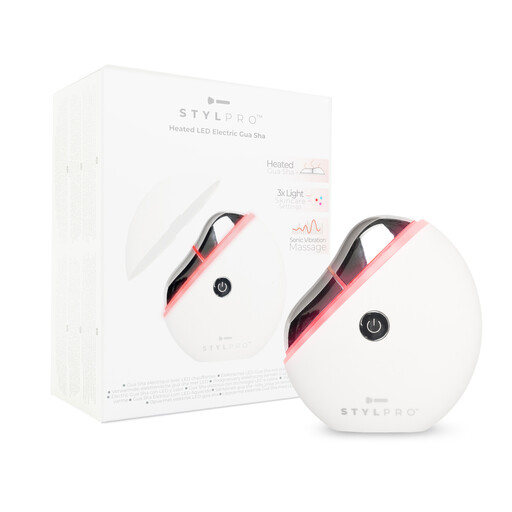
Why This Fits Their Persona: This user is focused on enhancing their skincare routine, seeking tools for facial contouring, reducing puffiness and improving product absorption. A powerful body massager is entirely unsuitable for this delicate area.
This device perfectly illustrates why the "one-size-fits-all" approach fails. It is a highly specialised face massager, combining gentle heat, vibration and LED therapy specifically for facial skin, a task no massage gun could perform.
It blends a traditional technique (Gua Sha) with modern technology. The three LED light modes, combined with heat and vibration, offer a multi-functional approach to at-home facial care.
We have compiled a complete, real-time list of products that fully satisfy these strict selection criteria and UK safety regulations.
1. What is the difference between a cheap and an expensive massage gun? The price difference often comes down to three factors: the motor, the battery and the build quality. More expensive models typically feature brushless motors, which are significantly quieter and more durable. They also tend to have a higher amplitude (10mm+) for true deep-tissue massage, longer-lasting batteries and are constructed from more premium, durable materials. Cheaper models may be louder, have lower amplitude and a shorter overall lifespan.
2. Can I use a percussion massager on my neck? It is generally not recommended to use a powerful percussion massager directly on the front or sides of your neck or on your spine, due to the sensitive structures in these areas. For neck tension, a shiatsu massager is a more suitable and safer choice. If using a massage gun for shoulder or upper back tension, use a softer attachment on a low speed and avoid direct contact with bone.
3. How often should I use an electric massager? For muscle recovery, using a massage gun for 1-2 minutes on each muscle group post-workout is effective. For general relaxation or tension relief with a shiatsu massager, a 15-20 minute session once a day is usually sufficient. It's important to listen to your body; if you feel any sharp pain or lingering soreness, reduce the duration or frequency and allow your body to recover.