
24/7 Customer Support

Free returns

Same-day & Next-day Delivery

Quality Guaranteed

Unlock Your Welcome Offers: FREE Delivery | Up to 80% OFF | Free 30-day JoyPlus trial
Download the APP
From long hours at the desk to post-workout soreness, finding effective relief for aches and pains is a common goal. An electric massager seems like a straightforward solution, but the market is flooded with options that often over-promise and under-deliver. As the Joybuy Product Recommendation Officer, my role is to help you navigate the choices and identify a device that genuinely meets your needs for pain relief, muscle recovery or simple stress relief.
Before you invest, it’s crucial to understand the common pitfalls that lead to buyer's remorse. Many shoppers are drawn in by flashy marketing, only to end up with a gadget that gathers dust.
To make an informed choice, focus on the mechanics of the massager rather than the marketing claims. Here are the key parameters that determine a device's effectiveness.
The technology used defines the massager's purpose. Understanding the difference is the first step to finding the right fit.
A single setting is rarely enough. A quality electric massager should offer adjustable intensity levels to suit different body parts and sensitivity. For a deep tissue massager, this means multiple speed settings. For a heated massager, it means adjustable temperature controls. The ability to change attachments or massage direction also adds significant value, allowing you to tailor the experience from a gentle warm-up to an intense recovery session.
Consider how and where you will use the device. If you need to target your own back, a massager with a long or ergonomic handle is essential. For neck and shoulder relief, a hands-free wrap-around design is far more practical. If you plan to use it away from home, a lightweight, portable massager with a good battery life and a carrying case is a must.
Based on these practical criteria, we've matched several products to distinct user needs. This is not a definitive "best of" list, but a starting point to help you find a model that aligns with your specific requirements.
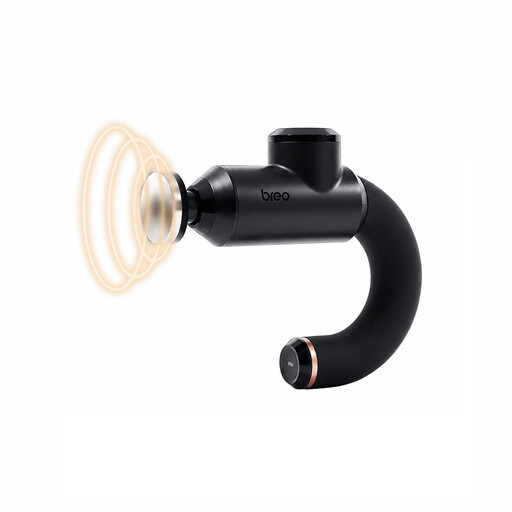
Why This Fits Their Persona: Ideal for post-workout muscle recovery, whether after a gym session or a long run. The combination of a heated head and powerful percussion effectively targets deep muscle soreness and aids recovery.
It directly counters the "weak motor" pitfall with a high 12 mm amplitude and up to 19 kg stall force, ensuring a true deep tissue massage, not just surface vibration.
The fast-heating head warms in 5 seconds, and the six specialised attachments provide a versatile and targeted treatment for different muscle groups.
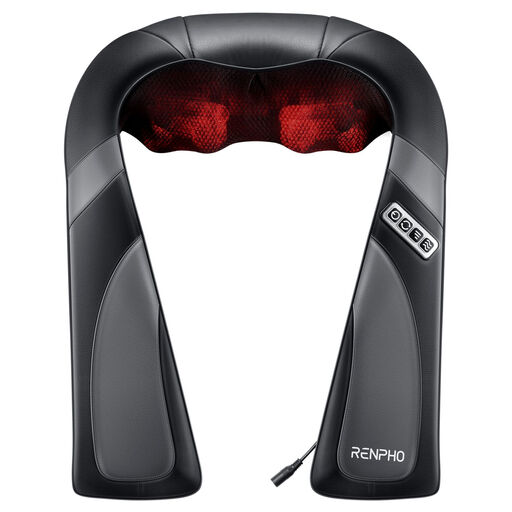
Why This Fits Their Persona: Designed for hands-free use, it allows UK office workers to ease neck and shoulder tension while sitting at their desk, providing much-needed stress relief during a long workday.
It avoids the "all-in-one" trap by being a specialised shiatsu massager. Its eight deep-kneading nodes are specifically designed to target neck and shoulder tension effectively.
Features three adjustable intensity levels and an optional heating function, allowing for a customisable massage that can be adapted to individual tension levels.
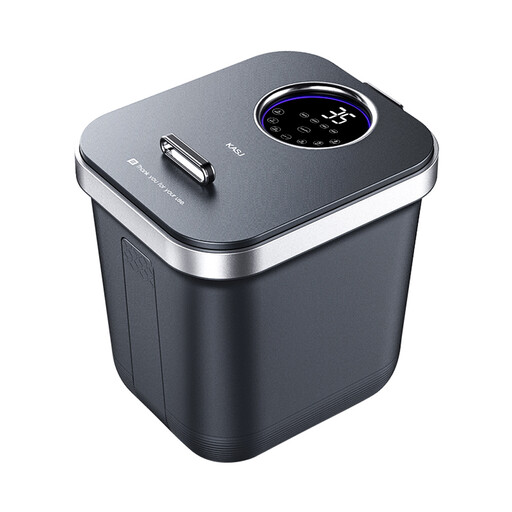
Why This Fits Their Persona: Perfect for unwinding after a long day. The deep tub allows for a calf soak, a feature particularly welcome during colder UK months, providing a comprehensive hydrotherapy experience at home.
This is not just a tub with bubbles. It avoids the "overhyped features" trap by providing genuine functions: motorised rollers, acupressure nodes and stable temperature control via water circulation.
It combines heated hydrotherapy with a mechanical shiatsu massage function for comprehensive foot pain relief. The built-in UV sterilisation is a practical hygiene feature.
We have compiled a complete, real-time list of products that fully satisfy these strict selection criteria and UK safety regulations.
For most people, using an electric massager for 15-20 minutes per session on a specific area is sufficient. For deep tissue massage guns, it's advisable to limit use on any single muscle group to a few minutes to avoid overstimulation. Always refer to the manufacturer's guidelines and listen to your body; if you feel pain, stop immediately.
A shiatsu massager uses rotating nodes to create a deep, kneading pressure that mimics a masseuse's hands. It's generally used for relieving tension and promoting relaxation in areas like the neck, back and feet. A massage gun uses percussive therapy—rapid, concentrated pulses—to penetrate deep into muscle tissue. It is more intense and primarily used for muscle recovery, breaking up knots, and preparing muscles for activity.
Yes, when used correctly. Reputable heated massagers are designed with safety features like automatic shut-off timers and overheat protection to prevent burns. It is important to never fall asleep while using a heated device and to avoid using the heat function on areas with inflammation, open wounds or reduced sensitivity. Always check the temperature before extended contact with the skin.