
24/7 Customer Support

Free returns

Same-day & Next-day Delivery

Quality Guaranteed

Unlock Your Welcome Offers: FREE Delivery | Up to 80% OFF | Free 30-day JoyPlus trial
Download the APP
Preparing mince, vegetables, sauces and homemade fillings can become time-consuming when handled by hand. An electric meat grinder and food chopper can speed up everyday cooking, but the right appliance depends on how much you prepare, which ingredients you use and how easily the parts can be cleaned.
Marketing descriptions do not always tell the full story. A compact food chopper may be unsuitable for repeated meat preparation, while a meat mincer machine may take up more cupboard space than expected. Use the following checks to avoid common buying mistakes.
A higher wattage figure does not automatically mean an appliance is suitable for every ingredient. Check the intended food types, maximum operating time and rest periods. For example, a 300W electric food chopper may handle vegetables, herbs and small portions of meat, but it may require short processing cycles.
A dedicated electric meat mincer usually has a different feed mechanism, cutting system and operating design from a general kitchen food processor. Choose according to your regular recipes rather than wattage alone.
A stated 2L capacity does not necessarily mean you should fill the bowl to the rim. Ingredients need room to circulate, and meat or vegetables may need to be added in batches for more even results.
A glass bowl food chopper can make ingredients visible while processing and may resist odours and staining. However, glass is heavier than plastic, so check whether you have enough space to lift and store it comfortably.
Some listings may show several blade sets or accessories in photographs, while the selected configuration includes fewer items. Always check the written specification for the exact number of bowls, blades, grinding screens and attachments.
This is particularly important when buying a sausage maker or kebbe maker. These accessories are useful only when they are included with the model and compatible with its feed head.
For an electric meat grinder, check both the motor rating and the stated processing capacity. The Kenwood MG510, for example, has a listed 1600W maximum power and a stated processing rate of up to 2kg per minute. It also specifies a maximum continuous use period of 15 minutes.
For a vegetable chopper, short cycle limits are more common. The BEAR QSJ-D03W5 specifies operation of up to 40 seconds, followed by a minimum two-minute interval. After three consecutive cycles, it requires a longer cooling period. These instructions should be treated as part of the product specification, not an inconvenience to ignore.
Look for stainless steel blades and check whether the design suits your ingredients. Multi-layer or stacked blades can help distribute cutting across the bowl, while interchangeable mincer screens provide more control over mince texture.
A fine screen may suit smoother fillings, a medium screen is practical for everyday mince, and a coarse screen can provide a more textured result. Do not use a general food chopper for bones, ice, frozen food or other hard items unless the manufacturer specifically states that it is suitable.
Removable, dishwasher-safe components can reduce cleaning time, but the motor base, plug and power cord should never be immersed in water. Look for a lid lock, non-slip feet and a food pusher for safer operation.
Also measure the appliance before buying. Bowl capacity is only one consideration: overall height, cord storage and the space needed to dismantle the blade or mincer head can affect daily convenience.

Why This Fits Their Persona: A practical option for smaller households and new cooks who need one appliance for onions, garlic, vegetables and occasional meat preparation.
The listing states the exact configuration: one blade set and one blending cup. Its 40-second operating limit also makes the intended batch size clear.
2L glass bowl, two speeds and 304 stainless steel blades. Suitable for soft and harder ingredients within the stated instructions.
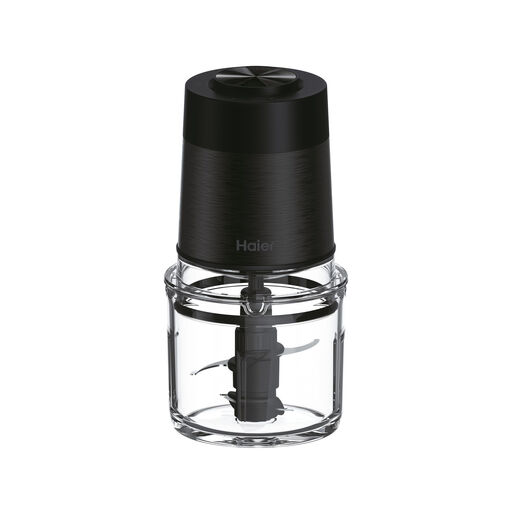
Why This Fits Their Persona: Suits cooks who value a glass bowl, straightforward controls and dishwasher-safe parts for regular kitchen preparation.
The specification identifies the bowl material, two-speed control and dishwasher-safe bowl and blades, rather than relying only on general performance wording.
550W motor, four double-stacked blades, anti-slip base and a glass bowl designed to resist odours, flavours and scratches.

Why This Fits Their Persona: Two bowl sizes help separate small prep from family-sized chopping and reduce flavour mixing between ingredients.
The listing clearly specifies two glass bowls and two blade sets, so the configuration is not dependent on review photographs or promotional images.
Includes 2L and 0.6L glass bowls, two sets of stainless steel blades and two speed settings.
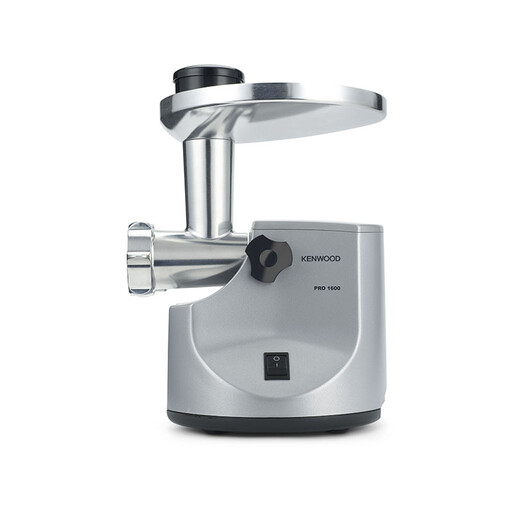
Why This Fits Their Persona: Designed for regular mince preparation, homemade sausages, kebbe and larger cooking sessions where a dedicated meat mincer is more suitable than a small chopper.
It lists three grinding screens, sausage and kebbe maker attachments, overload protection and a reverse function for clearing meat jams.
1600W maximum power, stated processing capacity of up to 2kg per minute, die-cast metal construction and dishwasher-safe parts.
We have compiled a complete, real-time list of products that fully satisfy these strict selection criteria and UK safety regulations.
Some food choppers are designed to process meat in small portions, but they are not identical to a dedicated electric meat mincer. Check the product instructions, bowl capacity and operating cycle before use. For frequent mince preparation, a meat grinder with interchangeable screens may offer more suitable control.
Some are, but this varies by model and component. The Bear QSJ-D03Q1 specifies dishwasher-safe glass bowls, while the motor unit must still be kept away from water. Always remove blades carefully and follow the cleaning instructions supplied with the appliance.
Rated wattage indicates the appliance’s maximum electrical input, not a fixed cost for every recipe. Actual running cost depends on the time used, electricity tariff and how often the motor operates. Short processing sessions and observing the stated rest periods can help avoid unnecessary operation.