
24/7 Customer Support

Free returns

Same-day & Next-day Delivery

Quality Guaranteed

Unlock Your Welcome Offers: FREE Delivery | Up to 80% OFF | Free 30-day JoyPlus trial
Download the APP
Grinding meat at home can make burgers, meatballs, sausages and meal-preparation recipes more flexible. However, choosing an electric meat grinder based only on wattage or a long accessory list can lead to disappointing results. The practical details—such as operating limits, cleaning requirements and what “maximum power” actually means—often matter more than the headline specification.
A product described as a 300W meat grinder with 1200W max power does not necessarily consume or deliver 1200W continuously. “Maximum power” generally refers to peak output under demanding conditions. For normal household use, look at the rated power, recommended operating periods and the type of ingredients the appliance can process.
A multifunctional meat mincer may include cutting plates, a sausage stuffer, a kibbeh maker or cookie-making accessories. These can be useful, but check whether the attachments match your recipes and whether they are easy to remove and clean. A large accessory set is not valuable if most pieces remain in the cupboard.
Some shoppers focus on capacity but overlook how long the appliance can run before cooling. A food chopper may have a much shorter cycle than a conventional electric mincer. For example, the BEAR model listed below specifies a maximum continuous operation of 40 seconds, followed by a rest period. Metal grinder components may also require hand washing rather than dishwasher cleaning.
For occasional home use, rated power gives a more realistic indication of everyday operation than peak wattage. A 300W meat grinder can suit smaller portions, provided ingredients are prepared correctly and the motor is not overloaded.
If you regularly prepare family-sized batches, examine the duty cycle. Some home meat mincers should run for only a few minutes at a time, with a cooling interval between batches. Follow the manufacturer’s instructions rather than forcing the motor through a large quantity in one session.
Fine, medium and coarse plates allow you to adjust texture for different dishes:
A meat grinder with reverse function can be useful when sinew or a poorly prepared piece of meat causes a blockage. Always switch the appliance off and wait for the motor to stop before using reverse. Never change directly from forward to reverse while the motor is running.
A stainless steel food chopper bowl or 304 stainless steel blades can be practical for chopping meat and vegetables, but the motor housing should still be kept away from water. Check whether removable parts are dishwasher-safe; some grinder heads, blades and plates must be washed by hand, dried immediately and lightly oiled before storage to help reduce oxidation.
Capacity should match your kitchen routine. A 2-litre bowl may be convenient for chopped onions, vegetables or smaller meat portions, while a mincer with a hopper and feed tube is better suited to producing mince with selectable textures.

Why This Fits Their Persona: A 2-litre food chopper suits shoppers who want one appliance for smaller portions of meat, onions, garlic and vegetables without buying a full mincer.
The listing clearly states its 40-second operating limit, two-speed control and restrictions against bones, ice, frozen food and dry grains.
2-litre glass bowl; 300W motor; two speeds; 304 stainless steel blades. The motor unit is wiped clean rather than immersed.
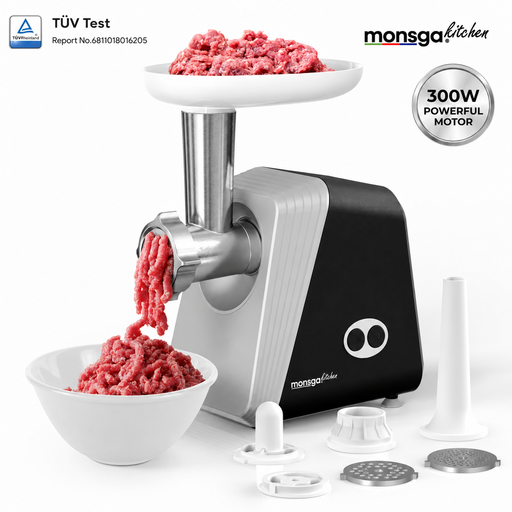
Why This Fits Their Persona: Suitable for shoppers who value a broader preparation system, including selectable mince textures and attachments for homemade sausages and kibbeh.
The specification separates 300W rated power from 1200W maximum power and provides overload and overheat protection information.
Three cutting plates; sausage stuffer; kibbeh and cookie makers; reverse function; cord storage. Removable parts are specified for hand washing.
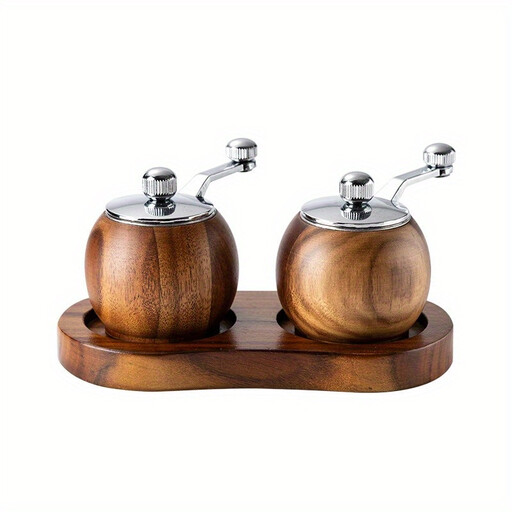
Why This Fits Their Persona: This compact grinder set may suit shoppers looking for a smaller, focused grinding solution, but the listing provides limited technical detail, so confirm intended ingredients and operation before purchase.
It is presented as a set rather than a high-powered appliance, reducing the risk of assuming that an accessory-style grinder can process large batches.
Three-piece set format. Detailed power, capacity and operating limits are not provided on the supplied listing, so check the product page carefully.
Before using an electric meat grinder:
For a machine with a reverse function, switch off first and wait until the blade has stopped. Use reverse briefly to help clear a blockage, then switch off again before checking the feed tube.
Wash detachable metal parts by hand with warm water and mild washing-up liquid unless the manufacturer specifically confirms dishwasher compatibility. Dry them promptly and keep the motor base dry. For large batches, allow the appliance to cool according to its instructions rather than judging capacity by hopper size alone.
We have compiled a complete, real-time list of products that fully satisfy these strict selection criteria and UK safety regulations.
Yes, a home meat mincer can be practical for burgers, meatballs, sauces and meal preparation. Choose a model with suitable grinding plates, manageable cleaning and an operating cycle that matches your portion sizes. It is not a substitute for a commercial machine when processing very large quantities continuously.
A meat mincer pushes ingredients through an auger and cutting plate, creating a more consistent mince with selectable textures. A food chopper uses rapidly moving blades in a bowl and is generally suited to chopping meat and vegetables in short cycles. A chopper can be convenient for smaller portions, while a mincer is more appropriate for homemade sausages or controlled mince texture.
Running cost depends on the appliance’s actual power consumption and the time it operates. A 300W appliance uses less electricity per hour than a higher-rated model, but peak power claims do not necessarily represent continuous consumption. Short processing cycles, correct ingredient preparation and regular cooling can help avoid unnecessary operation and motor strain.