
24/7 Customer Support

Free returns

Same-day & Next-day Delivery

Quality Guaranteed

Unlock Your Welcome Offers: FREE Delivery | Up to 80% OFF | Free 30-day JoyPlus trial
Download the APP
Navigating the growing market for an electric moped UK residents can legally ride can feel overwhelming. With promises of zero emissions and low running costs, it's easy to be drawn in by appealing marketing. However, many first-time buyers encounter frustrating issues that could have been avoided. Certain design choices and overlooked details can turn a dream purchase into a daily inconvenience.
As the Joybuy Product Recommendation Officer, my role is to help you see past the hype. This guide focuses on the practical realities of owning an electric moped in the UK, highlighting three common pitfalls to help you make a choice that fits your lifestyle, not just the showroom floor.
One of the most common points of frustration is battery range. A manufacturer's advertised range is almost always calculated under ideal conditions: a lightweight rider on a flat, smooth surface in warm weather and at a consistent, moderate speed. Real-world UK commuting involves hills, stop-start traffic, colder temperatures and carrying a backpack, all of which can significantly reduce the actual distance you can travel on a single charge. Relying solely on the advertised figure can lead to range anxiety or, worse, being stranded far from a plug socket.
For the many UK residents living in flats or terraced houses without a garage or private driveway, charging can be a logistical puzzle. A moped with a fixed, non-removable battery requires you to park it next to a power outlet. This is often impractical and can involve running extension cords across public pavements, which may be unsafe or against local regulations. An electric moped with a removable battery is a far more practical solution, allowing you to carry the battery indoors and charge it at your convenience.
The initial purchase price is rarely the final figure. To make your vehicle a road legal electric scooter, there are several mandatory costs that are easy to overlook. These include the DVLA first registration fee, annual road tax and third-party insurance. Furthermore, many manufacturers require a professional Pre-Delivery Inspection (PDI) by an authorised mechanic to activate the warranty, which comes at an additional cost. Factoring these expenses in from the start gives you a much clearer picture of the total investment.
To avoid these traps, focus on a few key specifications that determine the day-to-day usability of your moped.
For a moped to be road-legal for riders aged 16 and over, it must fall into the L1e-B vehicle category. This classifies it as a 50cc equivalent electric moped, with its top speed restricted to 28 mph (45 km/h). To ride one, you will typically need a provisional licence with a valid Compulsory Basic Training (CBT) certificate. However, if you hold a full car licence that was issued before 1 February 2001, you may be able to ride one without completing a CBT. Always check the latest guidance on the GOV.UK website.
As mentioned, a removable battery is a critical feature for urban and suburban living. Look for models that allow you to unlock and lift the battery out easily. Check its weight—a battery over 20kg can be cumbersome to carry up several flights of stairs. Also, note the charging time from 0% to 100% using a standard UK 3-pin plug. A typical charge time of 4-6 hours allows for convenient overnight charging.
While the top speed is capped at 28 mph, the motor's power (measured in Watts or kW) affects acceleration. A motor with higher torque will feel more responsive when pulling away from traffic lights. When assessing range, take the advertised figure and reduce it by at least 30% to estimate your likely real-world performance. Consider your daily round-trip commute and ensure the moped you choose offers a comfortable buffer to prevent daily charging.
Based on these practical considerations, here are a few models matched to different rider profiles.
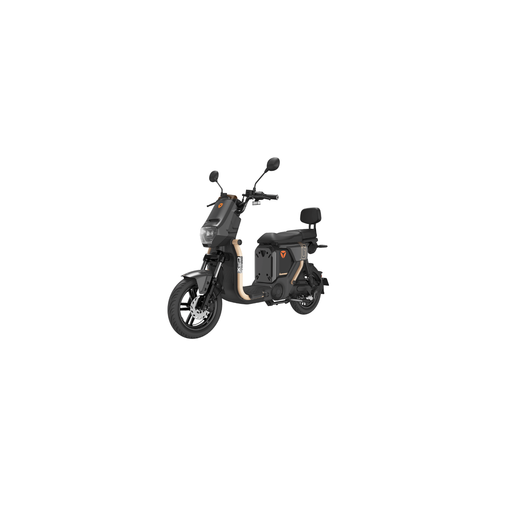
Why This Fits Their Persona: This model is well-suited for the typical commuter electric scooter UK user. Its 30-mile range is ample for most daily round trips to the office or train station and its lightweight design makes it nimble in city traffic.
It features a lightweight 8.5kg removable battery, directly solving the charging dilemma for those in flats. The purchase information clearly outlines the process for DVLA registration and warranty activation, preventing unexpected costs.
A fast 4-hour charge time minimises downtime. It also includes a comprehensive suite of app-based security features like GPS tracking and anti-theft alerts.
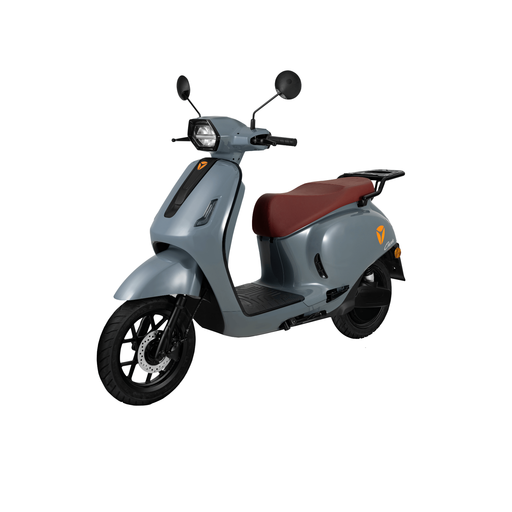
Why This Fits Their Persona: This is for the rider with a longer suburban commute or who uses their moped for more than just A-to-B travel, such as local delivery work. The extended range provides a crucial buffer, reducing the need for daily charging.
Its 50-mile stated range directly counters the "inflated range" pitfall by offering a substantial capacity that holds up better in real-world conditions. It also maintains charging flexibility with a removable battery.
The combination of a 50-mile range and a powerful 2.8kW motor provides both endurance and confident performance. It is a strong choice for those prioritising capability.
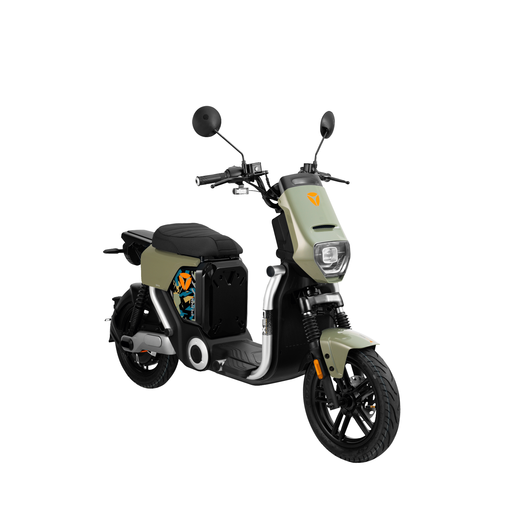
Why This Fits Their Persona: This is a great starting point for new riders who are particularly concerned about vehicle security in an urban environment. The YADEA electric moped range integrates smart features that offer peace of mind.
Many entry-level mopeds have minimal security. This model avoids that by including a full suite of app-controlled features like GPS tracking and movement alerts, which are often expensive after-market additions.
Security is managed seamlessly through a dedicated app, including remote locking, vehicle removal alerts and auto wheel lock. The inclusion of a 2-year warranty and roadside recovery adds further reassurance.
We have compiled a complete, real-time list of products that fully satisfy these strict selection criteria and UK safety regulations.
To ride an L1e-B category electric moped (up to 28 mph), you generally need to be at least 16 years old and have a provisional licence with a valid Compulsory Basic Training (CBT) certificate. However, if you obtained your full car driving licence before 1 February 2001, you are permitted to ride a moped in this category without needing to complete a CBT.
The running costs are significantly lower than for a petrol vehicle. A full charge typically costs less than ?1 in electricity. The main ongoing expenses are insurance (which is mandatory) and annual road tax (which is currently ?26 for electric vehicles, but always check the DVLA for the latest rates). You will also have an initial one-off DVLA registration fee of ?55.
Modern lithium-ion batteries, like those found in YADEA models, are designed for longevity. They can typically handle hundreds of full charge-and-discharge cycles, which for a daily commuter translates to many years of service. The lifespan depends on usage and care. To maximise it, avoid leaving the battery fully discharged for long periods and always use the manufacturer-supplied charger.