
24/7 Customer Support

Free returns

Same-day & Next-day Delivery

Quality Guaranteed

Unlock Your Welcome Offers: FREE Delivery | Up to 80% OFF | Free 30-day JoyPlus trial
Download the APP
Electric motorcycles and mopeds are becoming a practical option for UK commuting, short urban journeys and leisure riding. However, a low purchase price or impressive headline range does not automatically mean a suitable vehicle for British roads.
Before choosing from the growing UK electric motorcycle market, check three areas carefully: road legality, real-world range and after-sales support. These details can make the difference between a convenient daily vehicle and an expensive purchase that cannot be used as intended.
Some listings use terms such as “electric motorcycle” or “electric scooter” broadly. That does not mean every model can be ridden on public roads.
An off-road electric dirt bike may be designed only for private land or designated tracks. It may not have the required type approval, registration documentation, lighting or road equipment for public use. The VIPCOO H3, for example, is described as an off-road motorcycle for private land and designated tracks, and is not licensed for public roads.
If you need an electric moped UK commuters can use legally, look for the stated vehicle category, type approval information and registration guidance rather than relying on the product title.
A quoted range is usually a reference figure, not a promise for every journey. Rider weight, speed, gradients, cold weather, tyre pressure, road surface and battery condition can all affect results.
A claimed 50-mile range may therefore be more useful as a comparison point than as a daily planning figure. Leave a sensible reserve for return journeys, especially during colder months or when travelling on hilly routes.
The purchase price is only one part of the budget. A road-legal electric moped may also require:
For supported models, check who handles warranty work, whether parts are held in the UK and whether roadside recovery is included.
The YADEA OWIN and YADEA GFX are listed as L1e-B electric mopeds, equivalent to a 50cc moped, with a maximum speed of 28 mph. The stated minimum riding age is 16, with an AM licence requirement. Depending on your circumstances, this may involve a provisional licence and CBT. Some riders with older UK car-licence entitlements may have different rights.
Always confirm your position using current GOV.UK motorcycle and moped guidance and CBT guidance. The rider remains responsible for insurance, documentation, registration and legal equipment.
A Certificate of Conformity alone may not be sufficient for DVLA registration. The YADEA listings state that buyers should contact the UK importer and follow the supplied registration information. Listed costs include £55 DVLA registration, £26 road tax and an optional £25 number plate through the importer, with delivery charges potentially applying.
Battery voltage and amp-hour capacity help explain the vehicle’s energy storage:
A removable battery can be useful for riders without a garage or outdoor socket. Check the battery weight, available indoor storage and whether you can safely carry it upstairs. Use only the approved charger and follow the manufacturer’s storage instructions.
For urban riding, examine tyre construction, lighting, braking equipment, load limits and water-resistance information. For off-road riding, suspension travel, ground clearance, tyre pattern and braking hardware become more important.
The VIPCOO H3 includes front hydraulic shocks, rear nitrogen suspension, all-terrain tyres and dual hydraulic disc brakes. Its IPX4 rating and off-road design do not make it a road-legal or all-weather public-road vehicle. Treat the intended-use statement as a core specification, not a minor footnote.
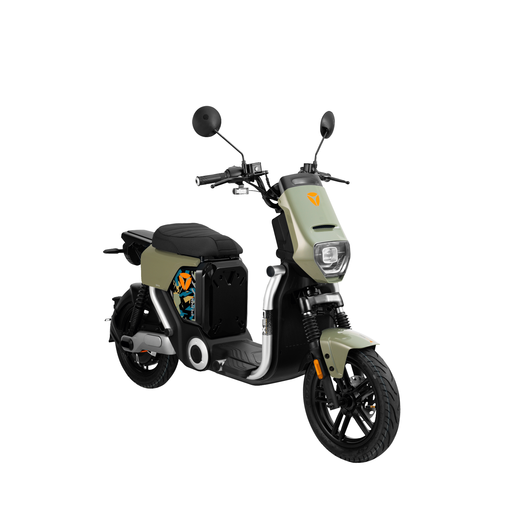
Why This Fits Their Persona: A compact option for new riders making short urban trips, provided they complete the required registration and licensing steps.
Its listing identifies the vehicle as an L1e-B electric moped and states the registration and licence requirements clearly.
28 mph stated maximum speed, removable 48V 24Ah battery and approximately four-hour full charge.
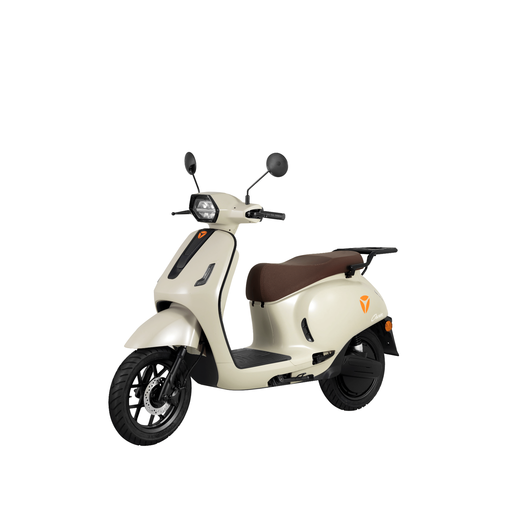
Why This Fits Their Persona: Suited to regular commuters who want a larger stated battery capacity and connected security functions for town riding.
The listing explains range limitations, registration requirements, PDI activation and UK after-sales arrangements.
72V 30Ah removable battery, up to 50 miles stated range, GPS tracking and two-year roadside recovery inclusion.
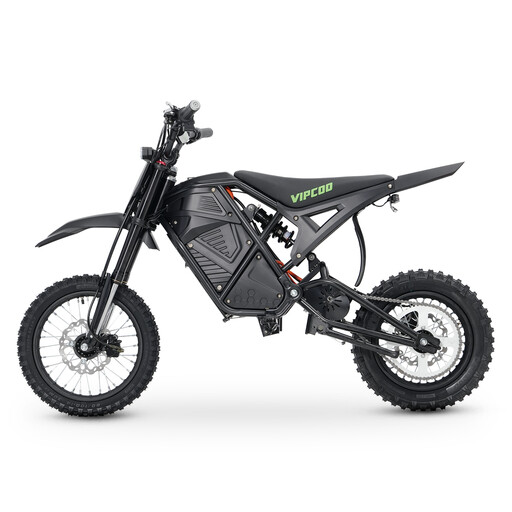
Why This Fits Their Persona: Intended for leisure riders using private land, off-road tracks or motocross environments rather than daily road commuting.
Its listing states that it is not approved for public roads, reducing the risk of buying an off-road vehicle for commuting.
3,500W motor, removable 48V 23Ah battery, front and rear suspension and dual hydraulic disc brakes.
Practical accessories can protect the vehicle and make daily use easier. A correctly sized Oxerbog waterproof motorcycle cover includes elastic straps, windproof buckles, reflective strips and keyholes for a separate chain lock. Check the 245 x 105 x 125 cm dimensions against your motorcycle before ordering.
For navigation, the Oxerbog motorcycle phone mount supports phones between 4.7 and 7 inches, subject to its thickness limit. Secure the mount firmly and avoid handling your phone while riding.
We have compiled a complete, real-time list of products that fully satisfy these strict selection criteria and UK safety regulations.
Usually, an L1e-B moped requires the appropriate AM entitlement. Riders aged 16 or over may need a provisional licence and CBT, depending on their existing entitlement. Confirm the current rules with GOV.UK before riding.
A road-legal electric moped generally needs registration, a number plate, insurance and road tax before use on public roads. A Certificate of Conformity may support the process but may not be sufficient by itself.
Electricity costs depend on battery capacity, your tariff and charging habits. You should also budget for insurance, registration, road tax, tyres, servicing and battery replacement over the vehicle’s ownership period. A removable battery and home charging can make routine charging more convenient, but advertised range should not be treated as a guaranteed distance.