
24/7 Customer Support

Free returns

Same-day & Next-day Delivery

Quality Guaranteed

Unlock Your Welcome Offers: FREE Delivery | Up to 80% OFF | Free 30-day JoyPlus trial
Download the APP
An electric multi cooker can reduce the need for separate pans, steamers and slow cookers, but choosing the wrong model may leave you with a bulky appliance, inadequate capacity or a coating that is difficult to maintain.
Before buying, look beyond programme counts and promotional phrases. The most useful comparison points are practical: how much food the pot can hold, how it heats, which functions you will genuinely use and how safely it can be cleaned and stored.
A 5L or 6L pot does not mean you should fill it to the rim. Ingredients need room to circulate, and foods such as rice, pasta and pulses expand during cooking. Pressure cooking also requires space for steam and safe operation.
For everyday meals, a 5L multi cooker may suit a family, but a couple or single person may waste worktop space and energy with a large appliance. Conversely, a 1.2L or 1.6L portable electric cooker is unlikely to suit batch cooking.
“10-in-1” and “14-in-1” labels can sound impressive, but several programmes may simply adjust time or temperature. Check whether you actually need a pressure cooker, slow cooker, rice cooker, food steamer, yoghurt function or baking programme.
If you mainly prepare noodles, soup, stir-fries and hot pot meals, a straightforward electric hot pot with adjustable heat may be easier to use than a larger digital appliance.
A removable inner pot, dishwasher-safe accessories and a detachable cable can make a noticeable difference after every meal. However, the heating base, plug and cable must not be immersed in water.
UK shoppers should also confirm that the product includes a suitable UK plug or compatible 220–240V connection. Do not assume that a detachable cable means the supplied plug is suitable for British sockets.
Use capacity as a guide rather than a promise of servings:
Measure the available worktop and cupboard space, including room for the lid to open and steam to escape.
Wattage affects heating speed, but it is not a complete measure of performance. A 600W portable electric cooker can be appropriate for a small serving, while a 1,200W–2,000W appliance is more suitable for larger volumes and rapid boiling.
Adjustable heat matters just as much. Low settings support simmering and slow cooking; higher settings are useful for boiling, frying and hot pot meals. For pressure models, check whether the appliance offers manual time and temperature controls as well as preset programmes.
A non-stick cooking pot can simplify cleaning, but use silicone, nylon or wooden utensils to reduce the risk of scratching. Stainless steel pots can be durable and suitable for browning, although food may require more attention during cooking.
Look for features such as:
Check the manual for the manufacturer’s cleaning instructions and confirm relevant conformity markings and documentation before purchase. Never force open a pressurised lid, and keep hands and face away from escaping steam.
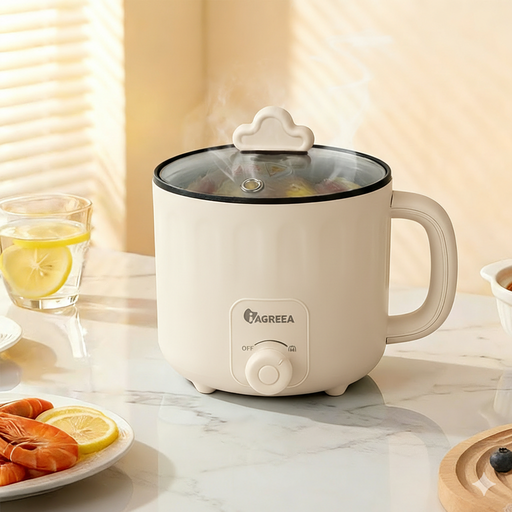
Why This Fits Their Persona: Its compact size suits students, solo households and small flats where cupboard and worktop space are limited.
The 1.6L capacity avoids paying for an unnecessarily large family appliance, while auto power-off and boil-dry protection address basic safety concerns.
600W heating, one-knob control, non-stick interior and a portable design for noodles, soup and small one-pot meals.
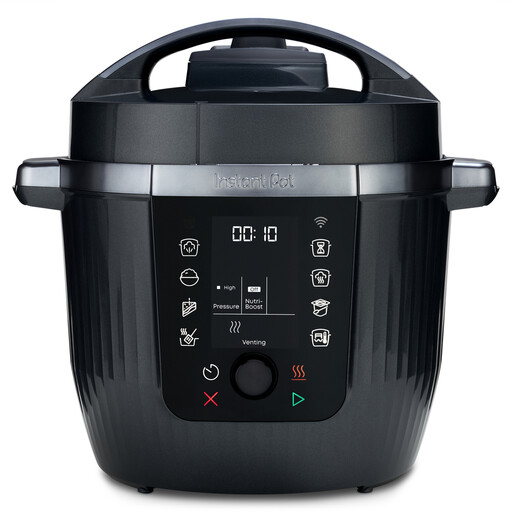
Why This Fits Their Persona: It suits households wanting several cooking modes in one established digital appliance for regular meal preparation.
Its listed functions are clearly specified, including pressure cooking, steaming, slow cooking and rice cooking, rather than relying only on a generic programme count.
5.7L stainless steel inner pot, digital controls and multiple built-in safety mechanisms for pressure cooking.

Why This Fits Their Persona: The wide 7L pot is designed for group hot pot meals, large soups and family gatherings where repeated cooking is inconvenient.
The capacity and 30.5cm opening are specified clearly, while high and low heat modes make the appliance more practical than a cooker offering only rapid boiling.
1600W power, glass lid, non-stick coating, 7L capacity and a listed UK plug connection.

Why This Fits Their Persona: Its 5L volume, delay timer and keep-warm function are suited to planned family dinners and batch cooking.
The 14 functions are itemised, including steam, stew, rice, pasta and slow cook, so buyers can check whether the programme list matches their recipes.
860W power, adjustable DIY function, dishwasher-safe removable pot and 24-hour delay timer.
We have compiled a complete, real-time list of products that fully satisfy these strict selection criteria and UK safety regulations.
Running cost depends on the appliance’s wattage, cooking time, tariff and meal size. A smaller cooker may use less electricity for one or two portions because it heats a compact vessel. Compare the rated wattage and avoid running a large appliance for small meals solely because it has more functions.
Some models combine slow cooking and rice cooking with steaming, sautéing or pressure cooking. A multifunctional cooking pot can replace separate appliances for many households, but check the pot size, programme controls and whether the inner pot is suitable for the recipes you prepare.
Lifespan varies with construction, frequency of use and maintenance. Avoid metal utensils on non-stick surfaces, clean the removable parts according to the manual and keep the heating base dry. For pressure models, inspect the sealing ring, steam valve and lid mechanism regularly, and replace parts only with compatible components.