
24/7 Customer Support

Free returns

Same-day & Next-day Delivery

Quality Guaranteed

Unlock Your Welcome Offers: FREE Delivery | Up to 80% OFF | Free 30-day JoyPlus trial
Download the APP
A fresh coat of paint can transform a space, but the thought of spending a weekend with rollers and brushes can be daunting. An electric paint sprayer promises a faster, smoother finish, turning a tedious chore into a satisfying project. However, the market is filled with models that can lead to frustration, wasted paint and a finish that’s far from professional.
As the Joybuy Product Recommendation Officer, my role is to help you navigate these choices. We will look past the marketing hype and focus on what truly matters for your UK home and garden projects. Before you buy, be aware of these common pitfalls that can turn your DIY dream into a messy reality.
To avoid these issues, it helps to understand a few core features. Focusing on these parameters will ensure you select a tool that is a help, not a hindrance.
Most electric sprayers designed for DIY use are HVLP spray gun models. This stands for High Volume, Low Pressure. In simple terms, the gun uses a high volume of air to atomise the paint at a low pressure. The main benefit for you is greater control and less overspray compared to high-pressure systems. This means more paint lands on your project and less is wasted as a fine mist in the air, making it ideal for detailed work like a paint sprayer for furniture or for use in less-ventilated indoor spaces.
The nozzle is where the magic happens. A quality DIY paint sprayer should come with at least two nozzle sizes.
Equally important are the adjustable spray patterns. A good sprayer will offer at least three: a horizontal fan for up-and-down movements, a vertical fan for side-to-side strokes and a circular pattern for detailed or intricate objects. This adaptability is what makes a tool a true all-rounder, capable of acting as an electric fence paint sprayer one day and a furniture finisher the next.
For any project that takes more than a few minutes, the weight of the tool is critical. Look for a lightweight paint sprayer, as this will dramatically reduce fatigue and improve your control over the application. A lighter tool is easier to manoeuvre, allowing you to maintain a consistent distance and speed, which is the secret to a flawless, drip-free finish. An ergonomic handle that fits comfortably in your hand is just as important.
Based on these practical criteria, here are some recommendations matched to common UK DIY profiles.
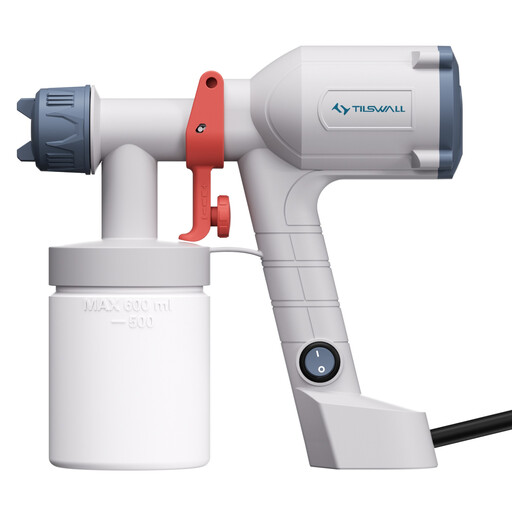
Why This Fits Their Persona: This user tackles a variety of jobs around the house and garden, from painting the shed to a feature wall. They need a reliable, no-fuss tool that can adapt to different tasks without a steep learning curve.
Its ultra-lightweight design directly counters the fatigue pitfall, making larger jobs manageable. The inclusion of two nozzles and three patterns busts the "one-size-fits-all" myth by providing genuine versatility.
Advantage: Exceptionally lightweight build reduces user strain. Pros: Comes with 1.5mm and 2.0mm nozzles; features a 600ml detachable cup for quick refills.
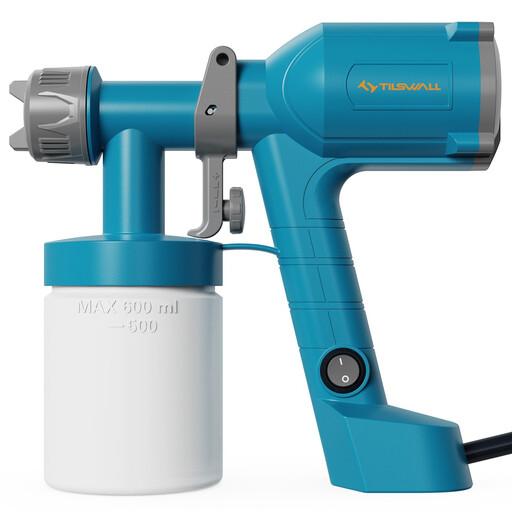
Why This Fits Their Persona: This user loves giving old furniture a new lease of life. They need a tool that offers precision for detailed work on cabinets, chairs and tables, and is light enough to handle without causing arm ache.
The detachable cup and nozzle design directly addresses the cleaning hassle, making post-project cleanup far less of a chore. Its three spray patterns provide the control needed for intricate surfaces, avoiding the poor results of a "one-size-fits-all" tool.
Advantage: Multiple spray patterns for superior control on complex shapes. Pros: Easy to disassemble for thorough cleaning; lightweight body allows for steady, precise application.
With your painting projects sorted, perhaps it's time to think about the finishing touches for your outdoor space.
We have compiled a complete, real-time list of products that fully satisfy these strict selection criteria and UK safety regulations.
This is one of the most critical steps. Always refer to the paint sprayer’s instruction manual and the paint tin. Most sprayer kits include a viscosity cup. You fill the cup with your thinned paint and time how long it takes to empty. The manual will specify the ideal time (e.g., 40-60 seconds). As a general rule, aim for the consistency of single cream. It is always better to do a quick test spray on a piece of cardboard first.
It can be, but it doesn't have to be. The key is to choose a model that is designed for easy disassembly and to clean it immediately after you finish painting. Letting paint dry inside the gun is what causes problems. For water-based paints, you can simply run warm, soapy water through the system. For oil-based paints, you will need to use the appropriate solvent, like mineral spirits.
Yes, a versatile DIY paint sprayer is perfectly suited for both. The trick is to use the correct nozzle and paint consistency for each job. You would use a larger nozzle and thicker paint (like emulsion) for a wall, and potentially a smaller nozzle with a thinner paint, stain or preservative for a fence. A model with interchangeable nozzles and adjustable patterns gives you the flexibility to tackle a wide range of projects effectively.