Small-group cottage cooks
If you are making drop scones for one to four people, you may prefer a manageable pan to a deeper cooker intended for shared meals.


For drop scones in a holiday cottage, look for an electric pan with adjustable heat and enough flat cooking area for the batches you plan to make. A 30 cm pan is a practical starting point for a small group; a deeper cooker makes more sense if you also want to prepare shared meals, but takes more room to carry and clean. If the cottage has a working, compatible hob, a conventional frying pan is another option.
If you are making drop scones for one to four people, you may prefer a manageable pan to a deeper cooker intended for shared meals.
A plug-in pan gives you a separate cooking surface when the cottage hob is limited, inconvenient or already occupied. It may also serve for other simple meals.
If you expect several batches or want to cook shared meals too, cooking area and pan depth may matter more than packing the smallest appliance.
If the cottage has a working, compatible hob, consider whether you need a separate electric appliance at all. If you do, start with heat control, then choose a cooking area that suits your group and the available worktop.
| Concern | What to check | Who this matters to |
|---|---|---|
| Adjustable heat | Look for a thermostat or several heat settings; check the manual rather than treating the maximum setting as a drop-scone setting. | If successive batches brown too quickly, I want to lower the heat without relying on a fixed output. Around 36% of consumers put controllable heat first. |
| Hob independence | Check the socket arrangement and instructions for the lead and connector; consider a detachable cord if serving away from the socket matters. | When the cottage hob is busy or unsuitable, I need a separate place to cook breakfast. Hob independence is the primary concern for roughly 29% of consumers. |
| Batch size | Check cooking-surface dimensions; consider extra depth only if you also plan one-pot meals. | For a larger breakfast group, I would rather have room for more drop scones at once, even if the pan takes up more worktop space. About 21% of consumers prioritise cooking capacity. |
| Cleaning and storage | Read the model-specific cleaning instructions and check its external size and weight before packing. | I can accept more batches if the appliance is easier to carry, cool and put away. Ease of cleaning and storage comes first for around 14% of consumers. |
Depth and capacity help with shared meals, but drop scones also need usable flat cooking area and controllable heat. A deeper cooker takes more room to transport and use.
Choose the deeper format if you expect to use it for one-pot meals as well as breakfast; otherwise, compare shallower pans that fit your planned batches.
Electrical inlets and connectors still need model-specific care. Judge Cookware's JEA23 instructions say not to immerse the skillet in water.
Read the care instructions before buying, keep electrical parts dry and clean the cooled pan only as its manual directs.
A pan needs suitable worktop and socket space, and the property may have rules about guests bringing appliances. The Health and Safety Executive advises maintaining portable electrical equipment to prevent danger.
Ask the host about appliance use, inspect the pan and lead before cooking, and do not use damaged equipment or a socket arrangement that is unsuitable for it.
Judge Cookware's JEA23 electric skillet is an option for cooks who want a thermostat-controlled surface independent of the cottage hob.
VonShef's 30 cm round multi-cooker is worth considering when the same appliance will also be used for shared meals.
Quest Appliances lists 30 cm and 40 cm electric frying pans, giving cooks a choice of size for different groups.
This conventional frying pan is an option for drop scones if your cottage has a working, compatible hob. It does not provide a separate electric cooking surface.
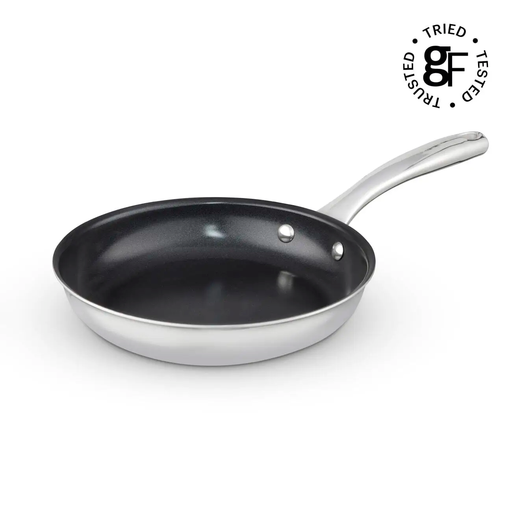 Image unavailable
Consider this conventional pan for drop scones when you can use the cottage hob. Its product name specifies a 30 cm size, stainless steel and induction compatibility; check that the available hob is suitable before relying on it.
A 30 cm pan is a practical starting point for a couple or small group. Consider a larger cooking surface if you need more drop scones in each batch, or a deeper cooker if you will also make shared one-pot meals; check its overall size against the cottage worktop and your luggage.
Adjustable control is useful for changing the heat as successive batches brown. Check the model's controls and instructions, and use the first batch to judge whether to raise or lower the setting rather than assuming its maximum temperature is right for drop scones.
Follow the exact model's cleaning instructions rather than assuming its body can be immersed. Judge Cookware says its JEA23 skillet must not be immersed; let the pan cool and keep its electrical connections dry while cleaning it as directed.
Confirm that the host permits it and that you have a stable, heat-safe place and a suitable mains socket. Check the lead, plug and connector for damage, keep electrical parts dry and follow the appliance instructions before cooking.