Weekly broth batch cookers
If you regularly make mushroom broth for soups, sauces, grains or freezer portions, the useful comparison is how much you can cook per permitted batch—not just the capacity printed on the cooker.


Start by comparing how much broth you need to make in one batch: a 5.7–6L cooker is a sensible starting point for regular home batches, while a larger model may suit meal prep if you have room for it. The stated capacity is not a safe pressure-cooking fill level, so check the exact model’s instructions before planning a batch; then weigh up sautéing, pressure-release controls and cleaning against the functions you will actually use.
If you regularly make mushroom broth for soups, sauces, grains or freezer portions, the useful comparison is how much you can cook per permitted batch—not just the capacity printed on the cooker.
If you want several portions at once but have limited worktop or cupboard space, compare the cooker’s dimensions as well as its stated capacity.
If steam release and handling a hot inner pot are unfamiliar, give the model’s instructions, release controls and cleaning requirements as much attention as its cooking modes.
For mushroom broth, work out the batch size you need, then compare the cooking workflow and the handling required once pressure cooking ends.
| Concern | What to check | Who this matters to |
|---|---|---|
| Usable batch capacity | Compare stated capacity with any usable-volume figure and the model’s maximum-fill instructions. Sage specifies a 6L bowl but 4L usable volume for the Fast Slow GO. | If mushrooms, aromatics and liquid must fit into one cooking cycle, I need enough permitted fill space without giving up more worktop room than necessary. Around 42% of consumers put batch capacity first. |
| Broth workflow | Check for pressure-cook and sauté settings. If you want a programme or a particular release method, check those controls on the exact model. | When I prepare broth repeatedly, I want cooking steps and pressure release that I can manage comfortably. Roughly 33% of consumers prioritise that workflow. |
| Safe handling and clean-up | Read the manual’s lid, valve and release instructions; check inner-pot care and make room to cool and store the finished batch. | If I am new to pressure cooking or making a full pot, I need to handle hot liquid confidently and have containers ready afterwards. About 25% of consumers put handling and clean-up first. |
Ingredients and liquid share the pot, and pressure cooking requires room below the permitted fill level. Sage, for instance, specifies 4L usable volume for its 6L Fast Slow GO bowl.
Check usable volume where stated, then use the exact model’s fill markings and manual when planning a batch.
Air-frying or other additional modes do not replace the pressure-cook setting needed for this cooking plan. They matter more if you expect to use the cooker for other meals too.
Compare capacity, sautéing, controls and inner-pot care before deciding whether extra modes are useful to you.
Pressure release needs to follow the appliance instructions, and a pot of hot broth can be heavy to lift. Instant Pot’s XL manual calls for a stable, non-combustible, level surface.
Read the exact manual before use, protect your hands when handling the pot and do not open the cooker while it remains pressurised.
A larger batch also needs suitable containers and space for cooling and storage. A Food Standards Agency-commissioned literature review recommends refrigerating leftovers within two hours.
Prepare containers and fridge or freezer space before starting the batch.
The Classic range gives buyers a choice between a 5.7L model and a larger 7.1L XL model for meal prep.
The Fast Slow GO suits buyers interested in stock-oriented settings and a choice of steam-release modes.
The HyperHeat PC201 is a multi-function option for households planning to use the appliance beyond broth-making.
These choices include two 5.7L cookers to compare for regular broth batches and one 3.8L option for smaller batches. Check each model’s permitted pressure-cooking fill level before deciding how much broth to make at once.
 No image available
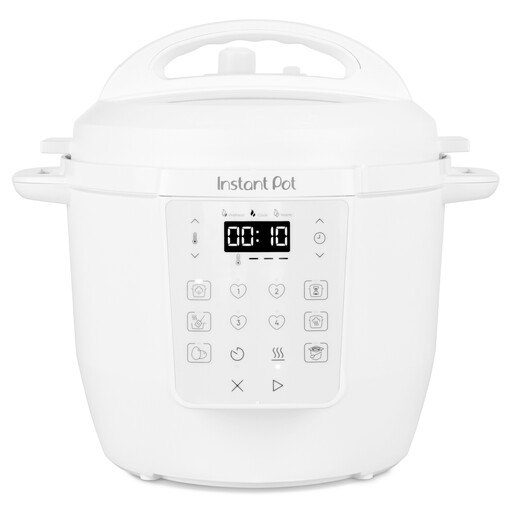
Consider this 5.7L cooker if you want to sauté ingredients and pressure cook in the same appliance. Its listed features include a ceramic non-stick coating; check the exact instructions for the permitted broth fill level and pressure-release method.
 No image available
For regular broth batches, compare this 5.7L model’s permitted fill level with the quantity you intend to cook. Check the Sea Salt model’s instructions for its cooking settings, pressure release and inner-pot care.
 No image available
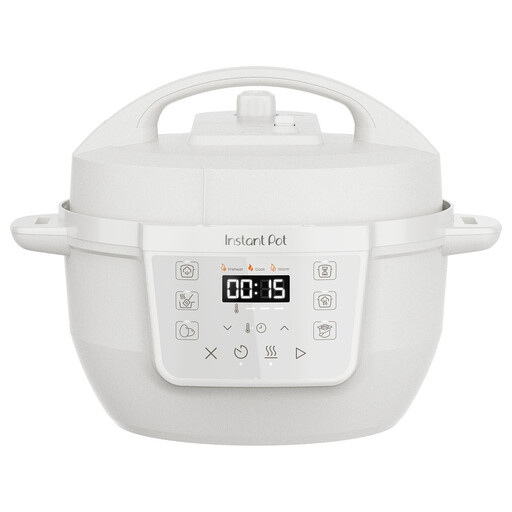
This 3.8L variant is the smaller-batch choice in this group, rather than a substitute for a larger weekly cook. Compare its permitted pressure-cooking fill level with your recipe and check the exact model’s controls and inner-pot instructions.
It is a useful starting size for regular home batches, but the broth you can pressure cook at once depends on the exact model’s usable volume and fill limit. Sage states 4L usable volume for its Fast Slow GO despite its 6L bowl; compare the manual with the amount of ingredients and liquid in your recipe.
No dedicated Stock programme is necessary if the cooker has the pressure-cook controls your recipe calls for. A Stock shortcut, such as the one Sage lists for the Fast Slow GO, may appeal if you prefer programme-led cooking; check how the exact model handles pressure release too.
Follow the exact appliance manual and recipe for filling and release, and wait until the cooker is depressurised before opening it. The Instant Pot XL manual specifies a stable, non-combustible, level surface; protect your hands when lifting a hot inner pot.
Have suitable containers and storage space ready before cooking. A Food Standards Agency-commissioned literature review recommends refrigerating leftovers within two hours; divide the finished broth into suitable containers so you can cool and store it promptly, following any recipe-specific advice.