
24/7 Customer Support

Free returns

Same-day & Next-day Delivery

Quality Guaranteed

Unlock Your Welcome Offers: FREE Delivery | Up to 80% OFF | Free 30-day JoyPlus trial
Download the APP
An electric pressure cooker promises to be the ultimate kitchen timesaver, turning complex recipes into simple, one-pot meals. Yet, many UK households end up with a bulky appliance that either gathers dust or fails within a year. The market is filled with models boasting endless functions and flashy features, making it easy to choose a machine that underdelivers.
Before you invest, it is crucial to understand the common pitfalls. Many buyers are swayed by marketing hype, only to face disappointment. Here are the key issues to watch out for:
To avoid these traps, focus on the fundamental specifications that determine an electric pressure cooker's performance and longevity.
The size of the inner pot, measured in litres, is your first consideration. A pot that is too small will limit you to single portions, while one that is too large is inefficient for smaller meals and takes up unnecessary counter space.
The inner pot is the heart of the appliance. The material dictates how you cook and clean.
Instead of chasing the highest number of functions, ensure the model you choose excels at the essentials. A quality 9-in-1 multi cooker should seamlessly combine the roles of a slow cooker and pressure cooker. Key functions to look for are:
Advanced features like a sous vide cooker function or a yogurt maker are excellent additions for culinary enthusiasts but should be considered bonuses after the core functions are confirmed to be solid.
Here are a few options that align with different user needs, helping you sidestep the common purchasing traps.

Why This Fits Their Persona: This user wants maximum versatility without compromising on quality. The 5.7L capacity is perfect for family meals, and the inclusion of a sous vide cooker function appeals to their adventurous cooking style. The clear LED display and 14 presets make it powerful yet approachable.
It features a high-quality ceramic non-stick pot, directly addressing the issue of flimsy, short-lived coatings. The functions are well-defined and genuinely useful, avoiding the "99-in-1" gimmick.
Excellent balance of core functions and advanced features like sous vide. The food-safe ceramic pot makes for effortless cleaning.

Why This Fits Their Persona: This user prioritises longevity and performance over non-stick convenience. They want a workhorse for frequent use. The 6L stainless steel pot is perfect for searing meats and can withstand heavy use and metal utensils without damage.
By using a robust stainless steel pot, it completely sidesteps the peeling non-stick issue. Its 10 programs are focused on core cooking methods, providing practical utility rather than gimmicks.
Superior durability and excellent for high-heat sautéing. The single-pot design still simplifies clean-up compared to using multiple pans.
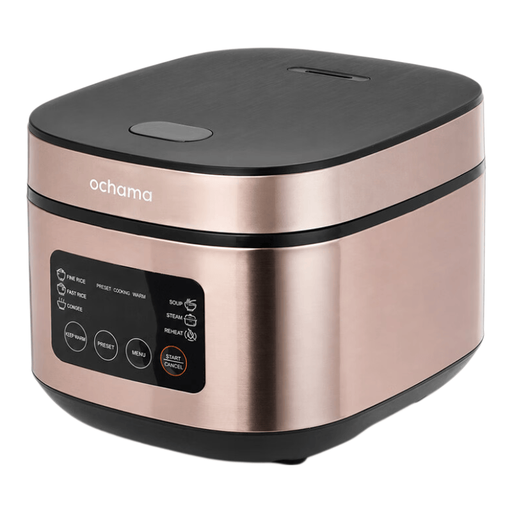
Why This Fits Their Persona: This user is drawn to one-pot cooking but doesn't need high-pressure functions. Their main goal is perfectly cooked rice, porridge and steamed meals. This 4L rice cooker is a practical, efficient choice for daily use in a small family.
It avoids the "function overload" trap by focusing on what it does well: cooking grains and steaming. The PFOA-free ceramic pot also dodges the cheap non-stick issue, offering safe and easy cleaning.
Simple, intuitive controls and a clear LED display make it very user-friendly. It's an affordable, space-saving appliance that excels at its core purpose.
We have compiled a complete, real-time list of products that fully satisfy these strict selection criteria and UK safety regulations.
An electric pressure cooker is generally more energy-efficient than a conventional oven or hob. A typical 1000W model used for one hour would consume 1 kWh of electricity. Given that pressure cooking significantly reduces cooking times (often by up to 70%), the overall energy consumption per meal is quite low, making it a cost-effective choice for regular use.
Neither is definitively "better"—it depends on your priorities. Choose stainless steel if your top priority is durability, longevity and the ability to sear meat at high heat. Choose a ceramic non-stick pot if your priority is effortless clean-up and cooking delicate or sticky foods without them catching on the bottom.
Yes, one of the main advantages of modern electric pressure cookers is that they are designed for unattended operation. They are equipped with multiple safety mechanisms, including pressure regulators, lid-locking sensors and auto-shutoff features. Once you have set the program, you can safely leave it to complete its cooking cycle. It will automatically switch to a "keep warm" mode once finished. However, always ensure it is placed on a stable, heat-resistant surface away from flammable items.