Solo small-batch soup cook
You usually make one meal, perhaps with a leftover portion. A compact bowl appeals, but your recipe still has to meet the cooker’s liquid and pressure-fill instructions.


For mostly single portions of cabbage soup, a compact electric pressure cooker is a sensible starting point; a larger bowl is more useful if you regularly make leftovers. Whatever the stated capacity, check that your recipe meets the exact model’s minimum-liquid requirement and stays below its pressure-cooking fill line. Extra cooking functions are worth considering only if you will use them for other meals.
You usually make one meal, perhaps with a leftover portion. A compact bowl appeals, but your recipe still has to meet the cooker’s liquid and pressure-fill instructions.
You cook for yourself but make several portions at once. You need enough usable cooking room, containers for the extra soup and a plan for chilling or freezing it.
You would rather have controls and lid instructions you can follow confidently than a long list of programmes. Steam release and cleaning are part of your choice, not afterthoughts.
Start with the amount of soup you actually make, then check the model’s pressure-cooking limits and the work involved in using and cleaning it.
| Concern | What to check | Who this matters to |
|---|---|---|
| Bowl size and headroom | Compare bowl capacity with the recipe’s liquid requirement and the marked pressure-cooking fill limit. | I usually make one bowl of soup and do not want a cooker that takes up more space than I need, but the batch must still fit within its operating limits. Around 42% of consumers put portion size and pressure-cooking headroom first. |
| Operation and cleaning | Read the lid and steam-release instructions; check which removable parts can be washed as you prefer. | When soup is a routine meal, I want to seal, release and clean the cooker without making the process feel like another chore. Roughly 33% of consumers prioritise straightforward operation and clean-up. |
| Leftovers | Check the intended batch against the usable fill limit and make sure you have containers for extra portions. | I would rather cook several meals at once, provided I can promptly store the soup I will not eat. For about 25% of consumers, making portions for later is the primary concern. |
The stated capacity is not the amount you can pressure-cook. For example, Instant Pot UK instructs Classic Mini users to add at least 375ml of water-based liquid and keep contents below its PC Max 2/3 line.
Check your usual cabbage-soup recipe against the minimum liquid and maximum pressure-fill instructions for the exact model.
A crisping lid or additional programmes may serve other meals, but they do not by themselves make a cooker more suitable for cabbage soup. Additional components can also take up storage space and add cleaning steps.
Decide which other meals you expect to cook before choosing functions beyond pressure cooking.
A larger batch leaves food to chill and store. GOV.UK guidance for England, Northern Ireland and Wales advises refrigerating cooked food within one to two hours and eating leftovers within 48 hours or freezing them.
Divide extra soup into smaller containers, refrigerate it promptly and freeze portions you will not eat within that period.
Without a workable storage routine, the extra portions may go to waste.
A stated cooking time does not necessarily cover the time taken to come to pressure and release it. Your recipe and the release method also affect when the soup is ready to serve.
Follow the instructions for your model and allow time for pressurising and release when planning the meal.
Instant Pot UK lists the Classic Mini as a 3.8L multi-cooker with pressure-cook, slow-cook, sauté, steam, egg, yoghurt and keep-warm functions.
Ninja Kitchen UK describes the Foodi Mini OP100UK as a 4.7L, 6-in-1 multi-cooker for up to two people, with pressure cooking and air frying among its functions.
Tefal UK lists the Turbo Cuisine CY756140 with a 4.8L bowl, one-dial control and 10 automatic programmes.
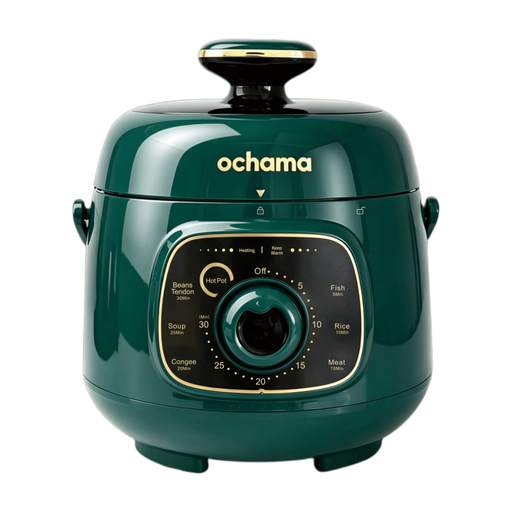
These two electric pressure cookers offer different stated capacities for a solo soup routine: 1.8L for smaller batches and 5.7L if you also want to make portions for later. Check each model’s pressure-cooking instructions against your recipe before choosing.
 No image available
Consider this compact cooker if you usually prepare a small portion of soup. Its stated capacity is 1.8L; check the model’s minimum liquid and pressure-fill line to see whether your cabbage-soup recipe fits.
 No image available
Consider the larger bowl if you intend to make soup for later meals as well as for one serving. This 5.7L, 9-in-1 model is an electric pressure multi-cooker; check its kitchen footprint, minimum liquid and pressure-fill line before deciding whether it suits your usual batch.
A 3.8L cooker is a reasonable starting point for a solo portion and some leftovers, provided your recipe fits the model’s pressure-cooking limits. Instant Pot UK specifies at least 375ml of water-based liquid and a PC Max 2/3 fill line for its Classic Mini; check other models’ own instructions rather than applying those figures to them.
Only if the recipe meets your cooker’s instructions for suitable liquid and fill level. Instant Pot UK says Classic Mini users should add water-based liquid, including when using canned, condensed or cream-based soup, to meet its 375ml minimum.
Cool and store extra portions promptly. GOV.UK guidance for England, Northern Ireland and Wales advises refrigerating cooked food within one to two hours and eating leftovers within 48 hours or freezing them; its food-handling guidance says reheated food should be steaming hot throughout and reheated only once.
Yes: check that the exact cooker is intended for your home supply rather than assuming that similarly named variants are identical. Instant Pot UK lists the Classic Mini at 220–240V, 50–60Hz; check the plug and documentation for the particular model you choose.