Cottage travellers cooking for one or two
If you are bringing the cooker with you, consider whether you can carry and store it easily and still make the amount of soup you want.


For a small group making cabbage soup, a 5.7L electric pressure multi-cooker is a sensible starting point only if the cottage host permits guest appliances and there is a suitable worktop and socket. A smaller cooker may be easier to carry for one or two diners; choose a larger one if the soup batch or other cooking modes justify the space. In every case, plan the recipe around the model’s pressure-fill and liquid instructions, not its stated pot capacity alone.
If you are bringing the cooker with you, consider whether you can carry and store it easily and still make the amount of soup you want.
You need room for the planned meal and perhaps leftovers, while allowing for the pot’s pressure-cooking fill limit and the space available in the cottage kitchen.
If you also plan to sauté, steam or slow-cook meals during the stay, a multi-cooker’s additional modes may be worth considering alongside its size.
Check that you can use and position a cooker at the cottage before choosing its capacity; then match the usable pressure-cooking volume to your soup batch and read the model’s release instructions.
| Concern | What to check | Who this matters to |
|---|---|---|
| Cottage fit and permission | Ask the host about guest appliances. Compare the cooker’s dimensions, weight and electrical rating with the available worktop, storage and socket. | If I have to carry the cooker and use an unfamiliar kitchen, I need to know it can be placed and plugged in safely before its features matter. Around 40% of consumers put cottage fit and permission first. |
| Usable soup capacity | Choose a pot size for the diners and planned leftovers, then check the model’s maximum pressure-fill level and minimum-liquid instructions. | When I am feeding a group, I need enough room for the intended soup batch without treating the stated litre capacity as the permitted fill level. Roughly 30% of consumers make usable capacity their primary concern. |
| Pressure release and cleaning | Read the exact model’s lid, valve, release and cleaning instructions; allow a clear route for steam. | I want to manage hot soup and steam safely in a kitchen I do not know, then clean the cooker before leaving. Approximately 30% of consumers prioritise pressure handling and clean-up. |
The pot’s litre rating is not the amount of soup you can necessarily cook under pressure. The cited Instant Pot DUO manual sets a two-thirds maximum fill and a stricter half-full limit for foods that expand.
Work out your soup quantity using the instructions for the exact cooker and ingredients you will use.
Even a cooker with the right functions may not fit the available worktop or the host’s rules. Instant Pot UK lists its Classic 5.7L at 5kg and 30.8 × 35.1 × 32cm.
Ask the host about guest appliances and check the available surface, socket and storage space before travelling with a cooker.
Air-fry or grill modes may be useful for other holiday meals, but they are not needed simply to pressure-cook cabbage soup. Consider whether you will use those modes enough to accommodate the appliance.
Start with pressure cooking, pot size, steam clearance and cleaning needs; assess additional programmes afterwards.
Hot liquid and released steam can scald. The Instant Pot DUO manual says not to move the cooker while it is under pressure or force it open before pressure has dropped.
Read your model’s release procedure before the trip, position it where steam can vent safely and follow that procedure before opening the lid.
Its UK pressure multi-cooker range includes compact and 5.7L options for different soup quantities and storage needs.
Foodi multi-cookers are relevant if you plan to use pressure cooking alongside other modes during the stay.
Its Good To Go 28270 is a 6.5L electric multi-cooker.
5 Minute CleverChef models are listed among the multi-cookers.
This compact electric pressure cooker is a choice to consider for a modest soup batch when packing and storage space matter. Check its usable pressure-cooking capacity against your recipe before choosing it.
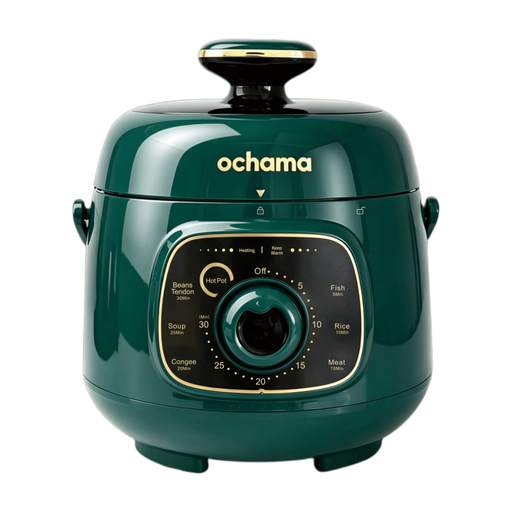 Image unavailable
Consider this 1.8L cooker for a modest cottage soup batch if its permitted pressure-fill level leaves enough room for your recipe.
Before use, check the model’s minimum-liquid and release instructions, its electrical rating, and the host’s appliance rules. Make sure the worktop offers sufficient space and safe steam clearance.
Do not assume you can: ask the host whether guest-owned countertop appliances are permitted at your booking. GOV.UK guidance on self-catering holiday homes in England addresses owners’ electrical-safety obligations, not permission for every guest to bring a cooker.
It can suit a small group or a meal with leftovers if it fits the kitchen and the recipe fits within the cooker’s pressure-fill limit. Instant Pot UK lists its Classic at 5.7L; the amount of soup you can make depends on the ingredients and that model’s instructions.
Check the exact model’s liquid requirement, fill limit, lid and pressure-release procedure before starting. Keep the steam path clear, and do not move or force open a cooker that is still pressurised.
No; app control is not a requirement for pressure-cooking soup. Focus on whether the cooker has the cooking functions you will use and instructions you can follow in the cottage kitchen.
Check that the cottage has a working fridge or freezer if you intend to keep leftovers. Follow Food Standards Agency guidance on cooling, storing and reheating cooked food rather than leaving the soup in the cooker for later.