Stock makers short on space
If worktop and cupboard space are tight, compare external dimensions with both places you might keep the cooker. A small bowl is useful only if it also holds a practical amount of stock ingredients.


A compact 3.8L electric pressure cooker is worth considering for modest chicken-stock batches if its pressure-cooking fill limit leaves enough room for your ingredients. A 4.8–5.7L model gives you more nominal capacity for batch cooking, but you still need to check its dimensions against your storage space and a suitable place to release steam. The stated capacity is not the amount you can fill when cooking under pressure.
If worktop and cupboard space are tight, compare external dimensions with both places you might keep the cooker. A small bowl is useful only if it also holds a practical amount of stock ingredients.
If you make stock for several meals or to freeze, consider the room left for bones, vegetables and liquid below the pressure-cooking fill limit, not just the capacity printed in the product name.
If this is your first pressure cooker, clear instructions for filling, checking the lid and valves, releasing steam and cleaning the parts may matter more to you than a long programme list.
Start with the amount of stock you intend to make, then check whether a cooker with enough usable capacity fits where you will store and operate it.
| Concern | What to check | Who this matters to |
|---|---|---|
| Footprint and storage | Compare the stated width, depth and height with your cupboard and worktop, including a suitable operating position for steam release. Instant Pot UK lists its 3.8L Classic Mini at 31.8 × 35.1 × 25.6cm (D × W × H). | I have little spare worktop or cupboard room and need to know where the cooker can stand and be put away. Around 42% of consumers put fit and storage first. |
| Usable stock capacity | Compare your usual bones, vegetables and liquid with the model's pressure-cooking fill limit and minimum-liquid instructions. The Instant Pot Duo manual limits filling to two-thirds of capacity. | I want enough stock for several meals without making repeated batches. For around 33% of consumers, usable batch size is the primary concern. |
| Steam handling and cleaning | Read the model's lid, valve and release instructions; check which removable parts can be washed and how. | I am new to pressure cooking and want to manage steam release and clean up after making stock. Ease of use is the first concern for around 25% of consumers. |
Bones, vegetables and liquid all take up room, while pressure cooking requires space below the maximum-fill line. A cooker's stated litre capacity is not its usable stock capacity.
Compare your intended ingredients with the exact model's pressure-mode fill guidance and minimum-liquid requirement before choosing a size.
Depth and height also determine whether a cooker fits, and an enclosed storage position may not be suitable for operating it or releasing steam.
Check width, depth and height for both storage and use against the manufacturer's dimensions, and follow its placement instructions.
A programme does not replace correct filling, lid and valve checks or complete depressurisation before opening.
Read the instructions for your model before first use. Never force the lid open or move the cooker while it is pressurised.
Additional functions do not resolve a bowl that is too cramped for your ingredients or an appliance that has no suitable place to stand.
Check usable capacity, dimensions, steam-release instructions and clean-up first; weigh other functions against tasks you will actually use them for.
Instant Pot UK lists a 3.8L Classic Mini and a 5.7L Duo, giving small-kitchen shoppers two different capacities to assess.
Tefal's 4.8L Turbo Cuisine is a mid-size electric pressure multi-cooker with a dial and automatic programmes.
COSORI UK describes a 5.7L, 14-in-1 pressure cooker for shoppers considering a mid-size multi-cooker.
These listings offer two different starting capacities for chicken stock: a 5.7L electric pressure multi-cooker and a 1.8L electric pressure cooker. For either one, check the pressure-cooking fill instructions and external dimensions against your batch and kitchen space.
 No image available
Consider this 5.7L model if a larger stock batch matters to you more than choosing the smallest capacity.
Check its external dimensions and model-specific pressure-cooking fill and minimum-liquid instructions before deciding whether it suits your space and usual ingredients.
 No image available
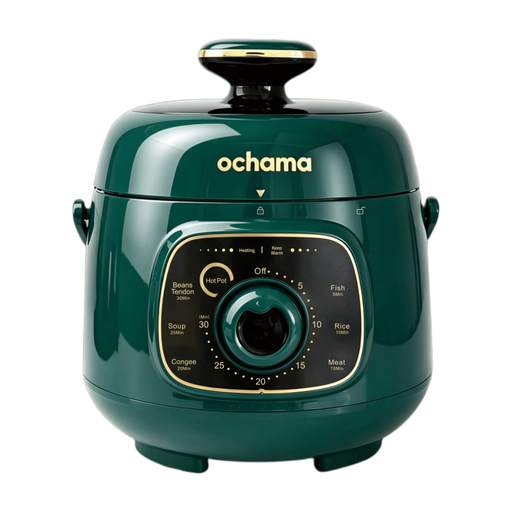
Consider its 1.8L capacity for a small stock batch, provided there is enough usable room under the pressure-cooking fill limit for your ingredients.
Check the model's minimum-liquid and fill instructions, and measure its external dimensions before choosing a storage and operating position.
Consider a compact 3.8L model for modest batches or a 4.8–5.7L model if you regularly want more stock for later meals. In either case, compare your ingredients with the model's pressure-cooking fill and minimum-liquid instructions, then measure the space where you will use and store it.
No: follow the maximum-fill instructions for your exact model and cooking mode. The Instant Pot Duo manual says not to fill beyond two-thirds of capacity when pressure cooking, and Instant Pot's Classic Mini guidance identifies a PC Max two-thirds line.
Follow the supplied instructions for your model, including its cleaning, assembly and initial checks. Instant Pot's Classic Mini guidance calls for washing and drying the inner pot, installing the condensation collector and completing a pressure-cooking test run before first use.
Let it depressurise and cool as directed by its manual, then clean the removable components according to their individual instructions. For the Classic Mini, Instant Pot says to empty and rinse the condensation collector after each use and lists the inner pot, lid and accessories as dishwasher-safe.