What to prioritise
Decide where the cooker can be used and stored, then choose capacity and controls to match how often you make stew and for how many people.
| Concern |
What to check |
Who this matters to |
| Safe shared-kitchen use |
Read the model’s pressure-release and valve instructions. Check household rules and how high-power appliances share the electrical circuit. |
I need to handle steam safely while other people use the kitchen, without competing for an overloaded circuit; roughly 40% of consumers put safe, low-conflict use first. |
| Capacity and storage |
Compare the cooker’s dimensions and serving guidance with the space available; follow its maximum-fill marks rather than treating nominal capacity as usable stew volume. |
I want enough stew for meals or housemates, but I still have to put the cooker away afterwards; around 30% of consumers prioritise the balance between capacity and storage. |
| One-pot cooking |
If you want to soften ingredients before pressure cooking, confirm the exact model has a sauté function. Check how its inner pot and accessories are cleaned. |
I would rather make the stew in one appliance than manage extra pans, and I want controls I can follow; roughly 30% of consumers make a simple cooking routine their main concern. |
Joybuy products for compact portions
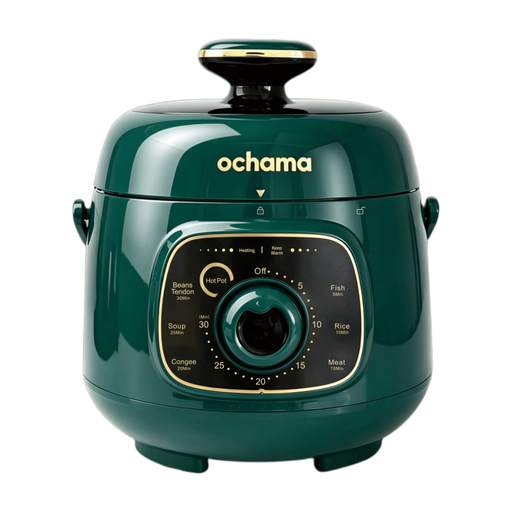
This compact cooker is relevant if you usually make chickpea stew for one or two people and have limited storage space. Check its manual and physical dimensions before deciding whether it fits your kitchen and recipe.
 No image available
ochama Mini Green Pot 1.8L Electric Pressure Cooker
For one- or two-person portions when cupboard space is a priority.
Stated capacity: 1.8L. Before cooking chickpeas, check the model’s fill and minimum-liquid instructions, pressure-release procedure and cleaning directions; measure the available storage space too.
Joybuy
Common questions
Can I use my own electric pressure cooker in a shared or rented kitchen?
Check your tenancy terms and household rules before using or storing a personal cooker in the shared kitchen. Ask the landlord or building manager if restrictions are unclear, and make sure the appliance and socket are in sound condition.
What should I check before pressure-cooking chickpea stew?
Follow the exact cooker’s instructions for liquid, fill level, valve checks and pressure release, and never force the lid open while pressure remains. The Instant Pot Duo manual gives general and expanding-food fill limits for that model; do not transfer those limits to a different cooker.
Which size suits one person or a batch of chickpea stew?
A compact model suits smaller portions and restricted storage, while a 5.7–6L class gives more room for several portions; consider a larger cooker only if you regularly need the capacity and can store it. These size-to-use descriptions draw on Instant Pot and Ninja product guidance, not a guarantee of how much any recipe will yield. Check the chosen model’s fill limits.
Can I use a pressure cooker while someone else runs the kettle or air fryer?
Avoid running multiple high-wattage appliances at once on the same circuit, as NICEIC advises. Coordinate use with housemates; if protective devices repeatedly trip, stop using the affected arrangement and report the issue to the landlord or property manager.
Do I need a dedicated chickpea programme?
A dedicated programme is not necessary to follow a suitable chickpea-stew recipe if the cooker provides the required pressure-cooking controls; a sauté function can also support a one-pot method. Match the recipe to dried or tinned chickpeas and follow the exact model’s instructions rather than transferring settings between cookers.


