Family-batch soup cooks
If dinner needs to leave enough soup for another meal, usable pressure-cooking capacity and an inner pot that is practical to clean matter more than a long programme list.


For a family batch of split pea soup, start with an electric pressure cooker in the 5.6–6L range: Instant Pot UK, Tefal UK and Crock-Pot UK each position models of this size for family meals or batch cooking. The advertised capacity is not the amount of soup you can pressure-cook, so check the exact model’s liquid requirements, pressure-fill line and steam-release instructions before choosing between simpler controls and extra functions.
If dinner needs to leave enough soup for another meal, usable pressure-cooking capacity and an inner pot that is practical to clean matter more than a long programme list.
If you want to sauté aromatics and then pressure-cook in the same pot, look closely at the controls, release method and clean-up routine. A preset does not remove the need to handle steam as the manual directs.
If the cooker will also be used for slow cooking, steaming or other regular meals, additional modes may be worth considering once its capacity works for the soup you plan to make.
For family split pea soup, check usable pressure capacity first, then decide how much the controls, steam-release method and other cooking modes matter to your routine.
| Concern | What to check | Who this matters to |
|---|---|---|
| Usable batch capacity | Compare the full recipe with the model’s pressure-fill marking, not just its advertised bowl capacity; check its liquid instructions too. | If dinner and leftovers need to come from one batch, I need the soup to fit below the pressure-fill line. Around 45% of consumers put usable batch capacity first. |
| Cooking and steam release | Check how to sauté in the pot and how the exact model directs you to release pressure and clean its removable parts. | When I am preparing a weeknight meal, straightforward controls and a release procedure I can follow matter most; around 33% of consumers prioritise this workflow. |
| Use beyond soup | Compare the listed modes with dishes you regularly make, while keeping the soup’s pressure-fill limit in mind. | If one appliance will handle several weekly meals, I want its other modes to be useful too. Wider use comes first for around 22% of consumers. |
A 5.6–6L label describes the bowl, not how high it can be filled for pressure cooking. Instant Pot’s guidance for the Plus 5.7L calls for contents to remain below its PC Max 2/3 line.
Check the marking in the model you choose against your full recipe. Make another batch rather than filling past its pressure-cooking limit.
Pressure release exposes you to hot steam, including on models with release controls designed for convenience.
Read the exact model’s instructions before buying and follow them after cooking. Keep hands and face clear of steam, and do not force the lid open.
Instant Pot UK, Tefal UK and Crock-Pot UK list models with different numbers of functions, but a longer list does not increase the safe fill level for split pea soup.
Confirm pressure cooking, usable capacity and the release procedure first; then compare additional modes with meals you actually make.
A keep-warm setting and reheating are different tasks. GOV.UK food-hygiene guidance for businesses says reheated food should be steaming hot throughout and reheated only once.
Cool and store leftover soup appropriately, then reheat it thoroughly rather than relying on keep-warm to heat it from chilled.
Instant Pot UK positions its 5.7L Plus multicooker for family meals and batch cooking, with nine listed functions.
Tefal UK lists several approaches, including the 6L All-in-One CY505, the guided 6L Cook4Me+ Connect and 4.8L Turbo Cuisine models.
Crock-Pot UK lists 5.6L Express multicookers for family cooking, with the Turbo Express offering a wider function list.
These 5.7L multicookers are choices to consider for family soup and, if useful to you, other meals. Compare each model’s pressure-fill and steam-release instructions against your recipe before choosing.
 No image available
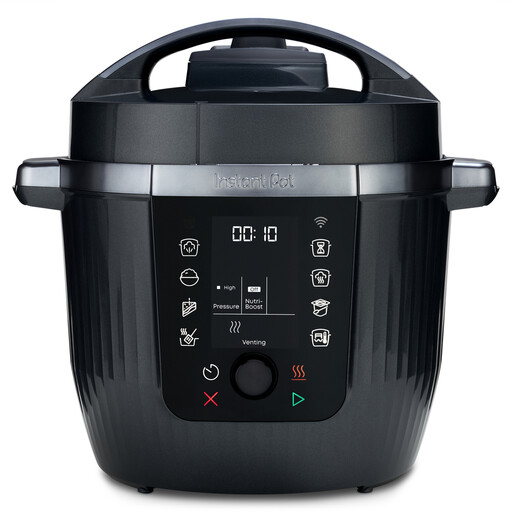
Consider this model if you want to sauté ingredients before making family soup and use the cooker for other meals.
The listed 9-in-1 functions include slow cooking and rice cooking. Check its manual for the liquid, fill and pressure-release instructions that apply to your recipe.
 No image available
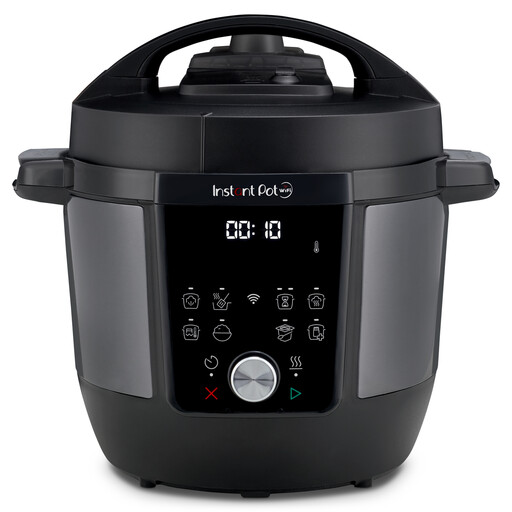
This 5.7L option is worth considering if family soup is one of several meals you plan to make in the cooker.
The title lists 10-in-1 functionality. Check the Pro model’s own pressure-fill, liquid and release instructions before planning a batch.
 No image available
Instant Pot UK positions the Plus 5.7L for family meals and batch cooking, making it a starting point for comparing your intended soup quantity with its usable pressure capacity.
It lists nine functions, including pressure cooking and sautéing. Follow the Plus model’s water-based liquid, PC Max 2/3 fill and steam-release instructions.
 No image available
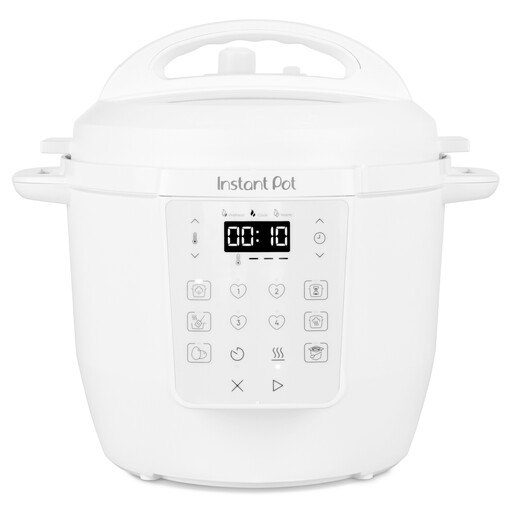
Consider this 5.7L variant if you want a multicooker for family soup and will use its other listed functions.
It is identified as a 7-in-1 model in Sea Salt. Check this model’s pressure-fill line, liquid requirements and release method rather than applying another Instant Pot model’s instructions to it.
A 5.6–6L electric pressure cooker is a starting point: Instant Pot UK, Tefal UK and Crock-Pot UK position models in this range for families or batch cooking. Check the exact model’s pressure-fill marking against the complete recipe, because its advertised bowl capacity is not its usable pressure-cooking capacity.
Yes—use the liquid required by your chosen cooker’s manual and recipe. Instant Pot UK says to add water-based liquid when pressure-cooking with its Plus 5.7L; follow your own model’s instructions rather than applying another cooker’s quantities to it.
Split peas can foam or spatter and affect steam release, according to Instant Pot UK’s Duo Nova manual. Check the instructions for your exact cooker and keep the full soup recipe within its applicable pressure-fill limit rather than overfilling it for extra portions.
Do not use keep-warm as a substitute for reheating chilled soup. GOV.UK food-hygiene guidance for businesses says reheated food should be steaming hot all the way through and reheated only once; cool and store leftovers appropriately before reheating them thoroughly.