What matters when choosing?
Work backwards from the stock you can store, then check the cooker’s pressure-fill and cleaning instructions and decide whether its steam-release method suits your kitchen.
| Concern |
What to check |
Who this matters to |
| Cleaning after raw chicken |
Check how to wash the inner pot and clean removable lid parts and any condensation collector. Confirm which specific parts, if any, are dishwasher-safe. |
If I share the sink and worktop, I need to clear away poultry residue and leave the cooker’s parts ready for the next user; around 42% of consumers put clean-up first. |
| Batch size and storage |
Check the pressure-cooking maximum-fill mark and minimum liquid requirement, then allow for portion containers and shared fridge or freezer space. |
I want stock for several meals, but only a batch I can divide and chill with the space available. For around 33% of consumers, batch planning is the primary concern. |
| Clear operation |
Check the model’s pressure-release and lid-opening instructions, as well as the condition and electrical suitability of the appliance and lead. |
When I am new to pressure cooking, I want to know how to release steam and when the lid can open, especially around other kitchen users; roughly 25% of consumers prioritise straightforward operation. |
Joybuy product choices
These electric pressure multicookers are options for making stock. Compare their model-specific fill and cleaning instructions against the batch you can store and the space you share.
 No image available
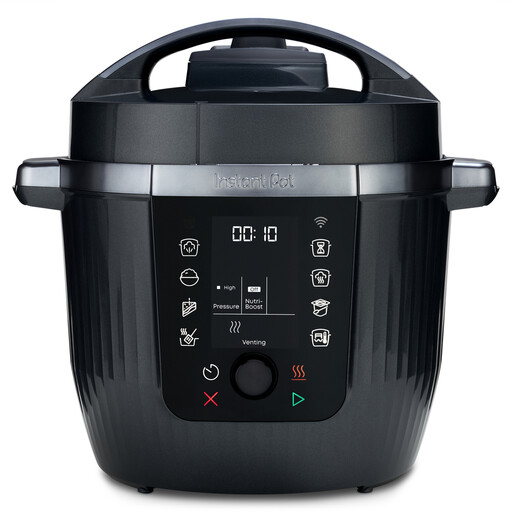
Instant Pot Pro 10-in-1 5.7L Multicooker, Black
Consider this model if written cleaning and pressure-cooking limits will help you manage stock-making in a shared kitchen.
Its nominal capacity is 5.7L. Instant Pot’s Pro 5.7L instructions specify a PC Max 2/3 fill line, at least 375ml of water-based liquid for pressure cooking, washing the inner pot and rinsing the condensation collector after use.
Follow the model’s pressure-release instructions and wait until the float valve drops before opening the lid.
Joybuy
 No image available
COSORI 9-in-1 5.7L Electric Pressure Multicooker, Ceramic Non-Stick
Consider this model if cleaning the inner pot promptly is a priority where you share kitchen facilities.
The listing identifies pressure cooking, a nominal 5.7L capacity, a ceramic non-stick inner pot described as dishwasher-safe, and separate cleaning directions for the lid and base.
Before planning a stock batch, check this exact model’s manual for its pressure-cooking fill limit, minimum liquid requirement and care instructions for the sealing ring and valve.
Joybuy
Common questions
Can I fill a 5.7L or 6L pressure cooker to its stated capacity for stock?
Not necessarily: use the pressure-cooking fill mark for the exact model rather than its nominal bowl capacity. Instant Pot’s Pro 5.7L instructions specify a PC Max 2/3 line and at least 375ml of water-based liquid for pressure cooking; check another model’s own instructions rather than applying those figures to it.
How do I clean a pressure cooker after preparing chicken stock?
Follow the exact model’s instructions for its pot, lid parts and condensation collector, and clean surfaces that contacted raw chicken. For the Instant Pot Pro 5.7L, Instant Pot instructs users to wash the inner pot with hot water and soap and to empty and rinse the condensation collector after each use. If the kitchen is used as a food business, GOV.UK says food areas and equipment must be cleaned and disinfected after raw-food contact.
How should I cool and store a batch of chicken stock?
Divide cooked stock into smaller portions so it can cool promptly, then refrigerate or freeze it. Food Standards Agency household guidance for England, Northern Ireland and Wales advises refrigerating cooked food within one to two hours, keeping the fridge at 0–5°C, and using leftovers within 48 hours or freezing them if that will not be possible. Arrange enough shared-fridge space before making the batch.
What should I check before using a shared electric pressure cooker?
Check that the appliance suits the electrical supply, that its plug and cable are undamaged, and that you can follow its pressure-release instructions. The Health and Safety Executive’s electrical-equipment guidance also advises checking the fuse rating against the appliance information. Stop using a cooker with visible damage or an electrical defect.


