Family bean-batch cooks
If black beans form a substantial part of dinner or you plan leftovers, you need to judge usable space for beans, liquid and other ingredients—not just the bowl’s advertised litre capacity.


For a family black bean meal, start with an electric pressure cooker whose stated portion capacity fits your usual batch, then check the exact model’s limits for expanding foods. A 5.7L–6L multi-cooker is a starting point for a meal of around six portions; a larger bowl is worth considering if you regularly cook extra beans or feed more people. Neither the litre figure nor the stated portion count tells you how much beans and liquid you can safely put in the pot.
If black beans form a substantial part of dinner or you plan leftovers, you need to judge usable space for beans, liquid and other ingredients—not just the bowl’s advertised litre capacity.
If beans need to fit into an evening routine, pressure cooking may appeal alongside functions you would use for other meals, such as sautéing or slow cooking.
If the lid, valve and steam release are unfamiliar, look for controls you understand and instructions you will follow. Guided steps can help with operation, but they do not replace the model’s filling and depressurisation rules.
Decide how much you normally cook before comparing programmes: the fill limit for beans can matter more than an extra cooking mode.
| Concern | What to check | Who this matters to |
|---|---|---|
| Usable capacity | Compare stated portions with your usual batch, then check the exact manual’s fill limit for beans and other expanding foods. | If beans and other ingredients need to feed the family with some left over, I need room above the food and liquid as well as room for the meal itself. Around 36% of consumers would put usable batch capacity first. |
| Everyday cooking | Look for pressure cooking and, if you would use it, a sauté function; choose other modes for meals you actually make. | When dinner starts with dried beans but the cooker will also handle other meals, I want functions that fit my routine. Roughly 29% of consumers would prioritise everyday cooking flexibility. |
| Controls and release | Read the model’s lid, valve and pressure-release instructions; decide whether its controls or guided prompts suit you. | If I am new to pressure cooking, I want to understand each step and know when the lid can be opened. About 21% of consumers would make clear controls and pressure handling their main concern. |
| Extra functions and clean-up | Check which additional modes you would use and which removable components the maker says can go in a dishwasher. | If one appliance will take on several cooking jobs, I need its extra parts and clean-up to fit my kitchen routine. Around 14% of consumers would put those practical extras first. |
Beans and other expanding foods need headroom, so a stated 5.7L or 6L bowl cannot necessarily hold that volume of beans and liquid during pressure cooking.
Work from your usual batch size and check the exact cooker manual’s limit for expanding foods before buying and cooking.
The Safer Food Group’s specific warning about phytohaemagglutinin concerns dried red kidney beans; it advises seeking guidance for other types.
For black beans, follow the bean pack, a suitable black-bean recipe and the appliance manual rather than assuming the red-kidney-bean instructions are identical.
A guided screen or air-fry lid may be useful for other meals, but neither changes the need for appropriate bean capacity and correct pressure-cooker use.
Choose the pressure-cooking functions and controls you need first; add other modes only if they suit regular household meals.
A separate crisping lid also needs somewhere to be stored and cleaned.
Correct lid assembly, filling and depressurisation remain necessary each time you pressure cook. Electrical Safety First also notes that registration helps manufacturers contact owners about product safety issues.
Read the model’s instructions before the first bean batch, inspect its valve and sealing parts as directed, and register the appliance if the manufacturer offers that option.
These brands offer different approaches to electric pressure cooking; compare the particular model and its manual rather than treating a brand name as a capacity or safety specification.
Instant Pot UK lists multi-cookers in sizes including 3.8L and 5.7L. Its Duo 5.7L is positioned for family meals.
Tefal UK lists a 6L Cook4me Touch with screen-led recipes and a 7.6L Turbo Cuisine & Fry with a separate air-fry lid.
Ninja is another brand to include when comparing electric pressure cookers and multi-cookers.
These electric multi-cookers include two 5.7L choices for family meals and a 7.1L choice to consider for larger batches. Check each model’s bean-fill and pressure-release instructions before deciding how much you can cook.
 No image available
Consider this for a family bean meal if you also want functions such as sautéing, rice cooking and slow cooking. Check this model’s manual for its bean-fill limit and approved pressure-release method.
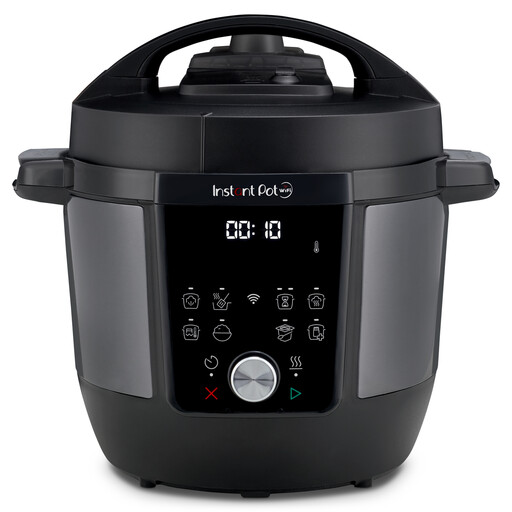 No image available
A 5.7L option to consider if you want to pressure cook beans and use the cooker for other family meals. Use the Plus model’s own manual to establish its bean-fill limit and release procedure; the Duo guidance elsewhere in this article is not a substitute.
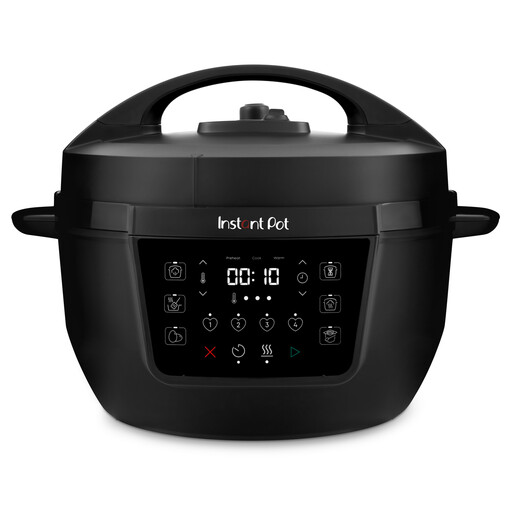 No image available
Consider the larger 7.1L bowl if your family regularly cooks beans for additional meals or a larger group. Its nominal capacity is not its safe bean-fill amount: check the XL model’s manual for the applicable limit and release procedure.
Start with the number of portions you usually make, then check the model’s permitted fill level for expanding foods. Instant Pot UK describes its Duo 5.7L as serving up to six people, and Tefal UK describes the Cook4me Touch as having a 6L, six-portion bowl; neither stated portion count establishes how much beans and liquid you can safely add.
No. Follow the limit in your exact model’s manual: the Instant Pot Duo manual restricts foods that expand during cooking to half capacity, and Sage Appliances’ general pressure-cooker guidance also advises a halfway limit for beans, grains and pasta. Do not assume another model uses the Duo’s markings or instructions.
Open it only after pressure has been released as directed by the model’s manual; do not force the lid. The Instant Pot Duo manual requires full depressurisation before opening, but the approved release steps should be checked for the cooker you own.
Do not assume the instructions are identical. The Safer Food Group’s specific phytohaemagglutinin guidance concerns dried red kidney beans and advises seeking guidance for other types; for black beans, follow the pack, a suitable recipe and your cooker’s manual.
Keep the manual and the appliance’s model and serial details so you can check filling, lids, parts and release instructions later. If the manufacturer offers registration, Electrical Safety First recommends it as a way for the manufacturer to contact you about product safety issues.