Family cooks making generous batches
If your braise includes beef, vegetables and enough sauce for several servings or leftovers, check how much fits below the model’s pressure-cooking fill line rather than judging by its stated litres alone.


Choose an electric pressure multi-cooker with a sauté function and enough room below its pressure-cooking fill line for your beef, vegetables and liquid; add slow cooking if you also want an all-day option. A 5.7L model may suit a usual family meal, while 7.5L–7.6L models offer more stated capacity for bigger batches but take more space. Bowl capacity is not the amount you can safely pressure cook.
If your braise includes beef, vegetables and enough sauce for several servings or leftovers, check how much fits below the model’s pressure-cooking fill line rather than judging by its stated litres alone.
If a long hob braise does not fit your schedule, a pressure-cooking programme may be useful. Check the controls and pressure-release instructions as well as the cooking programme when planning when dinner will be ready.
If you want to brown beef and then pressure cook or slow cook it in the same pot, prioritise those functions. Additional programmes matter only if you expect to use them for other meals.
For a family beef braise, start with the batch you normally make, then decide whether a shorter cooking schedule or other uses for the appliance matter most.
| Concern | What to check | Who this matters to |
|---|---|---|
| Batch size and headroom | Compare your usual ingredients with the bowl size and the exact model’s pressure-cooking maximum-fill mark. | When beef, vegetables and sauce need to fit in one family batch, I care about usable room rather than the litre figure alone. Around 45% of consumers put batch room first. |
| Weeknight cooking | Check for pressure cooking, sauté controls and clear instructions for starting and releasing pressure. | If I need dinner on a shorter schedule, I want to brown the beef and follow a pressure-cooking method without awkward controls. Around 33% of consumers make straightforward, shorter-schedule cooking their priority. |
| Other uses and cleaning | Look at slow cooking, the parts that need cleaning and whether any additional lid will fit your storage space. | I want one appliance for braises and other regular meals, but extra parts need to earn their cupboard space. For around 22% of consumers, those wider uses and the clean-up come first. |
Meat, vegetables and liquid must fit below the cooker’s pressure-cooking maximum-fill mark. For the Instant Pot Classic 5.7L, Instant Pot instructs users to keep contents below the PC Max – 2/3 line.
Before buying, compare your usual recipe volume with the exact model’s manual and fill marking, particularly if you cook large joints or make leftovers.
Air-frying lids, app controls and additional programmes serve other uses, but they do not create more room for a beef braise or replace pressure cooking and sautéing.
Choose the capacity and core functions first. Consider an additional crisping lid only if you expect to use and store it regularly.
Pressure cooking depends on steam, and the required liquid varies with the cooker and recipe. Instant Pot gives a specific water-based-liquid instruction for its Classic when canned, condensed or cream-based soup is used; that condition should not be treated as a rule for every model.
Follow the manual for the exact cooker and the method for your braised-beef recipe, while keeping the full contents below its pressure-fill mark.
The UK Office for Product Safety and Standards has reported a serious fire risk from inadequate earthing in a particular 6L electric pressure cooker. That finding does not apply to every cooker of the same capacity.
Check the model and seller details, keep the instructions and look for current UK safety alerts or recalls concerning the exact product.
Instant Pot lists both the Classic and Pro as 5.7L pressure multi-cookers, offering different controls at the same stated capacity.
Ninja’s Foodi MAX 15-in-1 SmartLid OL750UK is a larger-format option for cooks considering other modes alongside pressure cooking.
Tefal’s Turbo Cuisine range includes a 4.8L CY756140 and a larger 7.6L Turbo Cuisine & Fry CY778840.
These options include two 5.7L multi-cookers and a smaller 3.8L model. For a beef braise, check the exact model’s pressure and sauté instructions, liquid requirements and pressure-fill mark against your usual batch before choosing.
 No image available
Consider this for a family braise if you want to sauté the beef in the same appliance and have a slow-cooking option for another schedule.
The product name specifies a 5.7L capacity, ceramic non-stick coating and a recipe book. Check the model manual’s pressure-fill and liquid instructions against your recipe before cooking.
 No image available
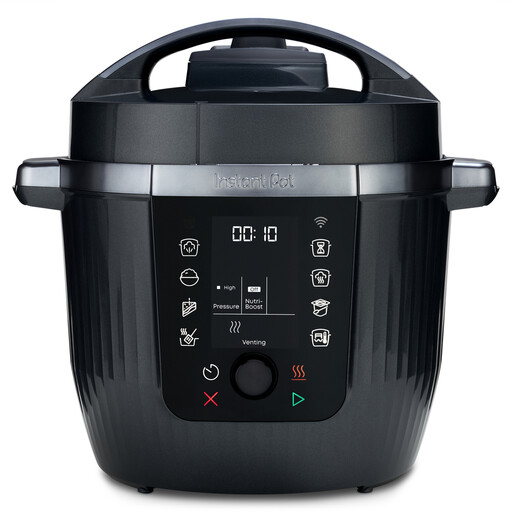
Consider this 5.7L option if you want to brown beef before cooking and may also use a slower method; confirm that its programmes and controls suit the recipe you follow.
The product name identifies the Black 10-in-1 variant. Check this model’s pressure-fill and liquid instructions, as well as its dimensions, against your batch and available space.
 No image available
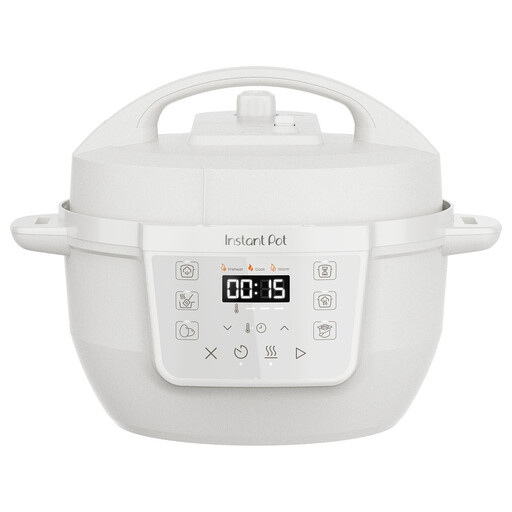
Consider the smaller 3.8L model for a modest braise only if your usual beef, vegetables and liquid will fit within its pressure-cooking limit.
The product name identifies the 7-in-1 Sea Salt variant. Check the exact manual for the fill mark and liquid guidance, and confirm that its cooking programmes suit your method.
Use the instructions for your exact cooker and recipe, not a universal amount. For the Instant Pot Classic 5.7L, Instant Pot specifies at least 375ml of water-based liquid when using canned, condensed or cream-based soup; contents must also remain below its PC Max – 2/3 line.
Choose pressure cooking for a shorter cooking schedule and slow cooking if you plan to cook gently over several hours. Sage Appliances describes these as different cooking methods; whichever you choose, follow a suitable recipe and your cooker’s instructions.
Browning is a recipe choice, not a requirement for choosing a pressure cooker. If your recipe calls for it and you want to use one pot, check that the cooker has a sauté function before adding liquid and starting the pressure-cooking stage.
Check that the food is cooked completely before serving, rather than relying only on the end of a programme. GOV.UK advises checking food is fully cooked and cleaning a temperature probe after use to avoid cross-contamination.
No. The Office for Product Safety and Standards reported inadequate earthing and a serious fire risk for a particular 6L electric pressure cooker, not every cooker of that capacity. Check current safety alerts or recalls for the exact model you are considering and follow its supplied instructions.