Freezer-first batch cooks
If you make soup for several meals, the usable fill level, space for portioning and ease of cleaning matter alongside the cooker’s stated capacity.


A 5.6–6L electric pressure cooker is a sensible starting point for family-sized batches of lentil soup; consider an 8L model if making more portions at once matters more than worktop and storage space. Choose controls and cooking modes you will use, rather than extra functions for their own sake. Check the exact model’s pressure-cooking fill instructions before deciding how much soup a batch can produce, particularly when cooking ingredients that expand.
If you make soup for several meals, the usable fill level, space for portioning and ease of cleaning matter alongside the cooker’s stated capacity.
If setting programmes or releasing pressure feels unfamiliar, clear controls and guided operation may matter more to you than a larger vessel.
If soup is only one use for the cooker, look at functions such as sautéing, slow cooking or steaming that match meals you already make.
Start with the amount of soup you can cook within the model’s fill limit, then decide whether guided controls, additional cooking modes or easier cleaning will make the greater difference to your routine.
| Concern | What to check | Who this matters to |
|---|---|---|
| Batch size and kitchen space | Compare capacity with the model’s pressure-cooking fill limit; measure the space where a larger cooker would sit or be stored. | I want enough soup for several meals without a cooker that is awkward to store. Around 36% of consumers would put usable batch size and kitchen fit first. |
| Controls and pressure release | Check whether the exact model offers guided programmes and how its pressure-release controls work. | When I am new to pressure cooking, I want instructions I can follow confidently from cooking through to opening the lid. For around 27% of consumers, operating guidance would be the primary concern. |
| Cooking functions | Check for pressure cooking and sautéing first; consider other modes only if they suit your regular meals. | If this appliance will handle more than soup, I want its other functions to replace cooking tasks I already do. Broader flexibility would come first for around 19% of consumers. |
| Cleaning and leftovers | Check the cleaning instructions for the bowl and lid, and have shallow containers ready for cooling portions. | I plan to make soup regularly, so washing the cooker and putting portions away promptly need to be manageable. Around 18% of consumers would prioritise that clean-up and storage routine. |
Nominal capacity is not the amount you can use when pressure cooking. The Instant Pot Duo manual sets a general limit of two-thirds of capacity and a limit of one-half for foods that expand, such as dehydrated vegetables.
Check the exact cooker’s manual and fill markings before scaling up a lentil-and-stock recipe.
Air frying and other modes may be useful for different meals, but they are not needed to pressure-cook lentil soup.
Prioritise the cooking functions, capacity, controls and cleaning arrangements you will use; consider extra modes for other dishes you regularly make.
Cooking a large batch does not remove the need to cool and store leftovers promptly. Buckinghamshire Healthcare NHS Trust advises refrigerating cooked leftovers within two hours and eating refrigerated leftovers within two days.
Divide the soup into smaller portions or shallow containers to help it cool, as NHS guidance suggests, then refrigerate it promptly.
Tefal describes automatic pressure release on the Cook4me+, but its controls should not be assumed to apply to other models.
Check the release method and opening instructions in the manual for the cooker you intend to buy.
The Duo range includes 5.7L and 8L options for different batch sizes.
The 6L Cook4me+ is a recipe-led option for those who prefer guided operation.
The 5.6L Express range combines pressure cooking with other one-pot cooking modes.
Foodi multi-cookers are relevant if you also want cooking modes beyond soup.
These choices cover 5.7L multi-cookers for family-sized soup batches and a 3.8L option for smaller batches. Compare each model’s usable fill level and controls before choosing a batch size.
 No image available
Consider this 5.7L cooker if you want to pressure-cook soup and sauté ingredients in the same appliance.
The product name also lists a ceramic non-stick coating and recipe book. Check its manual for the fill limit and pressure-release instructions before planning a batch.
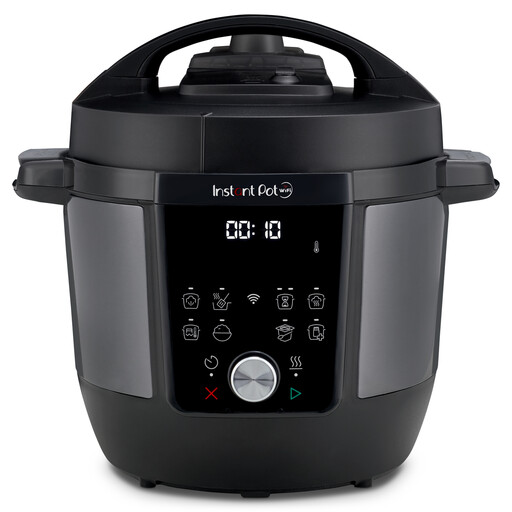 No image available
This is a 5.7L option to consider if your soup routine calls for pressure cooking and sautéing, with other cooking tasks handled by the same appliance.
Check the Plus model’s fill instructions, release method and cleaning requirements against your routine.
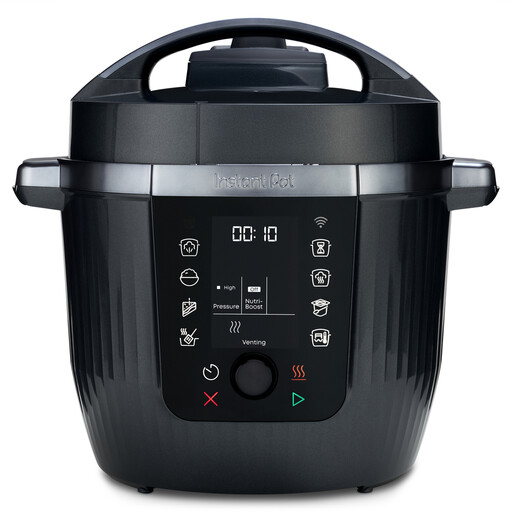 No image available
Consider the 5.7L Pro if you want pressure cooking and sautéing for soup and expect to use further cooking modes for other meals.
Its name identifies a 10-in-1 configuration. Consult the Pro manual for usable fill level and pressure-release instructions rather than applying guidance from another Instant Pot model.
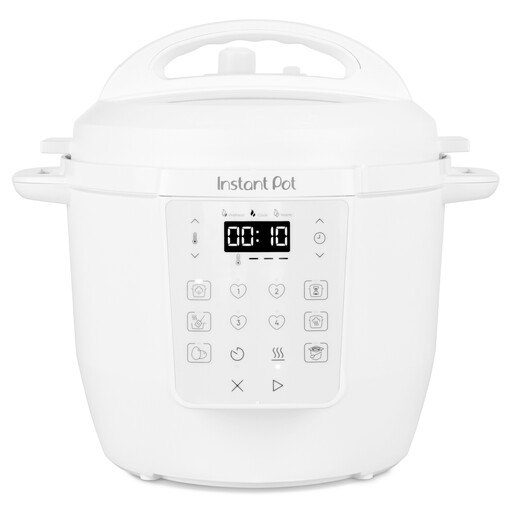 No image available
This 5.7L option suits a soup routine that uses pressure cooking and sautéing, with slow cooking or steaming available for other meals.
Use the instructions for this exact model when checking its fill limit and release method; its name alone does not establish that it is the separately listed Duo.
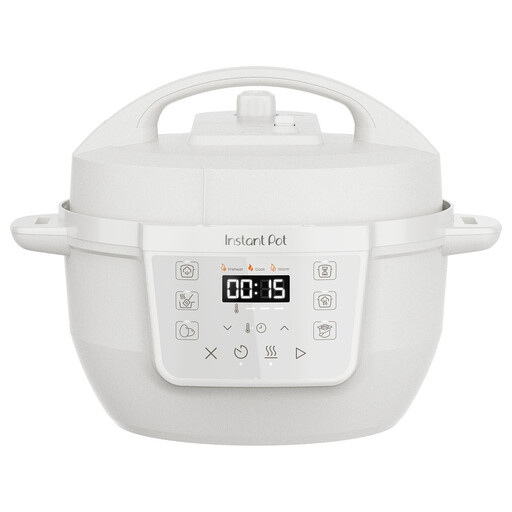 No image available
Consider this cooker if you want to pressure-cook a smaller soup batch and sauté ingredients in one pot.
Its stated 3.8L capacity is below that of the 5.7L choices. Check the model’s usable fill limit before deciding whether it will make enough portions at once.
A 5.6–6L cooker is a starting point for a family-sized batch; an 8L cooker is worth considering when you need more portions per cooking cycle and have room for it. Instant Pot UK describes its 5.7L Duo as a six-portion model and its 8L Duo as an eight-portion model, while Tefal describes the 6L Cook4me+ as suitable for up to six servings. These descriptions do not replace the exact cooker’s pressure-cooking fill limit when sizing a soup recipe.
No: follow the fill instructions for your exact cooker rather than filling it to its nominal capacity. The Instant Pot Duo manual says not to exceed two-thirds of capacity generally and sets a one-half limit for foods that expand, including dehydrated vegetables; check how your model’s instructions apply to your lentil recipe.
No, air frying is not needed to pressure-cook lentil soup. If you want to soften ingredients in the cooker before adding lentils and liquid, check for a sauté or browning function; consider air frying if you will use it for other meals.
Cool it promptly and divide it into smaller portions or shallow containers to help it cool, as NHS guidance suggests. Buckinghamshire Healthcare NHS Trust advises putting cooked leftovers in the fridge within two hours and eating refrigerated leftovers within two days.