
24/7 Customer Support

Free returns

Same-day & Next-day Delivery

Quality Guaranteed

Unlock Your Welcome Offers: FREE Delivery | Up to 80% OFF | Free 30-day JoyPlus trial
Download the APP
The satisfaction of blasting away a year's worth of grime from a patio or watching mud and traffic film disappear from your car is hard to beat. An electric pressure washer promises to make these jobs quick and easy. Yet, many UK households end up with a machine that is either disappointingly weak, frustratingly cumbersome or so powerful it strips paint from the fence.
Choosing the right model isn't about finding the one with the biggest numbers on the box. It's about avoiding common pitfalls that lead to wasted money and a tool that gathers dust in the shed. Before you buy, be aware of these frequent traps:
To make a smart choice, you need to understand the three key specifications that determine a machine's suitability for your needs.
Pressure, measured in bar, is the force of the water jet. Flow rate, measured in litres per hour (L/h), is the amount of water it uses. A good balance is key.
A higher flow rate can speed up cleaning time, as it helps to rinse away dirt more quickly. For domestic use, a flow rate between 350 and 420 L/h is a very effective range.
The motor's power, measured in Watts (W), drives the pump that creates the pressure. While not the only factor, it's a good indicator of the machine's capability and durability. A 1500W pressure washer typically provides a great balance of performance for most household tasks, powering a jet strong enough for a patio cleaner machine without consuming excessive electricity. More powerful motors (1800W+) are better suited for tackling large, stubborn areas like a full driveway cleaner.
Practical features often matter more than raw power. Look for a portable pressure washer with wheels and a comfortable handle. Onboard storage for the lance, hose and power cable is a significant advantage, preventing clutter and making setup much faster.
An adjustable spray nozzle is essential, allowing you to switch from a pinpoint jet for stubborn spots to a wide fan for rinsing. For a superior jet wash for car cleaning, a pressure washer with a foam bottle attachment is invaluable. It allows you to pre-soak the vehicle in detergent, loosening dirt for an easier and safer wash.
We've identified a few models that align with specific user needs, helping you find the right tool for the job.
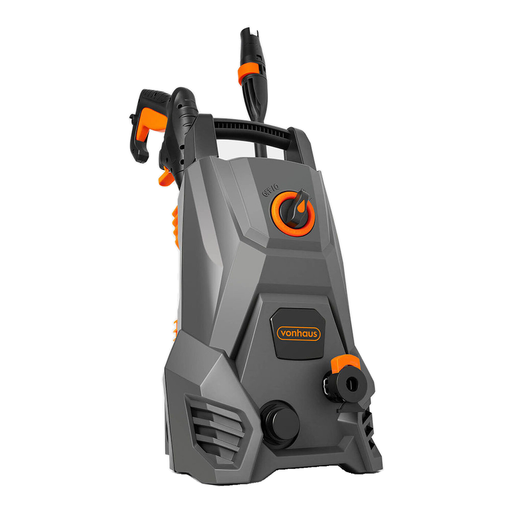
Why This Fits Their Persona: This user needs a reliable all-rounder for typical UK home tasks: washing the car, cleaning the patio and sprucing up garden furniture. They value convenience and don't want to overpay for power they won't use. This model's balance of power and features is ideal.
Its 105 bar max pressure is effective without being destructive, avoiding the "overpowered" pitfall. The wheeled, lightweight design and included foam bottle also counter the issues of poor portability and missing accessories.
All-in-one solution: Comes with an adjustable nozzle and foam bottle. Portable: Weighs just 5.4kg with wheels and a carry handle.
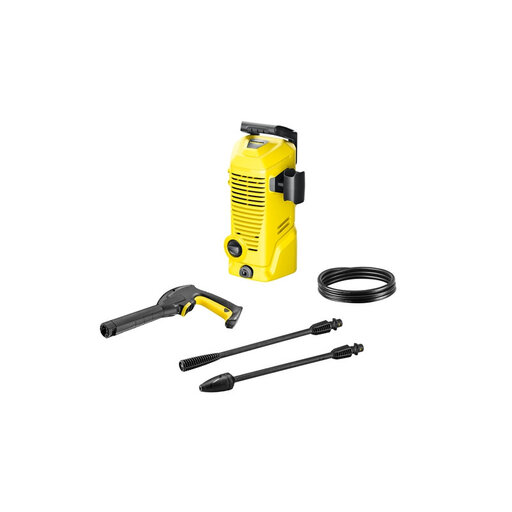
Why This Fits Their Persona: This person lives in a flat with a balcony or a house with a small garden. They need a machine for light, infrequent tasks like cleaning a bike, muddy boots or a small set of patio furniture. Storage space is their main concern.
It directly solves the "cumbersome design" problem. Its extremely compact and lightweight build, with integrated accessory storage, means it can be easily stored in a cupboard, not just a shed.
Extremely compact: Weighs under 4kg and has a small footprint. Quick setup: The Quick Connect system makes attaching the hose and gun simple and fast.
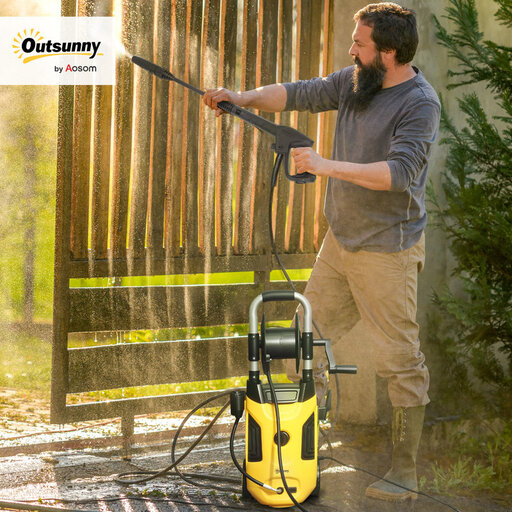
Why This Fits Their Persona: This user has a larger paved driveway or patio that suffers from stubborn moss and algae. They need more power to cut through tough grime efficiently but still want the convenience of an electric model with good storage and portability.
It provides a higher 150 bar pressure for tougher jobs, but avoids the trap of misleading specs by pairing it with a strong 1800W motor and a high 420 L/h flow rate for genuine performance. The integrated hose reel also solves a major storage headache.
Powerful performance: 1800W motor and 150 bar pressure for tough grime. Tidy storage: Features an integrated hose reel, gun holder and cable hook.
We have compiled a complete, real-time list of products that fully satisfy these strict selection criteria and UK safety regulations.
For washing a car, a pressure of around 100-120 bar is ideal. Use a wide fan spray setting to avoid damaging the paintwork. For most patios, 110-130 bar is sufficient to remove dirt and light moss. For very stubborn, ingrained grime on stone or concrete, you might consider up to 150 bar, but always test on a small, inconspicuous area first.
Some pressure washers can draw water from a static source like a water butt, but not all. This feature is known as "self-priming". You must check the product's specifications to see if it is supported. If it is, you will likely need a specific suction hose kit with a filter to prevent debris from entering and damaging the pump.
In the UK, the terms 'pressure washer' and 'jet wash' are used interchangeably to describe the same tool. There is no technical difference between them. 'Jet wash' is simply a more colloquial term, often associated with the powerful machines found at commercial car washes.