Guests needing simple bedside refills
If you mainly want ambient water for a carafe, a compact, non-plumbed dispenser may be easier to accommodate than a larger kitchen appliance.


For a cottage with potable mains water, start with the smallest dispenser that fills your carafe comfortably: a compact 3 L rechargeable filter suits ambient-water refills, while a plug-in dispenser makes more sense if you also want hot or chilled drinks. Consider a countertop reverse-osmosis unit when that filtration route matters to you and its size and upkeep suit the stay. If the cottage has a private supply or its water source is uncertain, ask the owner about the supply, testing and treatment before relying on any countertop appliance for drinking water.
If you mainly want ambient water for a carafe, a compact, non-plumbed dispenser may be easier to accommodate than a larger kitchen appliance.
If the same countertop unit will fill the carafe and prepare hot or chilled drinks, temperature and portion controls become more relevant.
If the cottage may use a private supply, establish what water and treatment the property provides before deciding whether a consumer purifier is appropriate.
Confirm the cottage’s drinking-water source before comparing appliances. Then match the dispensing arrangement to the carafe and decide whether hot or chilled water, or reverse osmosis, justifies a larger countertop unit.
Choose it when: ambient-water carafe refills are the main job; Philips lists a 3 L USB-rechargeable instant filter.
Accept: this route does not provide hot or chilled dispensing or reverse osmosis.
Choose it when: the kitchen appliance will serve the carafe as well as drinks at other temperatures; Aqua Optima lists no-plumbing use for its Aurora.
Accept: it needs a suitable countertop position, electricity and cartridge upkeep.
Choose it when: you specifically want reverse-osmosis filtration and have room and power for a countertop system.
Accept: check the particular unit’s tanks, replacement filters and cleaning requirements rather than assuming it suits a short stay or an unknown private supply.
| Concern | Buying checks | Who this matters to |
|---|---|---|
| Water source | Ask whether the cottage uses mains or private water. For a private supply, ask the owner about its water quality and treatment. | When the source is unclear, I need to know what water the cottage provides before choosing a drinking-water appliance; around 33% of consumers put source-water suitability first. |
| Carafe filling | Compare dispensing volumes, carafe clearance and tank capacity against your carafe. | I want to fill the bedside carafe without overflowing it or making repeated trips to top up the unit; around 27% of consumers make filling convenience their primary concern. |
| Short-stay practicality | Check the power arrangement, counter footprint and instructions for emptying the unit before moving it. | For a brief stay, I would rather carry and place a manageable appliance than bring a larger kitchen unit; portability comes first for around 20% of consumers. |
| Upkeep | Confirm the exact replacement cartridge and the model’s cleaning, descaling and storage instructions. | If I use the appliance only occasionally, I need to be comfortable with the work between visits; around 20% of consumers prioritise maintenance. |
The Drinking Water Quality Regulator for Scotland notes that some holiday properties use private supplies. The Drinking Water Inspectorate explains that treatment for a private supply depends on the properties of its water.
Ask the owner whether the drinking water is mains-fed or privately supplied and, for a private supply, what testing and treatment information is available.
A countertop RO system does not, by its category alone, establish that it is suitable for the cottage’s water source. A larger tank and additional maintenance may also be unnecessary if ambient carafe refills are the only task.
Decide whether you want the documented features of a particular RO model, then check its space, cartridge and cleaning requirements.
A tank that holds enough water may still be awkward if its portions do not suit your carafe. Aqua Optima lists 200 mL–1 L selections for Aurora; Waterdrop lists 240–600 mL presets for K19-H.
Compare the chosen model’s portions and carafe clearance with the vessel you intend to fill.
Cartridge ratings belong to particular models and do not replace cleaning and storage instructions, especially when an appliance sits unused between stays.
Identify the correct replacement cartridge and follow that model’s guidance for replacement, cleaning, descaling and storage.
Philips lists both a compact rechargeable instant filter and larger countertop water dispensers.
The Aurora is a plug-and-fill countertop filter dispenser for carafe water and hot or chilled drinks.
The K19-H represents an installation-free countertop reverse-osmosis route.
YOURCE cool is a larger countertop hot and chilled filter dispenser rather than a compact bedside device.
These countertop reverse-osmosis units are options to consider if you want RO filtration alongside carafe refills. Check their dispensing controls and the cottage’s water source before deciding whether either fits the stay.
 No image available
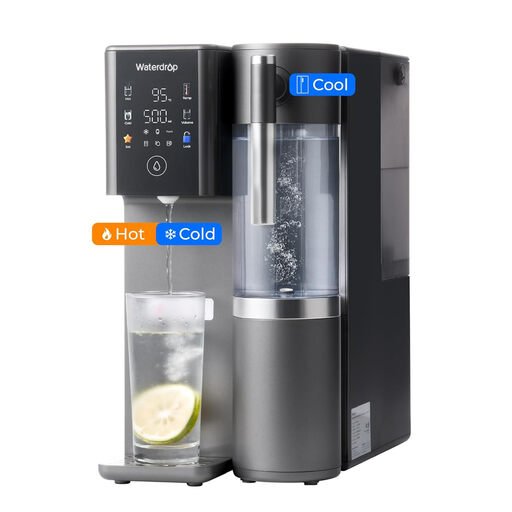
Consider this countertop RO model if you want temperature choices as well as water for a carafe.
The product name specifies six temperature settings. Check the dispensing amounts, feed-water tank capacity and carafe clearance before buying.
If the cottage uses a private supply, ask the owner about its water quality and treatment rather than relying on the RO label alone.
 No image available
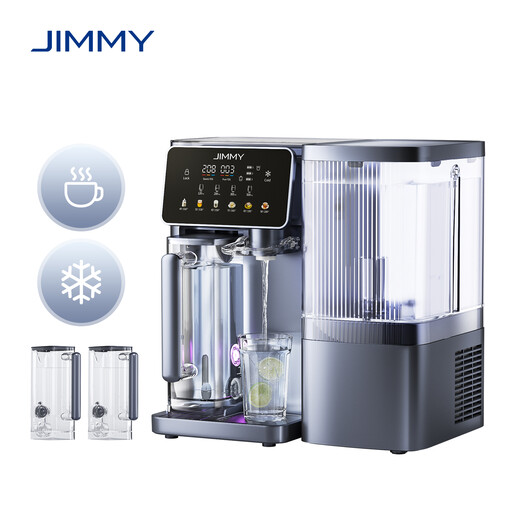
Consider this countertop RO model if you want included pitchers and hot or cold dispensing alongside carafe refills.
The product name specifies a 5.5 L tank and two 1 L pitchers. Check the dispensing portions, counter space, replacement cartridges and cleaning instructions for your intended use.
For a private cottage supply, establish the water quality and existing treatment with the owner before relying on this appliance for drinking water.
Not automatically: establish what drinking water the property provides before choosing an appliance. The Drinking Water Quality Regulator for Scotland notes that some holiday properties use private supplies, so ask the owner about the source and any relevant water-quality and treatment information.
Do not assume that it can. The Drinking Water Inspectorate says private-supply treatment must be chosen according to the water’s properties and contaminant concentrations; ask the owner about the supply and its treatment rather than treating a consumer appliance as a universal remedy.
A 3 L tank may suit light carafe use if you are happy with its refill frequency. Check the carafe’s capacity and the dispenser’s available portions as well as the tank size; a larger tank is more relevant if the appliance will also serve frequent kitchen drinks.
Identify the cartridge for the exact model and check its stated life, replacement instructions and cleaning requirements. Aqua Optima gives its Aurora Evolve+ filter a 100 L rating, while Waterdrop states up to 12 months or 1,100 gallons for the K19 replacement filter; neither rating transfers to another model.
It need not drive the choice if you only want ambient drinking water. Consider it when the same appliance will also make hot drinks, and follow the chosen unit’s placement and safety instructions; Aqua Optima lists a child lock for Aurora.