
24/7 Customer Support

Free returns

Same-day & Next-day Delivery

Quality Guaranteed

Unlock Your Welcome Offers: FREE Delivery | Up to 80% OFF | Free 30-day JoyPlus trial
Download the APP
Choosing among today’s electric scooters can be harder than comparing headline speed and range. Marketing often highlights peak motor output or an estimated maximum distance, while leaving out the details that affect everyday ownership: rider weight, charging time, suspension, weather resistance and where the scooter can legally be used.
There is also an important distinction between electric scooters and lightweight kick scooters. A foldable non-electric model may suit children, teenagers or short leisure trips, whereas an electric scooter is intended for powered travel and has additional legal and safety considerations in the UK.
Published range figures are usually measured under specific conditions, such as a particular rider weight, speed, temperature and road surface. Cold weather, hills, frequent stops and heavier loads can reduce the distance available between charges.
For commuting, compare the stated range with your actual route and leave a practical margin. A scooter advertised for 25 km should not automatically be treated as suitable for a 25 km round trip.
A high peak wattage figure does not tell you everything about the ride. Tyre size, suspension, braking and deck stability can matter more on uneven UK streets. Small solid tyres may be easier to maintain, but pneumatic tyres and suspension can offer a more forgiving ride over rougher surfaces.
Similarly, off-road electric scooters need more than a powerful motor. Ground clearance, all-terrain tyres, suspension and braking control should be assessed together.
Folding mechanisms improve storage, but they do not make a heavy scooter lightweight. A 33.7 kg model may be practical for dedicated riding, yet inconvenient if you need to carry it up stairs or combine it with rail travel.
Check both the folded dimensions and the product weight. For children and mixed-age households, also confirm handlebar adjustment, maximum load and rider-height guidance rather than relying on a broad age label.
For long-range electric scooters, look at the battery capacity in watt-hours where available, as well as the stated range. The Xiaomi Electric Scooter 6 Ultra lists a 585 Wh battery and a maximum stated range of 75 km at 15 km/h, or 55 km at 25 km/h. These figures are useful for comparison, but real-world results vary.
Charging time also affects convenience. Consider whether you can charge safely indoors, whether the charger is included and whether a faster charger is optional. Electricity use is only one running cost: tyres, brake components, storage and occasional maintenance should also be considered.
A scooter must support the rider’s weight and accommodate their height. The Xiaomi Electric Scooter 6 Lite specifies a maximum load of 100 kg and rider height of 140–200 cm. The Xiaomi Electric Scooter 6 Ultra specifies a maximum load of 140 kg and rider height of 120–200 cm.
The LEEYV RV205 lists a maximum load of 220 lb, approximately 100 kg, with an adjustable handlebar. This makes it more flexible than a fixed-height children’s scooter, but users should still check the full product information before purchase.
Look for clearly described braking equipment rather than a vague “safe braking” statement. The 6 Lite combines a front drum brake with rear E-ABS, while the 6 Ultra uses front and rear disc brakes with E-ABS.
For urban riding, 10-inch pneumatic tyres can help smooth out speed bumps and imperfect surfaces. The 6 Lite has 10-inch pneumatic tyres and 25 mm dual-spring front suspension. For more demanding terrain, the 6 Ultra uses 12-inch all-terrain tyres, dual-swing-arm suspension and increased ground clearance.
Before riding, inspect the brakes, tyre condition, folding latch, bolts and lights. Protective equipment and a properly maintained scooter remain important regardless of the advertised specifications.
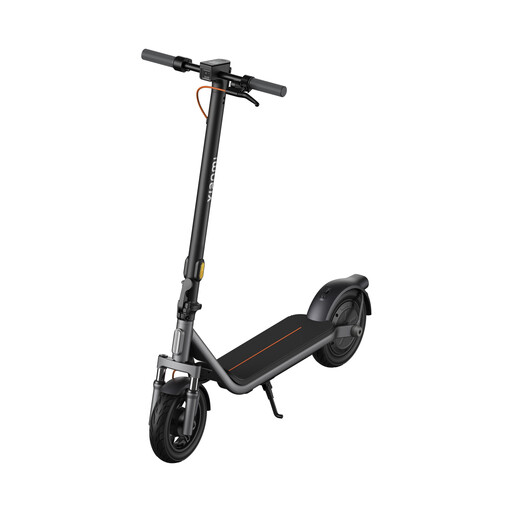
Why This Fits Their Persona: A practical option for adults or older teenagers who want a powered scooter for shorter urban journeys, with a manageable 18.1 kg product weight and a foldable design.
Its specifications state the load limit, 25 km maximum range, charging time and braking arrangement, helping buyers compare practical limitations rather than relying only on motor output.
10-inch pneumatic tyres, 25 mm front suspension, front drum brake, rear E-ABS and three riding modes.
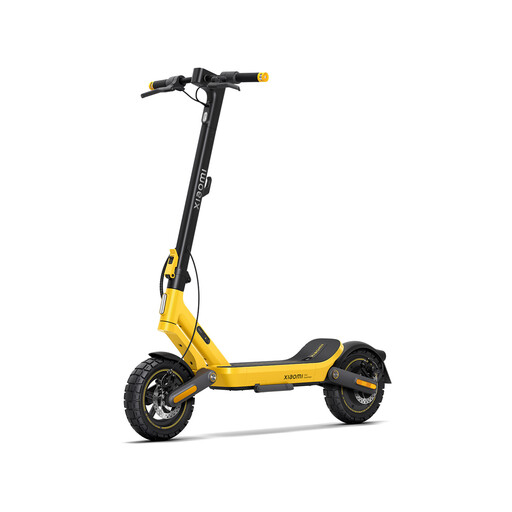
Why This Fits Their Persona: Suited to experienced adult riders who prioritise extended range, larger tyres and additional suspension for varied surfaces and longer recreational journeys.
The 75 km figure is presented alongside a 55 km range at 25 km/h, giving a clearer comparison point than quoting one maximum figure alone.
12-inch all-terrain tyres, dual-swing-arm suspension, 585 Wh battery, 140 kg maximum load and IPX6 water-resistance rating.
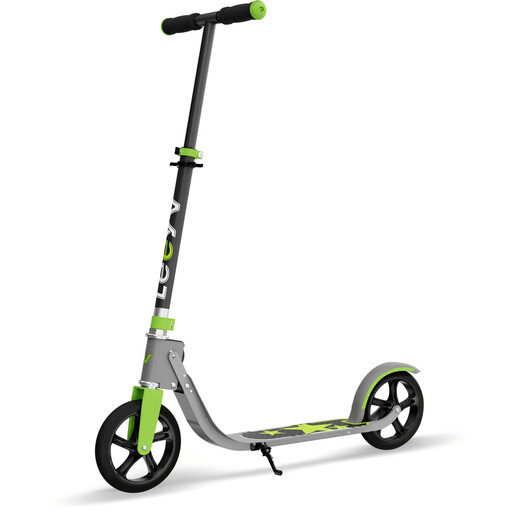
Why This Fits Their Persona: A non-electric, foldable choice for children aged 6–12, teenagers and adults who need a simple leisure or commuting scooter without battery charging.
It avoids battery-range and charging claims altogether, while its adjustable handlebar and stated 220 lb load limit make rider suitability easier to assess.
Foldable aluminium-and-steel frame, 205 mm polyurethane wheels, non-slip grips, rear braking and adjustable height.
Privately owned e-scooters cannot generally be used on UK public roads, pavements or cycle lanes, apart from approved rental-trial areas and subject to the relevant trial rules. Check current government guidance and local conditions before riding. A private e-scooter may be used on private land with the landowner’s permission, provided it is safe and suitable for the location.
Before buying, check:
For kids scooters, use age guidance alongside height and weight information. A helmet and suitable protective equipment should be considered, and younger riders require close supervision.
We have compiled a complete, real-time list of products that fully satisfy these strict selection criteria and UK safety regulations.
Privately owned electric scooters are generally not permitted on public roads, pavements or cycle lanes in the UK. Rental scooters may be permitted in designated trial areas under specific conditions. Always check the latest official guidance before use.
Lifespan depends on storage, riding conditions, charging habits, rider weight and maintenance. Regularly inspect the tyres, brakes, folding mechanism and frame. Avoid storing the battery in extreme temperatures and use the supplied or compatible charger according to the product instructions.
Electricity for charging is usually only one part of ownership. Include potential costs for replacement tyres, brake parts, servicing, storage and protective equipment. A model with a larger battery may cover longer journeys, but it can also weigh more and take longer to charge. Choose according to your actual route rather than paying for capacity you are unlikely to use.