
24/7 Customer Support

Free returns

Same-day & Next-day Delivery

Quality Guaranteed

Unlock Your Welcome Offers: FREE Delivery | Up to 80% OFF | Free 30-day JoyPlus trial
Download the APP
Choosing among electric scooters can look straightforward until you compare legal restrictions, quoted range, rider limits and charging requirements. A low price may hide unsuitable tyres, limited braking control or a product that cannot legally be used for the journey you have in mind.
This guide from the Joybuy Product Recommendation Officer focuses on practical buying decisions rather than marketing language, with options for adults, families, leisure riders and private-land use.
In the UK, it is illegal to ride a privately owned electric scooter in public places, including roads, pavements, cycle paths, parks and other public open spaces. Privately owned models may only be used on private land with the landowner’s permission, regardless of the rider’s age.
Rental e-scooters operating in approved government trial areas follow different conditions. Do not assume that owning a similar-looking scooter gives you the same legal permissions.
If you need a road-legal powered vehicle for public travel, an electric moped is a different category. It may require registration, insurance, a number plate, an appropriate licence and compulsory basic training.
A stated range is usually measured under controlled conditions. Actual performance can change with rider weight, speed, gradients, surface, temperature, tyre pressure and battery condition. A long-range electric scooter may therefore cover less distance on a hilly, windy UK commute than its headline figure suggests.
For regular travel, leave a sensible reserve rather than selecting a model whose quoted range only just covers your route.
A higher top speed does not compensate for poor braking, unsuitable tyres or a frame that is difficult to carry. For families, features such as kick-to-start or non-zero-start systems, speed modes, visible lighting and an appropriate weight limit can matter more than motor output.
Check the quoted range alongside the battery capacity and charging time. A scooter that takes several hours to recharge may be inconvenient if it is used for school runs or commuting. Read whether the battery is removable, particularly on larger vehicles.
Use only the supplied or manufacturer-approved charger. Charge on a hard, flat surface away from flammable materials and exit routes. Avoid unattended or overnight charging, and stop using damaged batteries, chargers or scooters that have suffered a significant impact.
Adult electric scooters intended for uneven routes benefit from larger pneumatic tyres and suspension, although pneumatic tyres require pressure checks and can puncture. Solid tyres reduce inflation maintenance but may transmit more vibration.
Look for clearly described braking equipment, such as a front drum brake combined with rear electronic braking. For children’s models, a rear foot brake or electronic handbrake should be easy for the rider to operate. Lighting improves visibility but does not make public-road use legal.
Compare the maximum load, recommended rider height and folded dimensions with the intended user. A foldable electric scooter is useful only if you can comfortably lift it into a car, store it indoors or carry it up stairs.
Lightweight scooters are convenient for transport, but a very low weight can mean fewer comfort features. For stunt scooters, choose a rigid, responsive frame designed for tricks rather than a powered commuter layout.
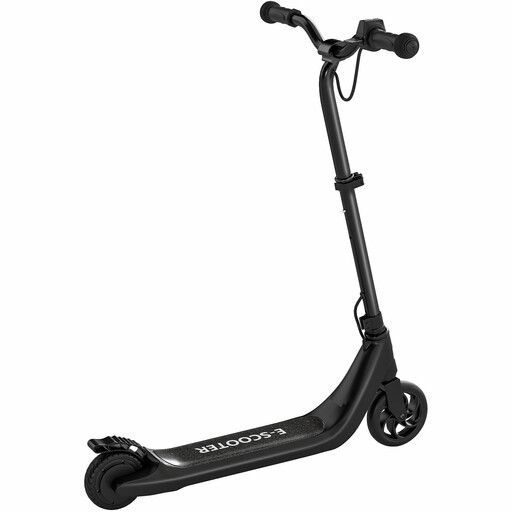
Why This Fits Their Persona: A straightforward option for children aged 6 and above using a scooter on permitted private land. Its 6 kg weight and adjustable handlebar support easier handling and storage.
The non-zero-start system helps prevent sudden launches, while the rear foot brake gives the rider a simple stopping control.
Up to 8 km/h, up to 6 km per charge, adjustable handlebar heights and PU wheels.
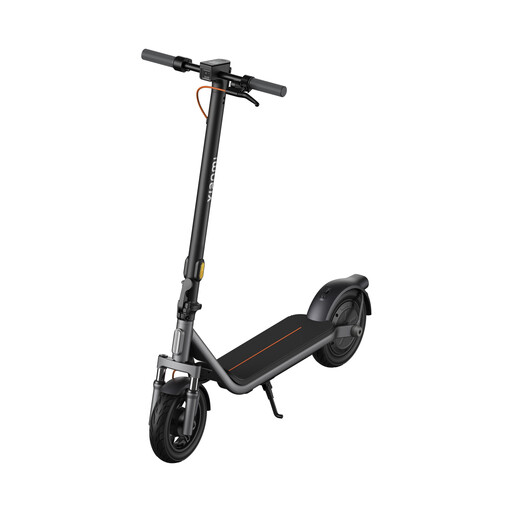
Why This Fits Their Persona: Suitable for adult riders seeking comfort features for private-land leisure or permitted use. The 18.1 kg frame remains foldable while adding front suspension and 10-inch pneumatic tyres.
Its specification lists rider height, load capacity, braking equipment and charging time, helping buyers compare practical fit rather than motor output alone.
25 km quoted range, 25 km/h maximum speed, 15% incline rating and front drum plus rear E-ABS braking.
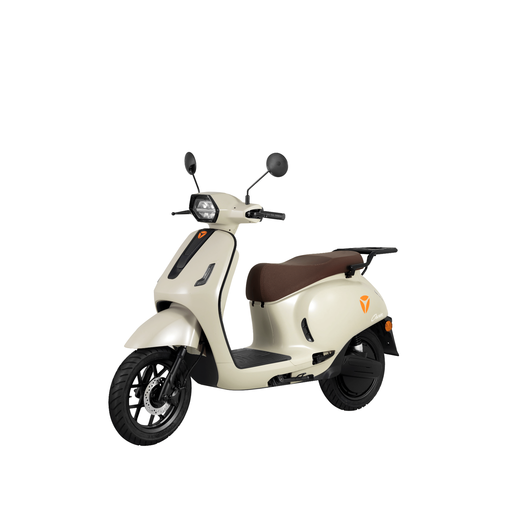
Why This Fits Their Persona: This is an electric moped rather than a standard kick-on electric scooter, intended for public-road use only after the required DVLA registration, insurance, number plate, licence and training steps.
The listing identifies its L1e-B category and sets out registration, AM licence and CBT requirements, so it is not confused with a private e-scooter.
28 mph maximum speed, up to 50 miles quoted range, removable 72V 30Ah battery and UK three-pin charging.
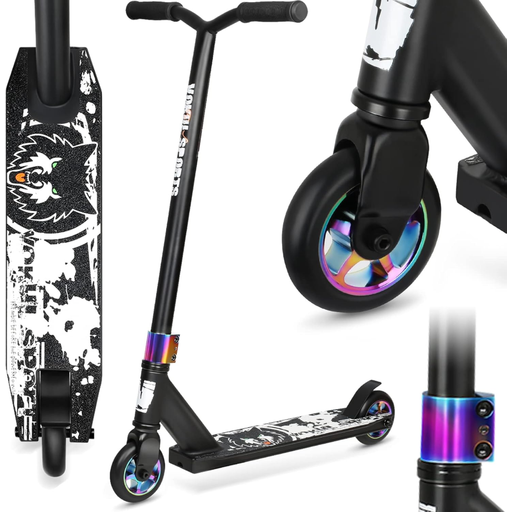
Why This Fits Their Persona: A non-electric choice for children aged 6 and above learning tricks on smooth, clear private surfaces or suitable skate-park areas.
It does not present motor speed or battery range as selling points; the fixed handlebar, rigid suspension and rear brake are specified for stunt use.
Aluminium and alloy-steel frame, solid 100 mm polyurethane wheels and a listed 7 lb product weight.
We have compiled a complete, real-time list of products that fully satisfy these strict selection criteria and UK safety regulations.
Before buying or riding, check:
Privately owned electric scooters are not legal to ride in public places in the UK. They may be used on private land with the landowner’s permission. Approved rental schemes can operate under separate trial arrangements.
The cost depends on battery capacity, electricity tariff and how empty the battery is before charging. A simple calculation is: battery capacity in kWh multiplied by your electricity price per kWh. Frequent short trips may use less electricity than a full charge, but charging losses should also be allowed for.
Battery lifespan depends on charge cycles, storage temperature, usage, load and maintenance. Avoid leaving the battery fully empty for long periods, use the approved charger and store the scooter in a dry environment. A quoted range should be treated as a variable estimate rather than a permanent guarantee.