
24/7 Customer Support

Free returns

Same-day & Next-day Delivery

Quality Guaranteed

Unlock Your Welcome Offers: FREE Delivery | Up to 80% OFF | Free 30-day JoyPlus trial
Download the APP
An electric screwdriver can make flat-pack assembly, home maintenance and electronics repair considerably easier. However, choosing by headline torque or the number of included bits can lead to an unsuitable tool.
A mini electric screwdriver designed for laptop screws will not replace a cordless drill driver for masonry. Equally, a powerful drill may be too aggressive for delicate circuit boards. Before buying, match the tool to the work, then check how its torque, battery and accessories support that use.
A high torque figure may sound appealing, but maximum torque alone does not indicate how suitable a tool is for small screws. Excessive force can strip a screw head, damage plastic housings or over-tighten fasteners.
For electronics repair, look for a precision electric screwdriver with selectable low torque settings. For furniture assembly, a clutch or several torque levels can help prevent driving screws too deeply into chipboard. A cordless drill driver with a higher torque range is more appropriate when drilling or working with substantial timber.
A large accessory count is only useful if the set includes the profiles and sizes you actually need. Common options include Phillips, Pozidriv, Torx, slotted and hex bits. Electronics repair may also require smaller Torx or security profiles, while furniture assembly often uses Pozidriv and hex fasteners.
Check whether bits are made from S2 steel or another stated material, whether they are standard hex fittings, and how they are stored. A magnetic screwdriver set or screwdriver with bits in a labelled case is easier to manage than loose accessories in a drawer.
A rechargeable screwdriver can be convenient, but battery capacity is only one part of the decision. Consider the stated screw count, charging connection, charging time and whether the battery is removable.
USB Type-C charging suits occasional household use and makes it easier to recharge from a compatible adapter. Larger 18V tools often use dedicated battery packs and chargers, providing more power for demanding work but adding weight and storage requirements. Always use the supplied or approved charger and follow the manufacturer’s instructions.
Torque, measured in N·m, describes turning force. Lower values are generally more appropriate for delicate components; higher values are useful for larger screws and drilling. A tool with several torque settings offers more control than one with a single output.
RPM indicates no-load rotational speed. A lower-speed precision screwdriver supports careful positioning, while a higher-speed DIY screwdriver can complete repeated furniture fasteners more quickly. For a cordless drill driver, variable speed and two gears can be useful when switching between screwdriving and drilling.
Do not rely on torque figures alone. Check whether a specification refers to electric torque, manual torque or maximum hard torque, as these measurements describe different operating conditions.
A 1/4-inch hex chuck is common on larger cordless tools, while mini electric screwdriver models may use a smaller hex fitting. Confirm that the included bits fit the chuck and that replacement bits are readily available.
Magnetic holders can make bit changes faster and help retain small bits, but magnetism does not replace correct alignment. Select the exact bit profile and size, keep it straight in the screw head, and stop if the bit begins to slip.
Capacity is usually shown in mAh or Ah. A larger figure may support more work between charges, but it can also increase the tool’s size and weight. For occasional furniture assembly, a compact 3.6V tool may be sufficient. For drilling into wood, metal or masonry, an 18V drill driver is a more suitable category.
Also check grip shape, LED lighting, forward and reverse controls, balance and access to confined spaces. For UK homes, a compact tool can be easier to store in a kitchen drawer or flat cupboard, while a larger kit may suit a workshop or garage.
Before use, check the manual, inspect the battery and charger, secure the workpiece, and wear suitable eye protection. Look for the relevant conformity markings and instructions for the UK market; do not use a damaged battery or charger.
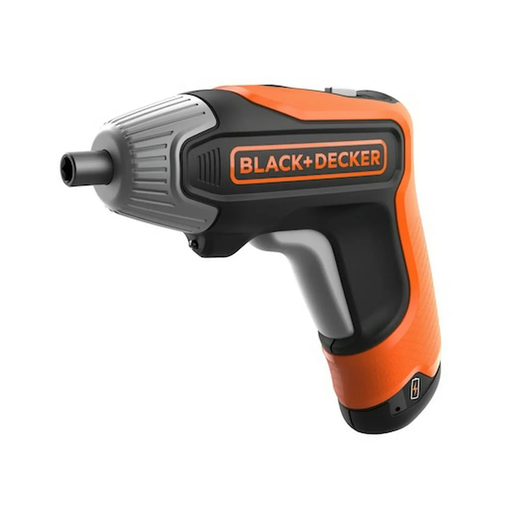
Why This Fits Their Persona: A practical option for occasional flat-pack assembly, shelving and everyday household screwdriving without the size of a drill.
Its stated 5.5N·m torque, forward/reverse action and supplied storage case give clearer everyday usability than buying on accessory count alone.
Pivoting trigger, LED work light and included HEX, PZ and slot bits.
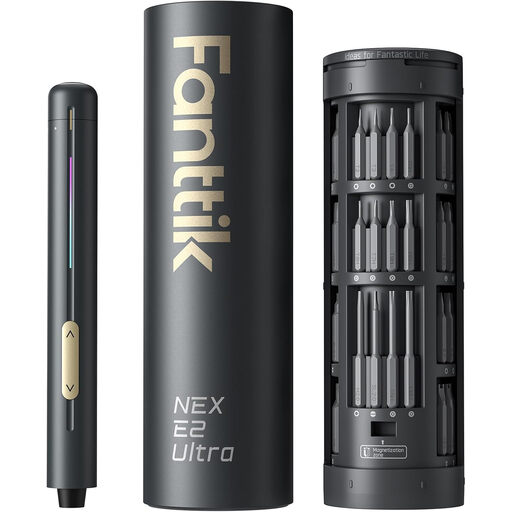
Why This Fits Their Persona: Suits PC builders, makers and electronics repair hobbyists who prioritise controlled handling and organised accessories.
Five torque settings from 0.05 to 0.6N·m address the risk of using a high-power tool on small components.
50 S2 steel precision bits, 800mAh battery, pry bar and tweezers in magnetic storage.
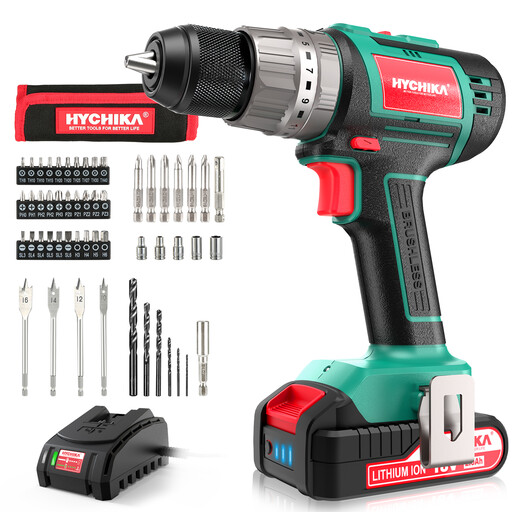
Why This Fits Their Persona: Designed for demanding home projects, drilling, furniture work and tasks involving wood, metal or masonry.
Its 21+3 clutch settings provide more adjustment than a single-output electric screwdriver, while separate screw, drill and hammer modes clarify its intended uses.
18V system, 60N·m maximum torque, two batteries and 53-piece accessory set.
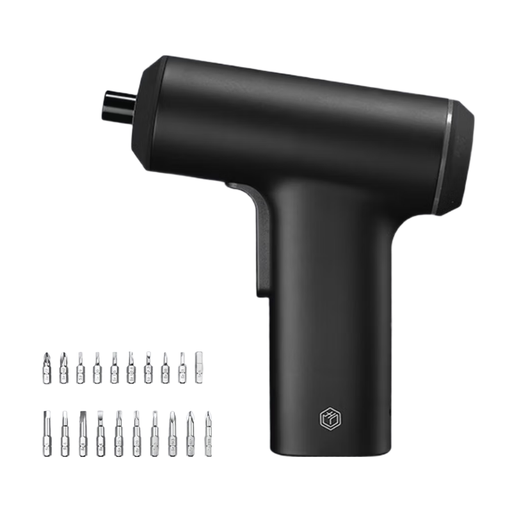
Why This Fits Their Persona: A middle-ground choice for renters, homeowners and flat-pack assemblers who want more output than a precision tool without moving to a full drill.
The stated 5N·m maximum torque and 3.6V format make its role clearer than choosing an oversized drill for straightforward screwdriving.
2000mAh battery, 20 S2 steel bits, LED ring light and Type-C charging.
We have compiled a complete, real-time list of products that fully satisfy these strict selection criteria and UK safety regulations.
Yes, a suitable furniture assembly screwdriver can handle many flat-pack tasks. Choose a model with adjustable torque, a comfortable grip and the correct Pozidriv or hex bits. Avoid using maximum power on chipboard, and finish carefully when the screw reaches the required depth.
Runtime varies with torque, screw size, material, battery capacity and usage. Product specifications may state an approximate screw count, but this is based on particular screw dimensions and conditions. For regular work, keep the tool charged; for longer projects, consider a model with a larger battery or a spare pack.
Only for limited screwdriving tasks. A cordless screwdriver is smaller and easier to control, while a drill driver normally offers higher torque, variable speed, a larger chuck and drilling modes. Choose the drill-driver format when you need to drill holes or work with dense materials; choose a precision screwdriver set for electronics and small repairs.