
24/7 Customer Support

Free returns

Same-day & Next-day Delivery

Quality Guaranteed

Unlock Your Welcome Offers: FREE Delivery | Up to 80% OFF | Free 30-day JoyPlus trial
Download the APP
From assembling a new flat-pack wardrobe to tinkering with a custom PC build, the right screwdriver can make the difference between a satisfying job and a frustrating afternoon. But the market is flooded with options and it's easy to end up with a tool that isn't fit for purpose. As a Joybuy Product Recommendation Officer, my role is to help you navigate the choices and find a tool that genuinely meets your needs.
Before you add anything to your basket, let's look at the common pitfalls that lead to disappointment. Many buyers find their new gadget gathering dust after just a few uses, often due to one of these three issues:
cordless screwdriver designed for construction on delicate electronics is a recipe for stripped threads and cracked circuit boards. Conversely, a mini electric screwdriver will stall and struggle with the demands of assembling a solid oak bookcase.To avoid these traps, focus on a few core parameters that determine a screwdriver's performance and suitability for your tasks.
Torque, measured in Newton-metres (N.m), is the rotational force the screwdriver can apply. More torque means more power to drive screws into tougher materials. Speed, measured in revolutions per minute (RPM), is how fast it turns.
precision screwdriver set used for electronics. This low force prevents you from overtightening and damaging tiny screws in laptops, phones and cameras.DIY tool kit. It's ideal for assembling flat-pack furniture, putting up shelves and other common household jobs.The bits are where the tool meets the task, and their material is critical. Look for bits made from S2 steel, which is harder and more wear-resistant than the more common Chrome Vanadium (Cr-V) steel found in cheaper sets. A well-curated magnetic bit set with 20-50 high-quality S2 steel bits is far more useful than a case of 100 soft metal ones. A magnetic tip also helps hold the screw in place, which is invaluable when working in tight spaces.
For certain jobs, standard screwdrivers are not just unsuitable; they're unsafe.
ratchet screwdriver offers a mechanical advantage. It allows you to apply continuous force without having to reposition your grip, making it efficient for both tight spaces and repetitive work.Instead of a generic list, we've matched specific tools to the people who will get the most out of them.
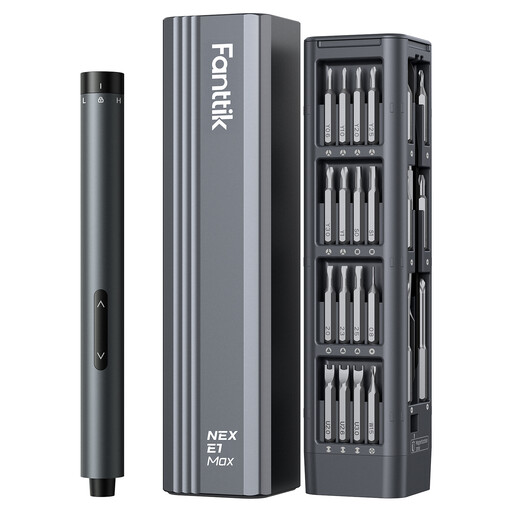
Why This Fits Their Persona: This user needs precision above all. Whether upgrading a graphics card, replacing a phone screen or building a drone, they require low, controllable torque to avoid damaging delicate components. This tool is designed specifically for that world.
It directly solves the "mismatched power" problem with two low-torque settings (0.05 N.m and 0.2 N.m). It also avoids the "bad bits" trap by including 50 high-quality S2 steel bits in a well-organised magnetic case.
The magnetic case with a pop-up mechanism keeps all 50 bits secure and accessible. The USB-C charging port offers modern convenience, avoiding the hassle of proprietary chargers.
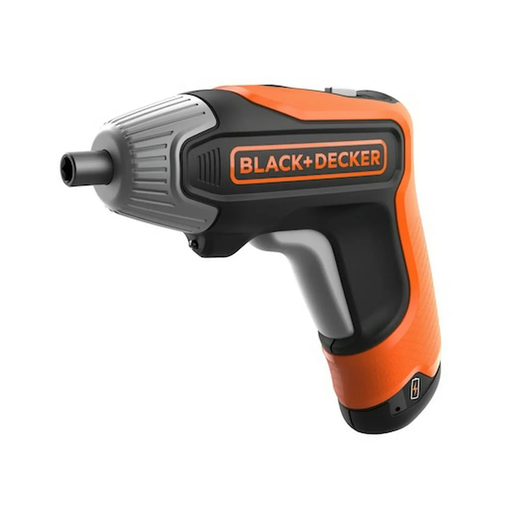
Why This Fits Their Persona: This user needs a reliable, no-fuss tool for common household tasks. They want something that's always ready in the kitchen drawer to assemble furniture, tighten loose handles or put up pictures without causing wrist strain.
It provides a solid 5.5 N.m of torque, perfect for general DIY without being overpowered. It also solves the "battery letdown" with a clever hard case that doubles as a charging dock, ensuring the tool is always charged and ready to go.
The integrated storage and charging case is a standout feature for home organisation. The built-in LED work light is genuinely useful for working inside cupboards or in poorly lit corners.
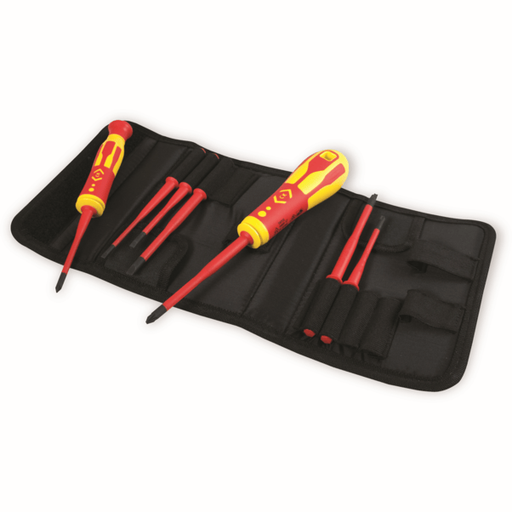
Why This Fits Their Persona: For an electrician, safety is not a feature—it's a requirement. This user works with consumer units, sockets and wiring, where a non-insulated tool could lead to serious injury. They need tools that meet strict professional standards.
This isn't a general-purpose tool; it's a specialised piece of safety equipment. It is VDE approved and individually tested to 10,000V for safe live working up to 1,000V, which is the only standard that matters for this type of work.
The slim, insulated blades are designed to access recessed screws in modern consumer units and terminals, a task impossible with standard screwdrivers. The quick-lock mechanism allows for fast and secure blade changes on the job.
We have compiled a complete, real-time list of products that fully satisfy these strict selection criteria and UK safety regulations.
For everyday tasks like assembling furniture or fixing things around the house, a cordless screwdriver with 3 to 6 N.m of torque is sufficient. For delicate work on electronics like laptops or phones, you need a mini electric screwdriver with very low, adjustable torque, typically below 1 N.m, to avoid stripping screws.
Not always. Most standard cordless screwdrivers use a 1/4-inch hex shank, which is a widely compatible size. However, precision screwdriver set models designed for electronics often use a smaller 5/32-inch (or 4mm) hex shank. Always check the shank size if you plan to use bits from other sets you own.
A VDE insulated screwdriver is a tool certified by the German VDE Testing and Certification Institute for safe use on or near live electrical circuits. Each tool is tested to withstand 10,000 volts. If you are not a qualified electrician, you should always switch off the mains power before working on any household wiring. However, for professionals who may need to work on live systems, these tools are an essential piece of safety equipment.