Family-home floor-care buyers
If porcelain tiles cover regularly used rooms, a floor-focused machine is the more relevant format for repeated passes. Consider how its pads contact the tiles and how much water it releases.


For regular cleaning across several porcelain-tiled rooms, start by considering a floor-focused machine with suitable pads and controlled water application; choose a long-handled spin scrubber when grout, edges and corners are the main job. A floor polisher needs particular care over pad choice, while steam is an option only if the floor is sealed and its care instructions permit it. Whichever format you choose, remove loose grit and test an unfamiliar cleaning method on an inconspicuous area.
If porcelain tiles cover regularly used rooms, a floor-focused machine is the more relevant format for repeated passes. Consider how its pads contact the tiles and how much water it releases.
If the main job is cleaning grout lines, corners and skirting-board edges rather than open floor area, a long-handled spin scrubber offers a more targeted head.
A telescopic handle or extendable pole can help you reach floor-level marks without kneeling as often. Handle reach does not replace the need to choose a pad or brush suitable for the porcelain finish.
Choose it when: Regular passes across tiled rooms are the main task and controlled spray is useful.
Bear in mind: A corded model needs suitable socket access and is not a specialist tool for narrow grout lines.
Consider it when: You need a floor machine for a sizeable sealed hard-floor area and its cleaning method is permitted for your tiles.
Bear in mind: Sealed-floor suitability does not establish that every scouring or polishing pad is appropriate for your porcelain finish.
Choose it when: Grout, corners and awkward floor-level spots account for most of the work.
Bear in mind: A small brush head covers less open floor per pass, and a cordless model needs charging.
Consider it only when: The floor is sealed and the tile or floor manufacturer permits steam cleaning.
Bear in mind: Steam adds heat and moisture, so uncertainty about the finish, grout or sealant needs resolving before use.
For porcelain tiles in a family home, identify the one cleaning need that takes priority, then check whether the machine and its contact surfaces suit the floor.
| Concern | What to check | Who this matters to |
|---|---|---|
| Finish and grout protection | Check the pad or brush material and your tile-care instructions; test an unfamiliar method on an inconspicuous area. | If protecting the visible finish and grout is my priority, I want gentle contact rather than assuming every tile-labelled attachment will suit my floor. Around 31% of consumers put finish and grout protection first. |
| Whole-floor cleaning | Compare floor-head format, water control and the reach of the cord or handle. | When several tiled rooms need regular cleaning, I would rather make broad floor passes than work across them with a small brush. Whole-floor coverage comes first for around 31% of consumers. |
| Grout and awkward spots | Look at handle extension, head-angle adjustment and whether a suitable replacement head is available. | Grout lines and low corners are the places I struggle to reach, especially if cleaning them means repeated bending. Reaching those spots is the primary need for around 25% of consumers. |
| Cable-free movement | Check the stated runtime and charging arrangements against the work you plan to do. | If sockets are inconvenient between rooms, I want to move without managing a cable, even if that means planning charging breaks. Around 13% of consumers place cable-free movement first. |
A motorised brush or pad can repeatedly work an unsuitable contact surface against the same finish. Porcelain Tiles advises testing any new cleaning product or method on a small, inconspicuous area.
Check the tile and installer care instructions, remove loose grit, and start with the least aggressive compatible attachment and light pressure.
A narrow spin-scrubber head is aimed at localised work, whereas rotating-pad floor cleaners are configured for repeated passes over floor area.
Decide whether most sessions involve washing tiled rooms or working on grout and edges before choosing a head format.
Shark describes its steam mops as suitable for sealed hard floors and advises checking the floor manufacturer's instructions when suitability is uncertain. That does not establish permission for every porcelain installation.
Confirm that the tile, grout and sealant care guidance permits steam before selecting this route.
A manufacturer's runtime figure may not reflect a session with different speeds, pressure and cleaning tasks.
Compare the stated runtime with the area you intend to clean, and check charging arrangements and replacement-head availability.
The SpinWave 2052E represents the rotating-pad spray-mop format. Amazon UK lists tile among its intended hard-floor surfaces, while Costco UK describes a trigger for controlling water release.
Ewbank describes its EP170 as a corded floor cleaner and polisher for sealed hard floors, with interchangeable reusable pads.
The S8201UK represents steam-assisted cleaning with rotating pads. Shark says its steam mops are suitable for sealed hard floors.
The ANS-8052 represents a cordless, long-handled spin scrubber for targeted work around grout, edges and awkward spots.
These floor-cleaning formats are relevant when regular cleaning across tiled rooms is the main task. Check each machine's contact surfaces and your floor-care instructions before choosing one for porcelain.
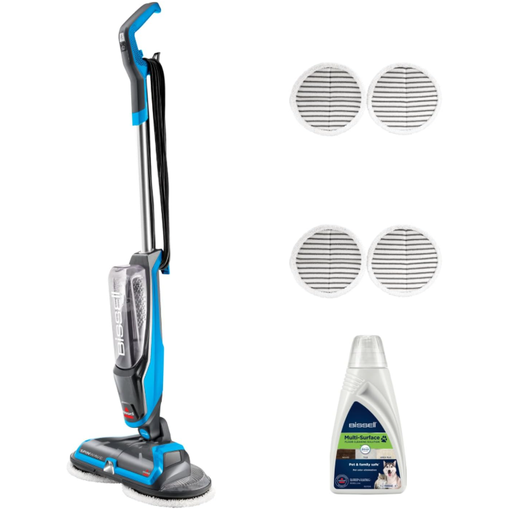 No image available
Consider this rotating-pad spray mop for regular passes across porcelain-tiled rooms, subject to your floor-care instructions.
Amazon UK lists tile among the 2052E's intended surfaces, and Costco UK describes a trigger that controls water release. Confirm the power format of this particular listing before ordering, and check that the chosen pads suit your finish.
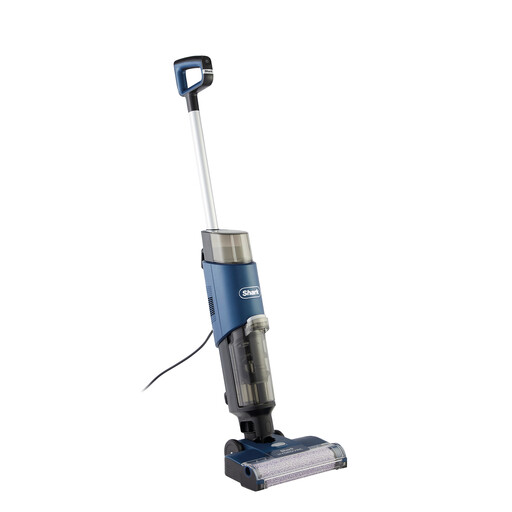 No image available
Consider this corded hard-floor cleaner if a floor machine, rather than a grout-detail brush, fits your main cleaning task.
Before using it on porcelain, confirm that your floor is among the permitted surfaces and that its brush contact material suits the finish.
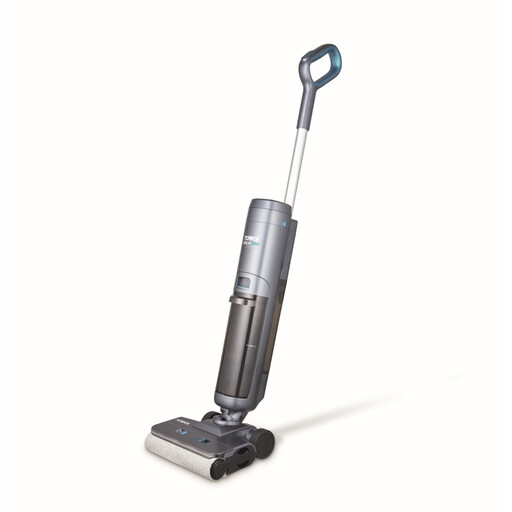 No image available
Consider this cordless floor-cleaning format if moving between rooms without a cable is a priority.
The product name specifies a 650 ml clean-water tank, a 550 ml dirty-water tank and 22.2 V. Confirm that your porcelain installation is a permitted surface and that the brush contact material is suitable before use.
Yes, if the attachment and cleaning method suit your particular tile finish and installation. Remove loose grit, use a non-abrasive contact surface and follow the tile or installer care instructions; Porcelain Tiles also advises testing a new method on an inconspicuous area.
It can clean floor tiles, but a small brush head is more relevant to grout, corners and local marks than repeated passes across large open areas. If whole-floor cleaning is the main task, compare floor-focused machines instead, while checking their suitability for your porcelain finish.
Only consider steam when the floor is sealed and the tile or floor manufacturer permits it. Shark describes its steam mops as suitable for sealed hard floors and advises checking the floor manufacturer's care instructions if you are unsure.
Use an appropriate electrical recycling route rather than putting an appliance with a plug or battery in general waste. Oxfordshire County Council gives that advice for electrical equipment; check your own council's collection arrangements and how it accepts removable batteries.