Post-move cleaners tackling dirt and grout edges
If the mess is concentrated on tile faces, in corners or beside grout, a brush head matched to those areas offers more targeted contact than whole-floor washing.


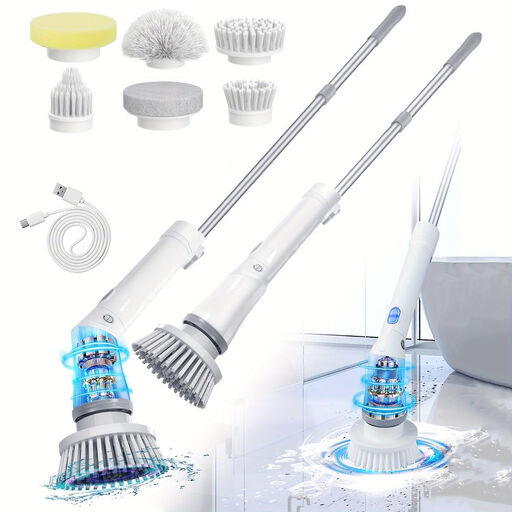
Choose a cordless spin scrubber with a suitable flat head for concentrated dirt on ceramic tile faces and edges; you will still need to remove the loosened dirt and moisture. For a larger open floor that needs washing, consider a hard-floor cleaner with separate fresh- and dirty-water handling instead. Use a floor polisher only if the flooring manufacturer permits mechanical cleaning of the particular tile and finish.
If the mess is concentrated on tile faces, in corners or beside grout, a brush head matched to those areas offers more targeted contact than whole-floor washing.
If the main job is washing an open area after loose debris has been cleared, consider how the machine handles fresh water, collected dirt and the damp floor left behind.
For repeated floor-level work, an extension handle and manageable tool weight may matter more to your choice than an advertised motor speed.
Choose when: Dried-on dirt, tile edges or grout-adjacent areas need direct brush contact.
Bear in mind: A brush loosens dirt but does not collect the dirty water; plan a wipe or mop afterwards.
Choose when: A larger open tiled area needs washing and separate fresh- and dirty-water handling is a priority.
Bear in mind: A floor-washing machine is not a substitute for a small brush at narrow grout lines and corners.
Choose when: The area is open, the hard floor is sealed and its manufacturer permits mechanical scrubbing.
Bear in mind: A cable needs managing around damp flooring, and the machine is not intended for grout-detail work.
Choose when: The remaining work is at grout, thresholds or other small points.
Bear in mind: A compact head is a supplementary option rather than a practical way to wash an entire open floor.
| Concern | What to check | Who this matters to |
|---|---|---|
| Concentrated dirt and edges | Check for a flat head for tile faces and a detail head if corners or grout edges need attention. | If most of the post-move mess is in particular spots, I need a brush that reaches those spots rather than a machine for washing the whole floor. Around 36% of consumers put targeted cleaning first. |
| Open-floor washing | Check the stated floor suitability, fresh- and dirty-water handling, and roller-care instructions. | When the open floor needs washing, I want to collect dirty water instead of moving it around with a brush. For around 29% of consumers, that water-management need takes priority. |
| Reach and handling | Check the usable handle length and weight with the appropriate head attached. | Cleaning along the floor and walls means repeated bending, so I need a tool I can position comfortably. Reach is the main concern for around 21% of consumers. |
| Safety and upkeep | For Great Britain, check appropriate product marking, manufacturer details and instructions; also check the cleaner label and how the tool is maintained. | With water, an electrical appliance and cleaning liquid involved, I want to understand safe use and routine care before buying. Around 14% of consumers make those checks their primary concern. |
An RPM figure does not establish whether a brush suits your tile glaze, grout or residue. Head shape and access to the affected area matter to the decision.
Choose the head and handle format for the job, then compare the exact model’s runtime and care instructions.
A spin scrubber agitates dirt but does not collect it in a dirty-water tank. The Health and Safety Executive also warns that wet floors can create a slip hazard.
For an open floor, compare a hard-floor cleaner or plan how you will wipe away dirt and leave the tiles dry.
A brush-only route requires a separate wipe, mop or floor-washing step.
Removing a trailing mains lead does not remove the need for suitable product information or a charger in good condition.
For use in Great Britain, check the exact product’s appropriate marking, manufacturer name and address, instructions and charger details before purchase.
Powered brushing can splash liquid. The Health and Safety Executive explains that hazard and precautionary statements set out safe-use measures and any protective equipment needed.
Follow both the liquid label and appliance instructions, including the directed dilution, and do not mix cleaners unless their instructions expressly permit it.
The Hurricane Spin Scrubber is a cordless, long-handled brush option for targeted tile cleaning.
The EWM and FC ranges take a floor-washing approach to open hard-floor areas.
HOTO offers cordless spin scrubbers with replaceable heads for targeted work.
Its compact rechargeable brush format is aimed at grout and other small cleaning points.
The mains-powered EP170 is a floor polisher and scrubber for sealed hard floors.
These choices include handheld spin scrubbers for targeted work and cordless hard-floor cleaners for broader washing. Check the supplied heads or permitted flooring for the exact product before choosing between them.
 No image available
Consider this lightweight cordless brush for targeted tile and corner work. Check which heads are supplied for your tile faces and grout edges, and confirm that the brush and cleaner suit the floor finish.
 No image available
The extendable handle makes this cordless spin scrubber worth considering if bending for floor-level work is a concern. Its title specifies two speeds, seven brush heads and IPX7 protection; confirm which heads suit tile faces and edges, and plan to remove loosened dirt separately.
 No image available
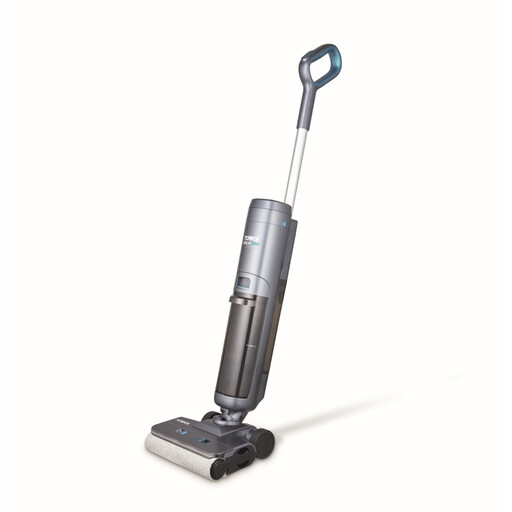
This wet-and-dry hard-floor cleaner fits a broader floor-washing task rather than focused grout scrubbing. The title describes centrifugal drying; confirm that the exact ceramic tile and its finish are suitable for the machine.
 No image available
Consider this wet-and-dry cleaner for washing an open floor if its sealed-floor requirement matches your tiles. The title specifies a 650 ml clean-water tank, 550 ml dirty-water tank and 22.2 V rating; it is not a dedicated grout-detail brush.
A suitable brush can be used on tile faces when the head and cleaning liquid are appropriate for that surface. JML describes its Hurricane flat brush for floor tiles, but that does not establish compatibility with every glaze, grout or sealant; follow the flooring manufacturer’s care guidance and test an inconspicuous area first.
Choose a spin scrubber for concentrated marks and edges, or consider a hard-floor cleaner for washing a larger open area after loose debris has been cleared. Kärcher states that its EWM 2 is suitable for tiles and separates fresh from dirty water; a roller machine is not a dedicated grout-detail brush.
Keep people off damp sections, leave a dry route through the room and let the floor dry before normal use. The Health and Safety Executive identifies wet floors and trailing cables as slip or trip hazards.
For use in Great Britain, check appropriate marking, instructions and warnings, and an identifiable manufacturer name and address. UK government product-safety guidance recommends these checks; marking requirements can differ in Northern Ireland, so check the rules relevant to where the product will be used.
No: follow both the liquid label and appliance instructions. The Health and Safety Executive explains that hazard and precautionary statements identify safe-use measures and any protective equipment needed; do not mix cleaning chemicals unless their instructions expressly permit it.