For recurring debris and spills across a shared ceramic-tile room, consider a wet-and-dry floor washer that collects loose dirt while washing. If the main problem is grout lines, edges or isolated marks, a compact electric scrubber is the more targeted choice, but it does not replace cleaning the whole floor. Check the exact appliance’s instructions against your tile finish, and allow for the space and upkeep it needs.
Who each approach suits
Shared-house routine cleaners
If crumbs, hair and spills spread across a kitchen, hall or bathroom floor, a machine that collects debris while washing may reduce the separate sweeping and mopping tasks. Tineco describes this combined function for its iFLOOR 3; check the functions of any model you are considering.
Grout-and-edge problem solvers
When dirt is concentrated in joints, corners or along skirting boards, access and brush shape matter more than whole-floor coverage. Joseph Joseph’s tile-cleaning guidance discusses shaped bristles for tight spaces; check whether a powered scrubber actually comes with a suitable head.
Low-furniture and storage-conscious buyers
Consider both the space beneath furniture and the space needed to put the cleaner away. Tineco states that its FLOOR ONE STRETCH S6 reclines to 180°, but a floor washer and its dock still need a storage spot.
What matters when choosing
Decide whether the recurring job is washing an entire tiled room, mopping after loose dirt has been removed, or scrubbing particular joints and marks. Then check the exact cleaner against the floor finish and the space available in the house.
Wet-and-dry floor washer
Consider it when: Loose debris and wet marks regularly occur across the same room, and you want one machine to collect dirt and wash.
Allow for: Charging or a suitable power connection, storage, and emptying and caring for the tanks and roller.
Rotating-pad cleaner
Consider it when: You already remove loose dirt and want powered pad movement for routine mopping; BISSELL describes spinning pads and spray operation for SpinWave.
Allow for: A separate debris-removal step and the pad-care instructions for the exact model.
Compact electric scrubber
Consider it when: Grout, perimeter edges or isolated marks are the main task rather than washing an entire room.
Allow for: Separate sweeping or mopping, and check that the supplied heads suit the surfaces you intend to scrub.
| Concern |
What to check |
Who this matters to |
| Whole-room mixed messes |
Check whether the exact model collects loose debris as well as washing, and whether its instructions permit use on your tile finish. |
If crumbs and spills spread across the kitchen, I want to avoid doing two complete cleaning rounds. Around 36% of consumers would put whole-room mixed-mess cleaning first. |
| Upkeep between users |
Look at how the dirty-water tank or pads are cleaned, and check replacement-part availability. |
When several people share the cleaner, I need a routine everyone can follow before putting it away; roughly 29% of consumers would make shared-use upkeep their primary concern. |
| Grout and edges |
Check the supplied head shapes and the manufacturer’s instructions for your grout and tile finish. |
If most visible dirt remains in joints and corners, I care about reaching those spots rather than covering open floor quickly. About 21% of consumers would prioritise detail cleaning. |
| Reach and storage |
Measure furniture clearance and the space needed for the machine and any dock. |
Where furniture sits low and cupboard room is tight, I need a cleaner I can manoeuvre and store; around 14% of consumers would put access and storage first. |
Mistakes to avoid
-
Choosing a detail scrubber for a whole-floor job
A small rotating brush may reach joints and local marks, but it does not perform the debris collection and room-wide washing described for a wet-and-dry floor washer.
Write down the messes that recur across the shared floor. If loose dirt and spills are the usual problem, assess a floor washer before choosing a detail tool.
With a detail scrubber, you may still need a separate vacuum or mop.
-
Assuming self-cleaning means no upkeep
Tineco describes a self-cleaning mode for iFLOOR 3, but the machine’s tanks and other parts still need the care specified in its instructions.
Check the cleaning routine and replacement consumables for the exact model, then agree who will empty and store it after each use.
Rollers, filters or cleaning solution may need replacing as directed for the model.
-
Running a mains connection into the bathroom
Wet bathroom conditions call for particular care with electrical equipment. Electrical Safety First advises against using an extension lead to power an appliance within the bathroom.
Keep charging equipment and mains connections outside wet bathroom areas, and follow the appliance instructions for where it may be used.
-
Expecting every floor head to reach grout
A head intended for open floor areas may not reach a narrow joint or corner. Joseph Joseph’s tile-cleaning guidance highlights the usefulness of shaped bristles for tight spaces, not the performance of any particular electric attachment.
Inspect the problem areas and check the supplied head shapes, replacement heads and approved cleaning method before buying.
A separate grout brush may still be needed for spots the powered head cannot reach.
Brands to consider
Tineco
Its iFLOOR and FLOOR ONE ranges are relevant if collecting debris and washing hard floors in one machine appeals to your household.
- Tineco specifies separate clean- and dirty-water tanks and a self-cleaning mode for iFLOOR 3. It states that the FLOOR ONE STRETCH S6 reclines to 180°.
- Those specifications belong to particular models. Check the exact cleaner’s floor instructions, storage space, runtime and replacement parts.
BISSELL
Its SpinWave range provides a rotating-pad approach for people considering powered mopping rather than debris-collecting washing.
- BISSELL UK support describes SpinWave’s spinning pads and spray operation.
- Check the instructions for the precise model, tile finish, pads and cleaning formula; rotating pads alone do not establish how well a machine will clean grout.
Shark
Its HydroVac range is another vacuum-and-mop option to examine for sealed hard floors.
- Shark’s UK material describes the cited HydroVac cleaner as suitable for sealed hard floors, including tile.
- Check the exact model’s power format, accessories and care instructions rather than applying one HydroVac description to the whole range.
Joybuy product choices
These choices cover wet-and-dry floor cleaners for room-wide messes, a rotating-pad mop for routine washing, and a compact scrubber for targeted work. Check each model’s instructions against your ceramic-tile finish before choosing.
 No image available
Tineco FLOOR ONE S7 PRO Smart cordless floor cleaner
Consider this wet-and-dry cleaner if collecting loose dirt and washing a whole floor are your main tasks. It is described as cordless and intended for hard floors; check the manufacturer’s instructions for your ceramic-tile finish.
Joybuy
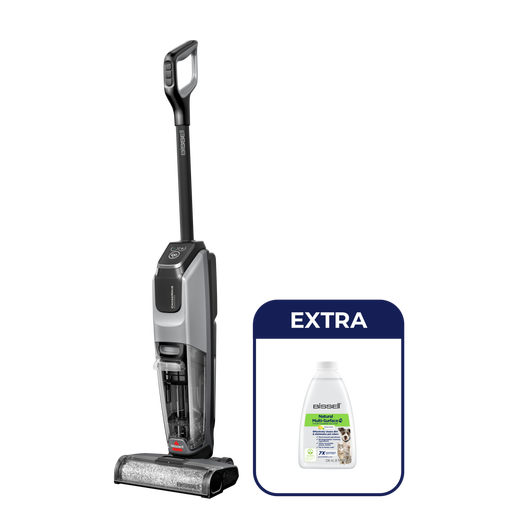 No image available
BISSELL CrossWave OmniForce 3912E wet-and-dry cleaner
Consider this wet-and-dry model for mixed messes across a room. Confirm whether the exact 3912E variant is corded or cordless, and check its instructions for your ceramic-tile finish before buying.
Joybuy
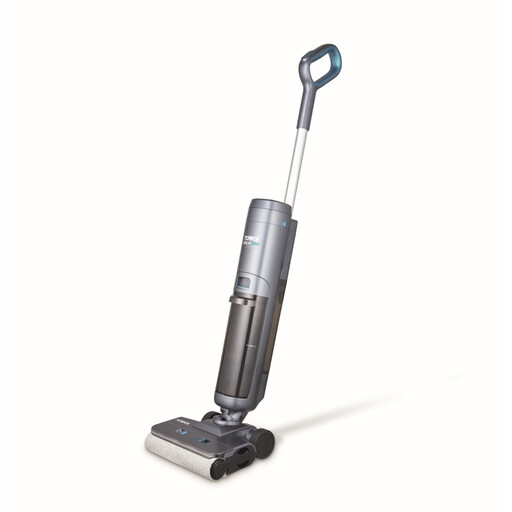 No image available
Tower Aquajet Pro T547003 cordless wet-and-dry cleaner, Titanium
Consider this model if you want a cordless cleaner for routine hard-floor washing and debris collection. Its stated clean- and dirty-water tank capacities are 650 ml and 550 ml respectively, with a 22.2 V specification; check the instructions for your ceramic-tile finish.
Joybuy
 No image available
Leebein 2025 cordless electric spin scrubber with extendable handle
Consider a rotating brush when marks in particular spots, rather than loose dirt across a room, are the priority. This model is described with seven brush heads and two speeds; check the heads’ shapes and the instructions for your grout and ceramic-tile finish. Plan to remove loose debris separately.
Joybuy
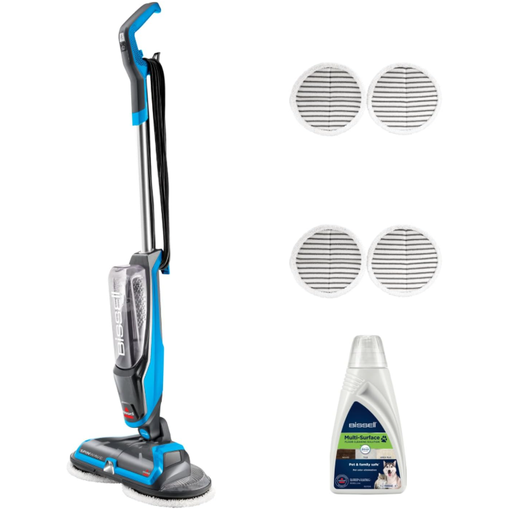 No image available
BISSELL SpinWave 2052E mop with rotating pads
Consider this rotating-pad mop if you remove loose debris before washing the floor. The model information identifies sealed tile as suitable but excludes unglazed ceramic; confirm your tile finish and the exact variant’s power format before buying.
Joybuy
Common questions
Can I use an electric floor cleaner in a bathroom?
Use it there only if the appliance instructions permit the intended use, and keep mains connections out of wet areas. Electrical Safety First advises against powering an appliance within a bathroom using an extension lead; keep the charging dock outside the bathroom unless its instructions expressly permit that location.
Do I need to sweep before using an electric scrubber or mop?
Remove loose debris first if the appliance does not collect it. Joseph Joseph advises sweeping or vacuuming tile floors before mopping; if you want to collect debris and wash with one appliance, examine the functions and floor instructions of a wet-and-dry washer.
What should housemates do after using a floor washer?
Follow the exact model’s instructions for emptying its dirty-water system, cleaning removable parts and letting them dry before storage. A self-cleaning function, such as the one Tineco describes for iFLOOR 3, does not replace the rest of the specified care routine.


