Grout-and-edge cleaners
You need control around greasy grout lines, tile corners and the narrow perimeter of a cooker rather than extra reach.


For a small tiled cooker surround, prioritise a cordless scrubber you can control close to grout lines and tile edges; choose a telescopic handle mainly if reaching higher tiles or avoiding bending matters more. Check the supplied head against your tile finish and grout gaps, and do not treat speed, head count or a water-resistance claim as proof of cleaning performance or permission to work around a powered appliance.
You need control around greasy grout lines, tile corners and the narrow perimeter of a cooker rather than extra reach.
You clean tiles above or around the cooker and want to consider handle length and weight without losing control near the edges.
You want an identifiable rechargeable tool, clear instructions and a way to check product alerts before using it near kitchen moisture and electrical equipment.
Start with the area you need to reach: a short, controllable tool suits close work, while an adjustable handle matters more for tiles outside comfortable reach. Treat steam cleaning as a separate option only where the surrounding materials and appliance instructions permit it.
Consider it when: Most of the job is close work on a small splashback, grout lines and cooker edges.
Trade-off: You may need to work in smaller sections and reach higher tiles separately.
Consider it when: Higher wall tiles or avoiding bending make an adjustable handle useful.
Trade-off: A longer handle may be harder to position near controls and narrow edges; check whether it shortens enough for close work.
Consider it when: You want a separate tool for wider kitchen cleaning and the relevant surfaces are approved for steam.
Trade-off: Heat and moisture may be inappropriate near sealants, finishes or appliance controls; follow the tile and appliance care instructions.
| Concern | What to check | Who this matters to |
|---|---|---|
| Grout and edge control | Check the smallest head’s shape and bristle stiffness against your grout gaps and tile finish; try it on an inconspicuous area first. | If greasy grout and cooker-side edges are my main task, I need a head I can keep on the intended surface. Around 31% of consumers would put precise cleaning first. |
| Reach and handling | Compare the handle’s shortest and longest settings, weight and grip position, including whether close work is possible without the extension. | When tiles are awkward to reach, I want to avoid bending or stretching without making the brush unwieldy; around 31% of consumers would make reach and handling their primary concern. |
| Electrical and material safety | Read the wet-use and charging instructions, plus the cleaner label and surface-care advice; keep electrical equipment isolated during cleaning. | I clean near moisture, heat and electrical controls, so I need to avoid exposing the appliance or unsuitable surfaces to the tool and cleaning solution. Around 23% of consumers would prioritise these safety and care checks. |
| Replacement heads and support | Confirm the exact model, compatible replacement heads, instructions and seller details before ordering. | If I expect to keep using the scrubber after its supplied heads wear, I need replacements that fit my model; around 15% of consumers would put ongoing ownership first. |
A stated speed or a bundle of heads does not establish that a brush fits narrow grout or is suitable for your tile finish.
Look for clear head shapes, the exact model number and compatible replacement heads before comparing headline specifications.
Finding a compatible replacement can become an additional task when the supplied heads wear.
Kitchen cleaning brings water close to heat and electrical equipment. Electrical Safety First advises against cleaning electrical appliances while they are plugged in or touching electrical equipment with wet hands.
Let the cooker and hood cool, switch off and isolate applicable appliances, and keep moisture out of controls and vents. Bosch Home UK advises turning off and unplugging a cooker hood before cleaning it.
An IP rating does not establish that charging parts can get wet or override the scrubber’s own operating instructions.
Check the exact manual for rinsing and wet-use limits, and keep the charger and connections dry and away from the cleaning area.
A product marking does not replace a traceable model identity, usable instructions and a way to check safety alerts.
Check the model and seller details and consult the Office for Product Safety and Standards Product Recalls and Alerts service using the exact brand and model.
BLACK+DECKER UK describes power scrubbers as part of its broader home-cleaning range, which also includes steam cleaners.
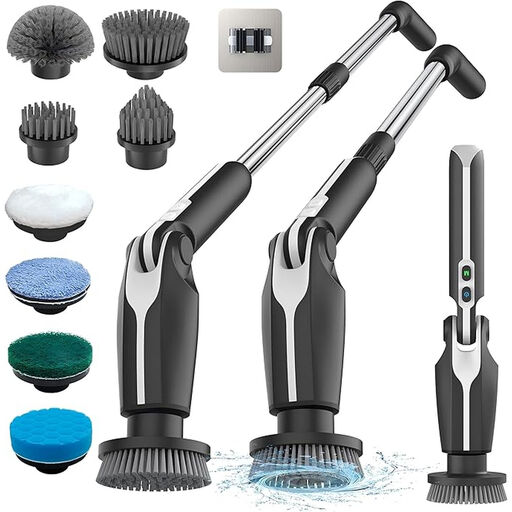
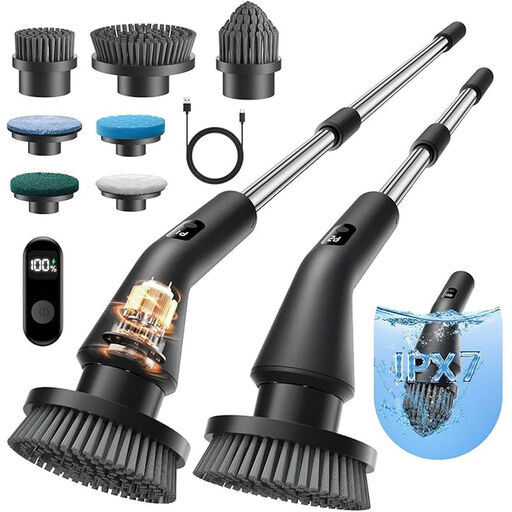
These cordless electric scrubbers are options to examine for tiled cooker surrounds. The two Leebein sets have extendable handles; compare their supplied heads and shortest handle settings for close work. Check the Iagreea head fit and reach separately if grout detail is your priority.
 No image available
Consider this set if reaching tiles above or below the cooker matters, but check that it also shortens enough for precise edge work.
The product name specifies eight interchangeable heads and two rotation speeds. Confirm the smallest head’s fit, tile-finish suitability and exact-model replacement heads before buying.
Do not submerge the unit or use it near high heat; follow its instructions and keep charging equipment dry.
 No image available
Consider the extendable handle for tiles outside comfortable reach, while checking how the brush handles short-distance work beside the cooker.
The product name specifies seven heads, two speeds and an IPX7 rating. Check head dimensions, replacement compatibility and the manual’s limits on rinsing and charging; the rating does not apply to every part of the charging arrangement.
 No image available
For grout and tile-edge work, compare its brush-head shape with the gaps around your cooker before choosing it.
Check bristle stiffness, tile-finish suitability, reach and compatible replacement heads for this version. Follow its wet-use and charging instructions rather than assuming the scrubber or its charging parts can be used near splashes.
Let nearby appliances cool and switch off and isolate them before cleaning around their surfaces. Electrical Safety First advises against cleaning plugged-in electrical appliances, and Bosch Home UK says to turn off and unplug a cooker hood before cleaning it; keep moisture out of controls and vents.
No. A water-resistance claim for a scrubber does not extend to its charger or permit use outside the manufacturer’s instructions. Keep charging equipment and connections dry, and do not clean powered appliances with the scrubber.
Use a degreaser only if its label and the tile, grout and nearby appliance-care instructions allow it. The Health and Safety Executive notes that some cleaning products can damage skin or eyes; follow the label’s ventilation and protective-equipment instructions. For cooker-hood surfaces, Bosch Home UK recommends mild soapy water and a soft brush, reserving degreaser for tougher spots.
For electrical equipment placed on the Great Britain market, Department for Business and Trade guidance dated 31 March 2026 lists UKCA or CE marking; its Northern Ireland entry lists CE, or UKNI together with CE. Check the applicable marking alongside the exact model, manufacturer information and instructions rather than treating the mark as the only safety check.
Search the Office for Product Safety and Standards Product Recalls and Alerts service using the exact brand and model number. Its service covers recalls, safety reports and alerts, so keep the model details for checks after purchase too.