Choose a compact or telescopic rotating brush if grout, edges, isolated marks or reaching the floor are your main concerns. For regular washing across a larger tiled area, a roller-based hard-floor cleaner is the more relevant format, but it will not necessarily replace a detail brush. Whichever you choose, check the attachment and cleaner against your porcelain finish and test them on an inconspicuous area.
Who each format suits
Spot-cleaning and grout-detail households
If joints, corners and isolated marks take most of your effort, start by comparing compact brushes and their attachments rather than machines intended to wash a whole room. Bosch DIY lists tiles and joints among the uses for its UniversalBrush.
Consumers who want less bending
A telescopic scrubber is worth comparing when getting a brush down to floor level is the main difficulty. Ryobi describes long-handled models with adjustable reach; check whether the head and supplied brush suit your indoor tile finish.
Routine large-floor cleaners
If you regularly wash a tiled kitchen or hallway and want to collect dirty water, compare roller-based hard-floor cleaners. Kärcher lists tile-compatible models with water tanks, though narrow joints may still need a detail brush.
What matters when choosing
Compact rotating brush
Choose it for: joints, corners and small patches where a manoeuvrable head matters.
Trade-off: a small head means repeated passes if you try to clean a whole room.
Telescopic scrubber
Choose it for: floor-level scrubbing when a longer handle helps you reach the work area.
Trade-off: a longer tool may be harder to control around narrow joints or delicate trims.
Roller-based hard-floor cleaner
Choose it for: routine washing across a larger compatible floor and collecting dirty water.
Trade-off: rollers and tanks need cleaning, while ingrained dirt in joints may need a separate brush.
| Concern |
What to check |
Who this matters to |
| Whole-floor washing |
Check the stated area per charge and how the machine holds clean and dirty water. |
If I wash an entire tiled room regularly, covering the floor and collecting dirty water matter more to me than concentrated scrubbing. Around 40% of consumers put whole-floor washing first. |
| Grout and local marks |
Check the supplied small heads and whether the exact model is intended for tiles and joints. |
When dirt sits in joints or corners, I want to work on those spots without bringing out a room-wide cleaner. For around 30% of consumers, detail cleaning is the primary need. |
| Reach |
Check adjustable handle length and head movement, as well as the brush fitted to the tool. |
If getting down to the floor is the difficult part, I need a handle that lets me reach the area I am cleaning. Reduced bending comes first for around 20% of consumers. |
| Finish protection |
Check the tile finish and attachment material; test the brush and cleaner together on an inconspicuous area. |
With a finish or grout condition I am unsure about, I would rather check a gentle method before cleaning widely. Around 10% of consumers make surface protection their first concern. |
Buying pitfalls
-
Assuming durable porcelain can take an aggressive pad
Porcelain Tiles advises against abrasive sponges and excessively acidic or basic cleaners. A tile's finish and grout also matter when choosing a cleaning method.
Start with a suitably soft brush or non-abrasive pad and a compatible mild cleaner. Test the complete method in an inconspicuous place before using it across the floor.
-
Choosing a detail brush to wash a large room
A compact head targets small areas but requires repeated passes across an open floor. Roller-based cleaners are built around wider wet-cleaning passes instead.
Decide whether most of the work is in joints and spots or across the floor surface, then choose the tool format for that task.
Using a small brush for room-wide washing can mean substantially more repeated work.
-
Assuming a cordless bare tool is ready to use
Ryobi UK distinguishes bare-tool scrubbers from starter kits, so the contents depend on the variant.
Check the exact model suffix, battery compatibility and whether a battery and charger are included.
A bare tool may require a compatible battery and charger before you can use it.
-
Treating splash resistance as permission to submerge a tool
Bosch DIY specifies IPX5 splash-water protection for the UniversalBrush; Ryobi's IPX7 descriptions apply to specified scrubbers. One model's rating does not apply to another.
Check the exact tool's manual and water-exposure instructions before wet cleaning. Do not submerge it unless those instructions permit it.
Brands to consider
Bosch DIY
The UniversalBrush is a compact cordless option for local tile and joint cleaning rather than a dedicated whole-floor washer.
- Bosch DIY lists interchangeable attachments and IPX5 splash-water protection for the UniversalBrush.
- Its compact head means repeated passes if the main job is washing a large floor.
Ryobi
Ryobi UK offers compact and telescopic scrubbers within its ONE+ range, including bare-tool and kit variants.
- Ryobi describes a telescopic format with a pivoting head and an adjustable 1–1.4 m handle.
- Check the exact kit contents and brush suitability; a long-handled format is not necessarily the easiest to control on polished indoor tiles.
Kärcher
Kärcher lists electric hard-floor cleaners for routine tile washing rather than primarily for narrow-grout scrubbing.
- Kärcher specifies separate tanks and a 300 mm roller width for the EWM 2.
- Allow for roller and tank cleaning; local ingrained marks in joints may still need a detail tool.
Joybuy products for different cleaning tasks
These products cover routine sealed-floor washing, compact spot cleaning and longer-handled scrubbing. Match the tool and its supplied attachment to your porcelain finish before choosing.
 No image available
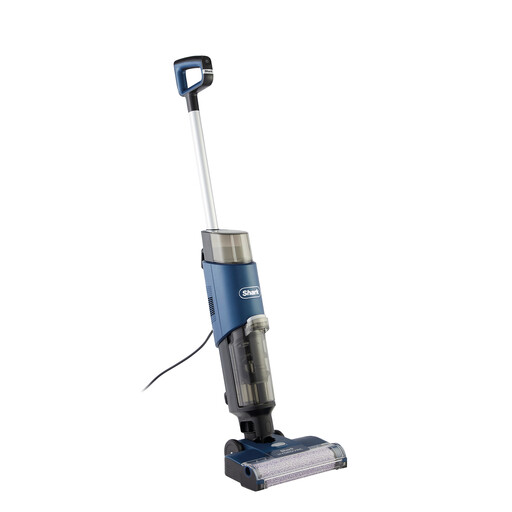
Shark HydroVac WD110UK corded hard-floor cleaner, Navy Blue
Consider this corded hard-floor format for routine washing rather than concentrated grout work. Confirm that the brush roll, cleaning solution, porcelain finish and grout suit its specified sealed-surface use.
View on Joybuy
 No image available
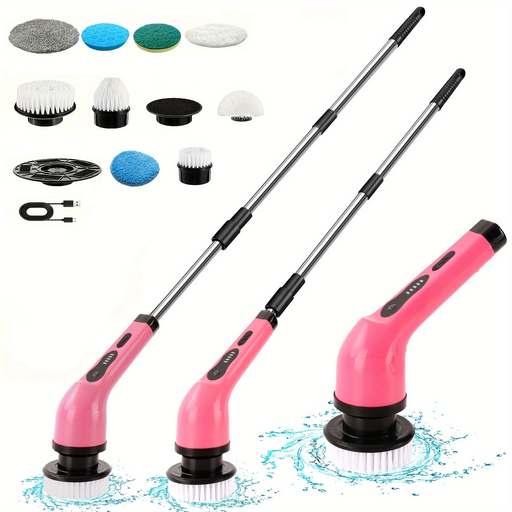
IAGREEA rechargeable electric spin scrubber, 2 speeds, 9 replacement heads, Pink & White
Consider this cordless brush for local tile and grout work rather than washing an entire room. Check which of its heads suits your porcelain finish, test it in an inconspicuous area and consult the water-exposure instructions before wet-area use.
View on Joybuy
 No image available
Leebein electric cleaning brush, extendable handle, 2 speeds, 7 brush heads, IPX7
The extendable-handle format is relevant when reaching floor-level areas matters most. Confirm that a supplied head suits your porcelain finish and grout, and follow this model's instructions for water exposure rather than relying on the IPX7 label alone.
View on Joybuy
 No image available
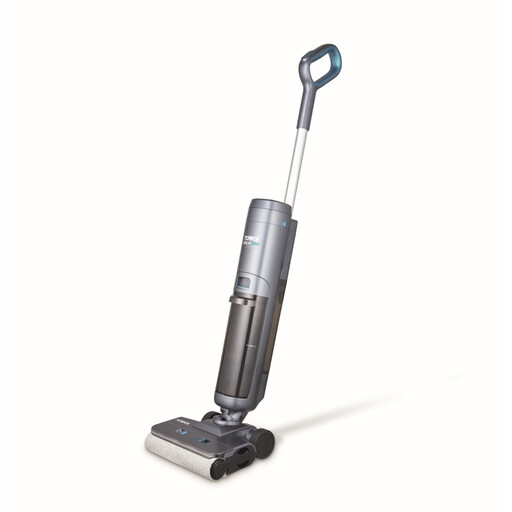
Tower Aquajet Pro T547003 cordless wet and dry hard-floor cleaner, Titanium
Consider this format for routine cleaning if your porcelain floor is suitable for wet cleaning. The named configuration has a 650 ml clean tank, a 550 ml dirty tank and a 22.2 V rating. Check the floor and grout requirements before use; do not use it on an unsealed floor.
View on Joybuy
Questions about cleaning porcelain tiles
Can an electric scrubber replace ordinary floor cleaning?
Not necessarily: a rotating brush is most useful for local grime, joints and edges, while regular floor care still involves removing loose dirt and washing the surface. Porcelain Superstore advises removing loose dirt before mopping and recommends a microfibre mop for routine cleaning.
Which brush and cleaner should I try on porcelain first?
Start with a suitably soft brush or non-abrasive pad and a compatible mild cleaner, then test them together in an inconspicuous place. Porcelain Tiles advises against abrasive sponges and excessively acidic or basic cleaning products.
Can I submerge a water-resistant electric scrubber?
Only if the exact model's instructions expressly permit that use. Bosch DIY describes the UniversalBrush as IPX5 splash-water protected, while Ryobi describes specified scrubbers as IPX7; neither statement gives every electric scrubber the same water-exposure limits.
What should I do with an electric scrubber at the end of its life?
Check electrical-equipment recycling arrangements rather than treating the tool as ordinary household waste. GOV.UK explains that the UK waste electrical and electronic equipment framework aims to increase recovery, reuse and recycling; check local collection options and how to handle any removable battery.


