What matters when choosing?
Start with the space available after cooking and the clean-up everyone can manage. Then decide whether a timer and extra cooking tiers will see regular use.
| Concern | What to check | Who this matters to |
|---|
| Cleaning and food separation |
Check which bowls, lids and trays can be removed and how each part must be cleaned. Separate tiers do not replace cleaning after raw-food contact. |
If several people use the appliance, I need to hand it over clean without a complicated washing-up routine; around 31% of consumers would put cleaning and food separation first. |
| Stored footprint |
Measure the shelf and worktop space, and compare the appliance in its stored configuration rather than relying on its capacity. |
When the worktop must be cleared after cooking, I need somewhere the steamer can actually go; storage would be the primary concern for around 31% of consumers. |
| Timed operation |
Check the timer, shut-off and water-level features on the specific model. A finished cooking cycle does not mean the lid and baskets are cool. |
In a busy kitchen, I want a clear end to the cooking cycle without relying solely on memory; around 23% of consumers would prioritise simple timed operation. |
| Several portions or foods |
Choose tiers and capacity for the meals you normally make. If foods need to finish together, check for synchronised timing rather than assuming every tiered model provides it. |
If I routinely prepare vegetables with other meal components, room for more than one food matters to me; around 15% of consumers would make simultaneous cooking their first priority. |
Joybuy product choices
These choices cover a two-tier electric steamer for cooking several foods and an electric cooking pot with a steam basket for vegetables. Decide whether you need separate tiers or would also use the pot for other cooking tasks.
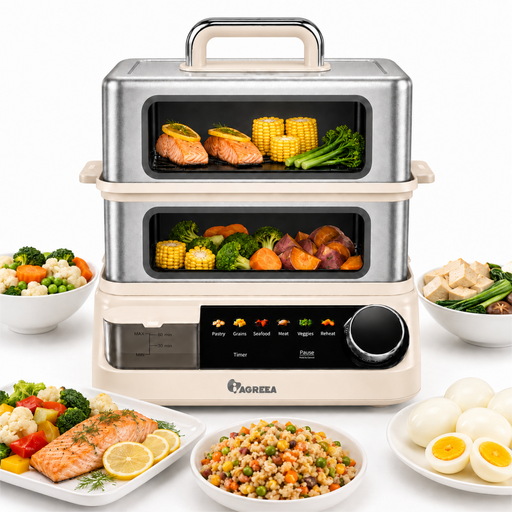 Image unavailable
IAGREEA MS-22ZG21-Q 14L two-tier electric steamer
Consider the separate tiers if you expect to steam vegetables alongside another food, rather than only a small serving of green beans.
The listed configuration has two stainless-steel trays, 2000W power, a 2.5L external water tank, six presets and a timer. Check its stored dimensions and the trays’ cleaning instructions against your shared-kitchen routine.
View on Joybuy
 Image unavailable
Drew & Cole Cleverpot cooking pot with steam basket, Cream
The steam basket offers a way to prepare vegetables if a cooking pot better suits your usual tasks than a dedicated multi-tier steamer.
The listed pot has 600W power and a glass lid. Check the exact capacity, whether a cooking timer is provided and how the basket should be cleaned before buying.
View on Joybuy
Frequently asked questions
Do I need a large steamer just for green beans?
No large capacity is required simply because you are steaming green beans. Three-tier 7–9L formats are worth considering when you regularly cook several portions or ingredients; otherwise, weigh their stored size and washing-up against your usual serving.
Which features make an electric steamer easier to share?
Removable parts with clear cleaning instructions and a storage arrangement that fits the shared cupboard are the most practical starting points. Check dishwasher suitability part by part, then decide whether a visible water level and timer would help with your usual cooking.
How should we handle a steamer after preparing raw food?
Clean food-contact equipment thoroughly after raw-food contact and keep raw and ready-to-eat preparation separate. Food Standards Agency guidance on cross-contamination addresses food businesses in England, Northern Ireland and Wales; in a domestic shared kitchen, follow the appliance manual and agree a cleaning routine between users.
Is a synchronised-finish steamer worthwhile for green beans?
Synchronised finishing is most relevant when you regularly cook foods with different steaming times and want them ready together. For green beans as a single side dish, a conventional timed model can meet the task without meal-coordination programmes.


