
24/7 Customer Support

Free returns

Same-day & Next-day Delivery

Quality Guaranteed

Unlock Your Welcome Offers: FREE Delivery | Up to 80% OFF | Free 30-day JoyPlus trial
Download the APP
As a Joybuy Product Recommendation Officer, my role is to help you navigate the crowded market of oral care gadgets. When it comes to choosing a new electric toothbrush, it's easy to get lost in a sea of marketing claims and technical jargon. Many shoppers in the UK end up paying a premium for features they'll never use or fall for promises that don't hold up in daily life.
Before you invest, let's look at a few common pitfalls that can lead to buyer's remorse:
To make a smart purchase, focus on the core specifications that directly impact your oral health and user experience.
The two dominant technologies on the market are sonic and oscillating-rotating. There is no single "better" option; the choice often comes down to personal preference.
If there is one feature you should not compromise on, it is this. An electric toothbrush with a pressure sensor is vital for protecting your oral health. Brushing too hard is a common habit that can lead to gum recession and enamel wear. A good sensor will alert you—often with a light or a change in vibration—when you are applying too much force, guiding you towards a safer, more effective technique. This is particularly important for anyone with an electric toothbrush for sensitive gums.
Nearly all electric toothbrushes include a two-minute timer, often with 30-second pulses (a quadpacer) to prompt you to move to the next quadrant of your mouth. This is a fundamental feature that helps ensure you brush for the dentist-recommended duration.
A smart toothbrush, on the other hand, offers advanced features like Bluetooth connectivity to an app. This can provide real-time feedback on coverage, pressure and brushing habits. While this can be a powerful tool for those dedicated to perfecting their technique, it's a 'nice-to-have' rather than an essential for many users.
Based on these practical considerations, here are a few recommendations tailored to different user needs across the electric toothbrush UK market.
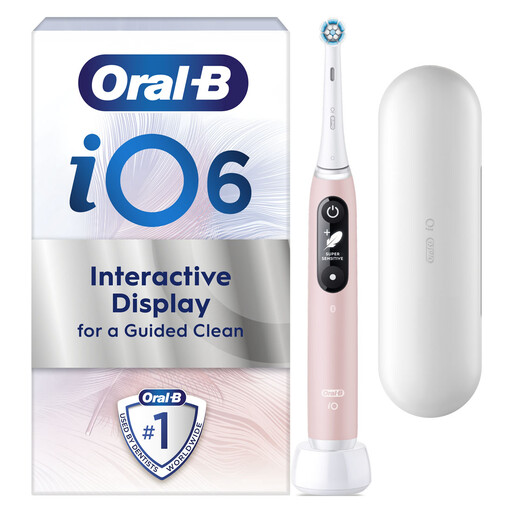
Why This Fits Their Persona: For the user who wants data-driven results, this smart toothbrush offers real-time coaching via the Oral-B app. It helps track coverage and pressure, turning a daily chore into an optimised routine for better oral health.
While it has five modes, its primary value comes from the AI tracking and app guidance. This isn't just a collection of settings; it's an interactive system that provides tangible feedback, justifying its 'smart' features.
Features an interactive OLED display for at-a-glance feedback and a multi-colour smart pressure sensor. The iO magnetic technology provides a powerful yet quiet and smooth cleaning experience.
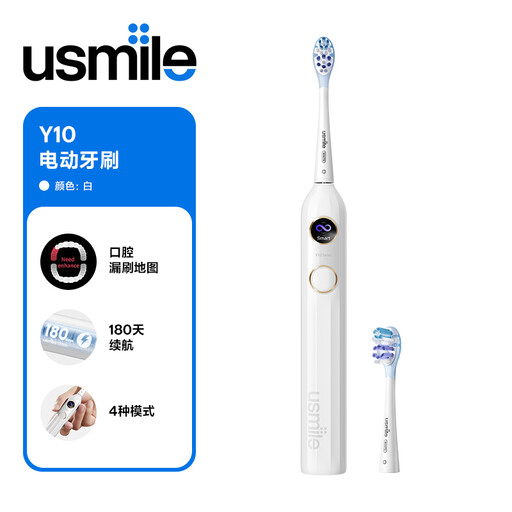
Why This Fits Their Persona: Perfect for frequent travellers or anyone who simply dislikes the clutter of charging cables. The standout feature is its exceptionally long battery life, offering months of use from a single charge via a modern USB-C port.
It directly counters the "battery life mirage" by making longevity its core selling point. While real-world use may vary, its capacity is engineered to far exceed the standard two-week lifespan of most brushes.
Features a unique smart screen for visual feedback on brushing coverage. It also includes smart pressure control and an IPX7 waterproof rating, making it both intelligent and durable.
We have compiled a complete, real-time list of products that fully satisfy these strict selection criteria and UK safety regulations.
Most manufacturers, including Oral-B and Philips, recommend replacing your brush head every three months or sooner if the bristles become frayed. The cost varies significantly by brand and model. It is wise to check the price of replacement heads before committing to a toothbrush to understand the long-term running cost.
Yes. Most electric toothbrushes sold in the UK come with a 2-pin plug designed for the shaving sockets found in many bathrooms. If you don't have one, you can use a simple and widely available 2-pin to 3-pin adapter to plug it into any standard UK wall socket. This does not affect the performance or safety of the device.
Both technologies can be suitable for sensitive gums, provided you choose the right settings and use a pressure sensor. Many models, both sonic and oscillating, offer a dedicated 'Sensitive' or 'Gum Care' mode that reduces the intensity. The key is to let the brush do the work without applying excess force. If you have severe sensitivity, look for a model with an 'extra-gentle' mode and a reliable pressure sensor.