
24/7 Customer Support

Free returns

Same-day & Next-day Delivery

Quality Guaranteed

Unlock Your Welcome Offers: FREE Delivery | Up to 80% OFF | Free 30-day JoyPlus trial
Download the APP
Upgrading from a manual to an electric toothbrush feels like a significant step up for your oral health. But the market is flooded with models boasting endless features, making it difficult to know what’s genuinely useful and what’s just marketing jargon. Many of us have been there: you spend a considerable amount on a new gadget, only to find it’s impractical, costly to maintain or simply doesn't suit your needs.
As the Joybuy Product Recommendation Officer, my role is to help you see past the hype. Before you invest, let’s look at the common pitfalls that UK shoppers face and how to sidestep them to find a device that truly works for you.
To make a smart choice, focus on the fundamentals. These are the non-negotiable specifications that directly impact your daily cleaning experience.
This is the primary difference in how electric toothbrushes work, and the choice often comes down to personal preference.
Neither is definitively superior; it’s about what feels most comfortable and effective for your teeth and gums.
If there is one feature you should not compromise on, it is the toothbrush with a pressure sensor. Brushing too hard is a leading cause of gum recession and enamel wear, and it’s a difficult habit to break. A pressure sensor provides real-time feedback—usually a light that changes colour or a change in the motor's vibration—to alert you when you’re applying too much force. This simple feature is arguably more important for long-term oral health than multiple cleaning modes.
A rechargeable toothbrush is standard, but how it charges matters. While some models still use a dedicated 2-pin bathroom plug, the move towards USB-C charging offers far greater flexibility. You can charge it with the same cable as your phone or laptop, making it a perfect electric toothbrush for travel and reducing clutter at home. Aim for a battery that lasts at least two weeks, but prioritise convenient charging over a six-month claim tied to a proprietary cable.
Instead of a one-size-fits-all approach, we’ve matched some standout products to different user needs.
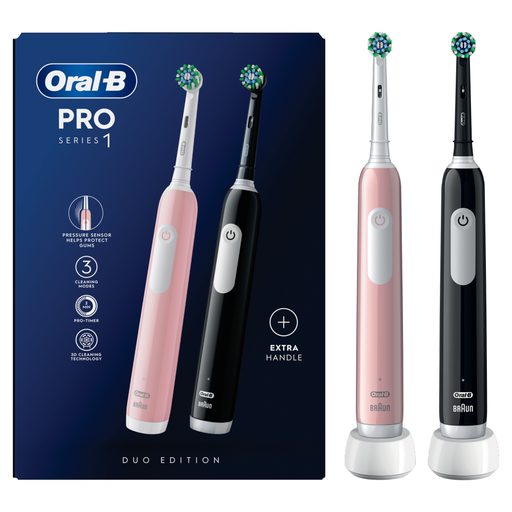
Why This Fits Their Persona: This is an ideal first step into electric brushing. It focuses on the essentials without overwhelming you with features. This duo pack offers excellent value for a couple or family, providing a reliable clean without a hefty price tag.
It avoids the "smart feature" trap by delivering core functionality—a timer and pressure sensor—that you will actually use every day. The widely available brush heads also prevent long-term cost surprises.
Includes a pressure sensor to protect gums and a 2-minute quadrant timer. The round head is designed to effectively clean around each tooth.
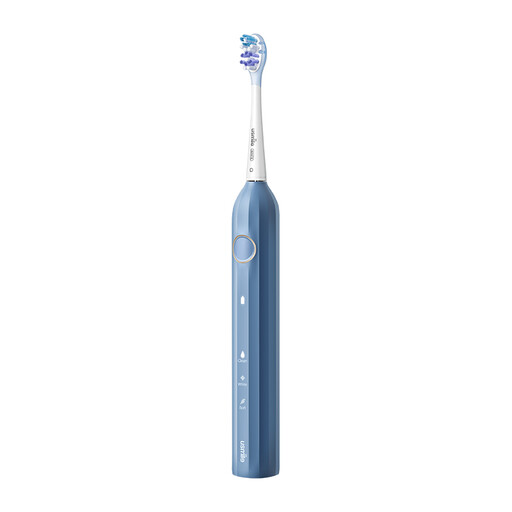
Why This Fits Their Persona: For anyone who travels often or simply hates cable clutter, the Y1S is a game-changer. Its standout feature is the exceptional battery life, lasting up to 6 months on a single charge. It comes with a travel case, making it the ultimate grab-and-go option.
While it boasts an ultra-long battery, it sidesteps the proprietary charger trap by using a standard USB charging method. This means you can charge it with the same cable as many other devices, adding to its convenience.
Incredible 6-month battery life from one charge. It's a powerful sonic toothbrush with 3 modes and a smart timer, all packaged in a sleek design with a travel case included.
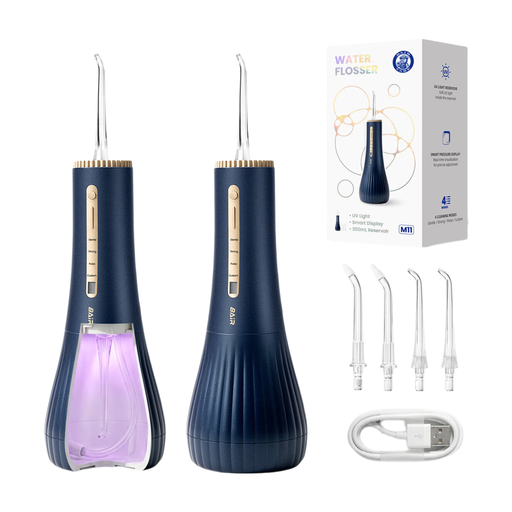
Why This Fits Their Persona: For those looking to go beyond brushing, a water flosser (or oral irrigator) is the next step. It's particularly effective for cleaning around braces, implants and bridges. This model combines powerful cleaning with a focus on hygiene, thanks to its UV sanitisation feature.
This isn't a toothbrush, but a complementary tool. It avoids the trap of being a "jack of all trades, master of none" by focusing solely on being an excellent water flosser. It has practical features like a large tank and long battery life.
Features a UV sanitisation light for nozzles, a large 360ml water tank and a 30-day battery life with convenient USB-C charging. The IPX8 waterproof rating adds to its durability.
We have compiled a complete, real-time list of products that fully satisfy these strict selection criteria and UK safety regulations.
The standard recommendation from dentists is to replace your brush head every three months. You should also replace it sooner if the bristles become visibly frayed or splayed, as they will no longer clean effectively. Some brush heads feature indicator bristles that fade over time to remind you when a change is due.
Absolutely. In fact, many find them more effective. If you have sensitive gums, look for a model with a dedicated "Sensitive" mode and, crucially, a pressure sensor to prevent you from brushing too hard. For braces, the small, oscillating-rotating heads or a targeted water flosser can be excellent for cleaning around brackets and wires.
A sonic toothbrush uses high-frequency vibrations to move the brush head from side to side, creating a fluid dynamic that cleans beyond where the bristles physically touch. An oscillating-rotating toothbrush uses a circular, spinning motion combined with pulsations to scrub plaque away. The choice is largely down to personal preference—some prefer the deep-clean feeling of an oscillating brush, while others favour the gentler, sweeping motion of a sonic one.