
24/7 Customer Support

Free returns

Same-day & Next-day Delivery

Quality Guaranteed

Unlock Your Welcome Offers: FREE Delivery | Up to 80% OFF | Free 30-day JoyPlus trial
Download the APP
Making the switch from a manual to an electric toothbrush is a significant step towards better oral hygiene. However, the market is flooded with models boasting features that sound impressive but often add more to the price tag than to your daily routine. As a Joybuy Product Recommendation Officer, my role is to help you see past the marketing clutter and focus on what truly matters. Before you invest, let's look at three common pitfalls that UK shoppers encounter.
rechargeable toothbrush advertised with a battery that lasts for months. These figures are often based on minimal usage, such as the lowest intensity setting for only one minute a day. For a typical user brushing twice daily for two minutes, the actual battery life is considerably shorter. Focus on a reliable battery that lasts at least a week or two between charges, rather than chasing a number that may not reflect real-world use.Instead of getting distracted by superfluous extras, focus on the core specifications that directly impact cleaning performance and long-term oral health.
This is the primary difference in how an electric toothbrush for adults cleans.
sonic toothbrush uses an oblong brush head, similar to a manual one, that vibrates at extremely high speeds (often over 30,000 strokes per minute). This high-frequency movement creates powerful fluid dynamics, pushing water and toothpaste into hard-to-reach areas like between teeth and below the gumline.Neither technology is inherently superior; the choice often comes down to personal preference. Some find the focused cleaning of an oscillating head more thorough, while others prefer the gentler, sweeping sensation of a sonic brush.
Regardless of the technology, two features are non-negotiable for an effective clean.
toothbrush with pressure sensor is crucial. It provides a real-time alert—usually by lighting up, vibrating differently or stopping pulsations—when you apply too much force, actively protecting your gums.toothbrush with timer ensures you meet this guideline. Most models include a quadrant pacer, which is a short pause or buzz every 30 seconds, prompting you to move to the next section of your mouth for an even, consistent clean.We've matched some practical options to different user needs, helping you find a brush that fits your lifestyle and budget without paying for features you don't need.
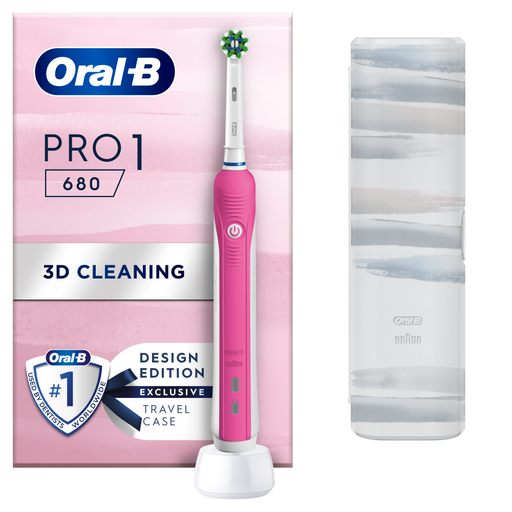
Why This Fits Their Persona: This user's top priority is preventing gum damage from aggressive brushing. This Oral-B electric toothbrush is an ideal choice because its standout feature is the built-in pressure sensor, which provides immediate feedback to protect sensitive gums.
It avoids feature overload by focusing on the two most important functions: a 2-minute timer and a pressure sensor. Its single 'Daily Clean' mode simplifies the routine, ensuring you get a great clean without confusion.
The integrated toothbrush with pressure sensor is its key benefit, actively reducing brush speed to prevent gum damage. It also includes a travel case, making it a practical choice for use at home and away.
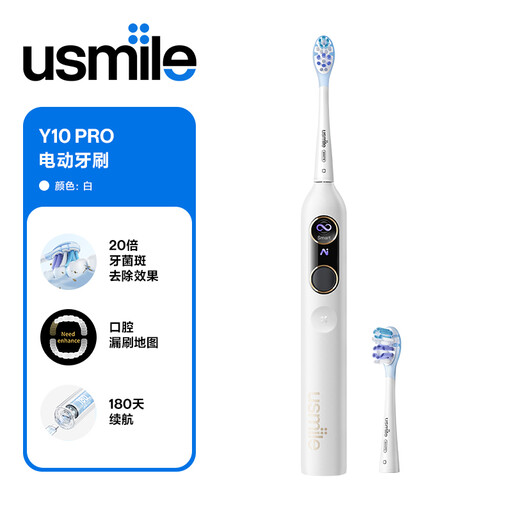
Why This Fits Their Persona: This user values convenience, long battery life for travel and useful tech. The usmile Y10 Pro's standout feature is its exceptionally long battery life, which the brand claims can last up to 180 days, minimising the need to pack a charger. The smart screen offers feedback without a fussy app.
It directly tackles the battery life pitfall by offering a runtime that far exceeds the industry average. While it has a "smart" feature, the on-handle display is more practical and less intrusive than a separate smartphone app.
Very long battery life is ideal for frequent travellers. The integrated smart screen provides useful brushing guidance. It also includes a pressure sensor and timer, covering all essential bases.
We have compiled a complete, real-time list of products that fully satisfy these strict selection criteria and UK safety regulations.
Many electric toothbrushes, particularly from brands like Oral-B, are sold with a 2-pin plug. This is designed to fit the shaver sockets commonly found in UK bathrooms. If your bathroom does not have a shaver socket, you will need a simple and widely available 2-pin to 3-pin adapter to charge it from a standard wall socket. This is a normal and safe configuration.
For hygiene and effectiveness, dentists and manufacturers recommend replacing your brush head every three months. The bristles wear down over time, becoming less effective at removing plaque. If you have been ill, it is also a good idea to change your brush head. Many modern brush heads feature indicator bristles that fade over time to remind you when a replacement is due.
There is no definitive answer to which is "better," as both offer a significant improvement over manual brushing. The choice is largely down to personal preference. Some people prefer the tooth-by-tooth clean of an oscillating-rotating head, while others find the high-frequency vibrations of a sonic brush feel more comprehensive and gentle. The most effective brush is the one you feel comfortable with and will use correctly every day.