People who rush brushing
If you often lose track of time or finish early, a timer can prompt you to complete the approximately two-minute session recommended by the NHS. It cannot tell you whether you have cleaned every surface.


Choose the feature that addresses what most often disrupts your routine: a two-minute timer if you cut sessions short, pressure feedback if you scrub hard, or connected guidance if you will use the app. None replaces brushing thoroughly twice a day for about two minutes with fluoride toothpaste; NHS guidance says both manual and electric brushes can work when used thoroughly.
If you often lose track of time or finish early, a timer can prompt you to complete the approximately two-minute session recommended by the NHS. It cannot tell you whether you have cleaned every surface.
If you tend to scrub, pressure feedback may help you notice it during a session. Philips and Oral-B describe this feature on particular models, so check the exact brush rather than assuming every model has it.
If prompts help you pay attention to coverage, connected features may be worth considering. Oral-B describes six-zone app guidance for its iO 5; it is less relevant if you do not intend to use an app.
Start with the part of your twice-daily routine you find hardest to maintain. Then check the exact model's prompts, replacement heads and charging arrangements rather than paying attention to its feature count alone.
| Concern | What to check | Who this matters to |
|---|---|---|
| Completing a session | Look for a two-minute timer; check whether it also prompts you to move between areas of your mouth. | If I often finish brushing in a hurry, a duration cue could help me stay with the session, though I still need to clean every surface. Around 36% of consumers put completing the session first. |
| Brushing pressure | Confirm that the exact model has a pressure sensor and how it alerts you. | When I catch myself scrubbing, I want a prompt I can respond to straight away. Roughly 29% of consumers make pressure feedback their primary concern. |
| Replacement heads | Identify the compatible head family for the handle and check that you can obtain replacements. | I want to keep using the brush without having to guess which heads fit when one wears out. For around 21% of consumers, straightforward ongoing ownership matters most. |
| Charging away from home | Check the stated battery duration and the charger and travel case supplied with the exact variant. | If I regularly brush away from home, I need a charging arrangement I can take with me. About 14% of consumers prioritise travel and charging convenience. |
A timer marks duration, not complete coverage. NHS guidance emphasises brushing thoroughly twice daily with fluoride toothpaste, whichever type of brush you use.
Choose prompts that address your routine barrier, then make time to clean the inside, outside and chewing surfaces.
Head compatibility affects whether the brush stays practical to use. Do not assume that every Oral-B head fits an iO handle.
Check the handle series and its compatible head family before choosing a model.
You will need fresh compatible heads regularly; Oral-B recommends replacing its electric brush heads every three months.
Pressure feedback is model-specific. The cited Philips and Oral-B models describe different responses to excessive pressure.
Check the exact model's specification to see whether it gives an alert, changes its brushing action or offers only a timer.
Battery statements and included charging equipment or cases can differ between models and variants.
If you will brush away from home, confirm the stated battery life, supplied charger and travel-case contents for the pack you are buying.
A reference point for round-head electric brushes, including simpler handles and iO models with connected guidance.
A reference point for sonic brushes with timer and pressure-sensor options.
These brushes offer different ways to support a daily routine, from on-handle timing and pressure cues to a model with app guidance. Compare the exact variant's charging arrangement and replacement heads alongside the features you expect to use.
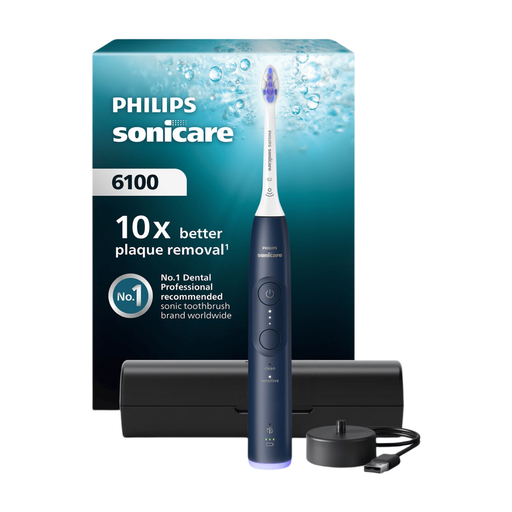 No image available
Consider this model if timed prompts and pressure feedback would help you avoid rushing or pressing too hard.
 No image available
This is a choice for someone who intends to use connected brushing guidance as part of their routine.
 No image available
Its listed timing and pressure cues may suit a routine built around prompts on the brush rather than an app.
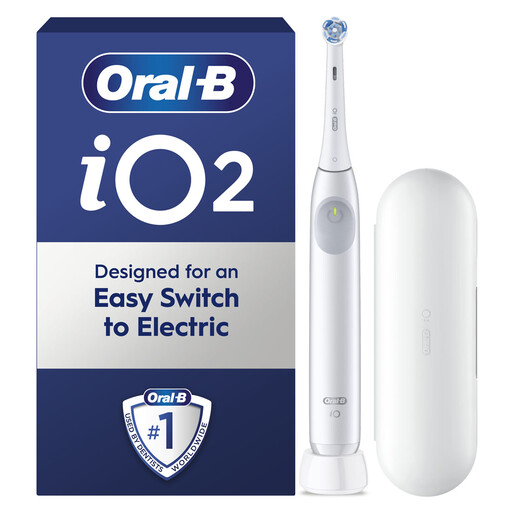 No image available
If you want timed prompts and pressure feedback without relying on connected guidance, this model is worth comparing.
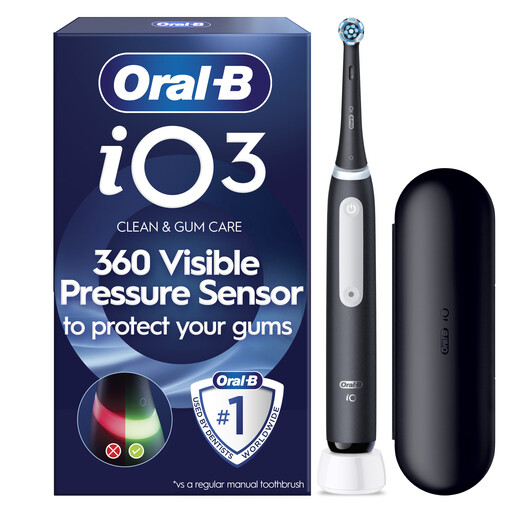 No image available
This model suits someone looking for visible pressure feedback and a timed brushing routine.
No. NHS guidance says manual and electric brushes can both work well when you thoroughly clean every tooth surface with fluoride toothpaste. Choose an electric feature for the part of the routine where a prompt would help you.
The NHS recommends brushing twice a day for about two minutes each time. A timer can cue the duration, but you still need to clean inside, outside and chewing surfaces.
Yes. For adults, NHS guidance recommends toothpaste containing at least 1,350 ppm fluoride. Spit out excess toothpaste after brushing rather than rinsing immediately with water.
Follow the instructions for your handle and head. Oral-B recommends replacing its electric brush heads every three months to maintain performance; replace a head earlier if its bristles are frayed.
Check the age guidance for the exact model and supervise brushing as appropriate. Oral-B says its iO3 is not recommended for children under three, while the NHS advises helping or supervising children with brushing until at least age seven.