People building a brushing routine
If you concentrate on the visible outer surfaces, a timer or pacing prompt may help you work systematically around the mouth without forgetting inner and chewing surfaces.


Choose a brush you can position comfortably along the outer surfaces and gumline, with timing prompts if you tend to rush and pressure feedback if you tend to press hard. Round-head Oral-B iO and sonic Philips Sonicare models offer different ways to get that feedback, but neither replaces a methodical routine that also covers inner and chewing surfaces and includes interdental cleaning.
If you concentrate on the visible outer surfaces, a timer or pacing prompt may help you work systematically around the mouth without forgetting inner and chewing surfaces.
If you find yourself pressing firmly at the gumline, look for pressure feedback on the exact model so you can notice when to ease off.
If advanced connected features are not your priority, check compatible replacement heads and the supplied charging accessories before choosing a model.
Start with a brush head you can place comfortably at the tooth and gumline, then decide whether timing prompts or pressure feedback would help your routine. NHS guidance calls for cleaning every tooth surface, not only the visible outer ones.
| Concern | What to check | Who this matters to |
|---|---|---|
| Complete coverage | Check for a two-minute timer and, if useful, prompts to change mouth sections. Make sure the head is comfortable to position along the outer tooth and gumline. | If I tend to finish after brushing the visible teeth, I need a routine that takes me around the outer, inner and chewing surfaces. Around 40% of consumers put complete coverage first. |
| Gumline pressure | Check the exact model for a pressure sensor or alert; an intensity setting is not the same feature. | When I catch myself pressing hard near the gumline, I want feedback that tells me to ease off. Around 30% of consumers make pressure awareness their primary concern. |
| Ongoing use | Confirm compatible replacement heads and what charging accessories the exact bundle includes. | If I want a brush that is easy to keep using, replacement heads and the charging arrangement matter more to me than extra settings. For roughly 30% of consumers, that practical upkeep comes first. |
Cleaning the fronts of the teeth does not cover the inner or chewing surfaces, or the spaces between teeth.
Follow a repeatable route around the whole mouth. NHS guidance also recommends cleaning between teeth daily with interdental brushes or floss.
A lower-intensity mode changes a setting; it does not necessarily alert you when you press too hard.
If force is your main concern, check that the exact toothbrush model specifies a pressure sensor or alert.
Head compatibility and bundle contents affect how straightforward the brush is to use over time.
Check the compatible head range and what charger or cable is supplied with the exact model. Philips notes that the charging cable for the travel-case accessory listed with its Series 5300 HX7103/01 is separate.
Replacement heads and, with some bundles, a charging cable need to be obtained separately.
Pressure feedback can alert you to force, but it cannot show that every tooth surface has been cleaned.
Place the bristles gently where the tooth meets the gumline and move deliberately across outer, inner and chewing surfaces.
Consider the iO range if you prefer placing a round head along the outer surfaces tooth by tooth.
Consider selected sonic models if you want pressure feedback alongside timing or pacing features.
SURI 2.0 is another model to consider; Electric Teeth includes it in its UK toothbrush recommendations.
These electric toothbrushes offer round-head and sonic options for an outer-surface brushing routine. Compare the guidance features and bundle details that matter to you, while planning to clean the rest of the mouth too.
 No image available
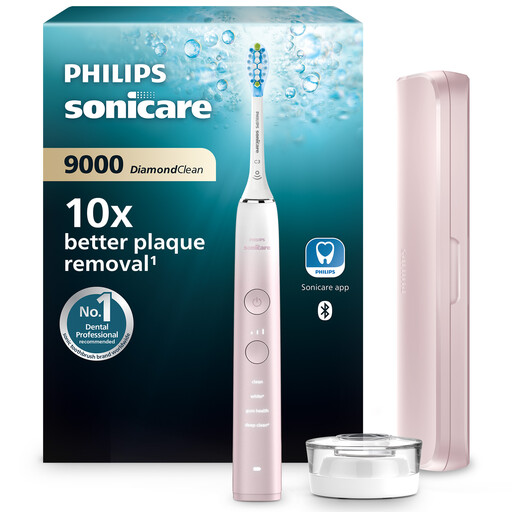
A sonic option to consider if you want a choice of brushing settings for your routine.
The listed variant has four modes, three intensity settings and Sonicare app connectivity. Check whether its guidance features suit the way you move between tooth surfaces.
 No image available
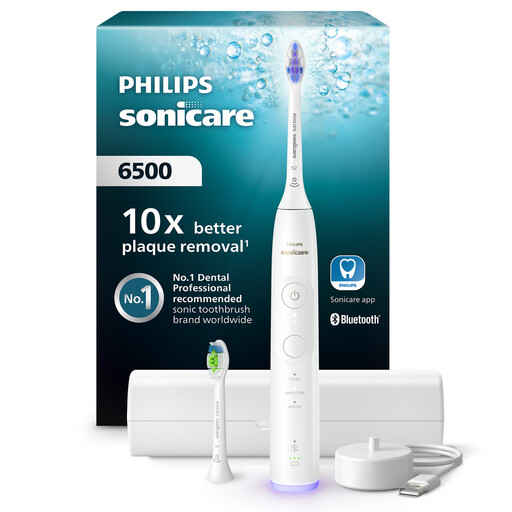
Consider this sonic model if visible pressure feedback and a supplied travel case fit your routine.
Its name specifies three modes, three intensity settings and a visual pressure sensor. Check which replacement heads fit the exact handle.
 No image available
Consider this round-head option if timed changes between mouth sections would help you avoid concentrating on the front teeth.
Its name specifies three modes and a 4 × 30-second timer. A timer is a prompt to move on, not confirmation that every surface is clean.
 No image available
Consider this sonic model if pressure feedback and prompts to change mouth sections are useful to you.
The listed variant specifies two intensities and a pressure sensor. Its Joybuy listing describes SmartTimer and QuadPacer; confirm the mode count and compatible replacement heads for HX7108/02 before choosing it.
 No image available
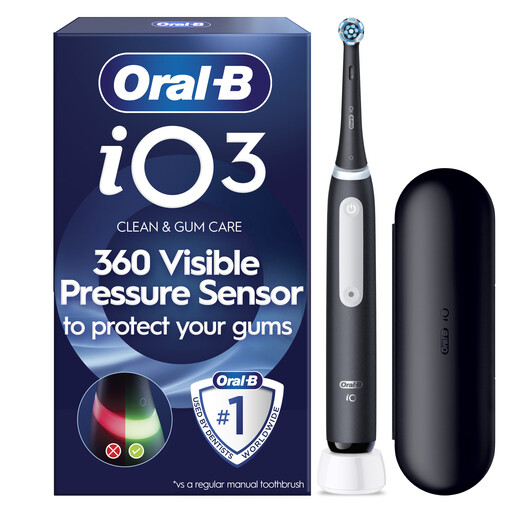
Consider this round-head model if visible feedback would help you ease off when brushing along the gumline.
The listing specifies three modes, a visible pressure sensor and a brushing timer. If section-by-section prompts matter, check whether this exact variant includes them; also confirm its compatible replacement heads.
No. NHS guidance says manual and electric toothbrushes can both clean teeth effectively when you use fluoride toothpaste and clean all tooth surfaces. Choose an electric model if its movement or guidance features make that routine easier for you to follow.
Place the bristles gently where the tooth meets the gumline rather than scrubbing hard. Kent Community Health NHS Foundation Trust advises angling the bristles towards the gumline and moving systematically across tooth surfaces.
No. NHS guidance calls for cleaning outer, inner and chewing surfaces. Clean between teeth daily with interdental brushes or floss as well; the toothbrush does not replace that step.
No. NHS guidance advises spitting out excess toothpaste without rinsing immediately, so the fluoride left on the teeth is not washed away straight after brushing.