Who is an electric citrus juicer for?

Family-batch breakfast makers

If you make juice for several people or use lemon juice in breakfast recipes, a stated working capacity helps you judge whether you will need to stop and empty the container. Lakeland specifies a 600ml working capacity and two cone sizes for its cited model.

Households with different pulp preferences

If some people prefer smoother juice and others want more pulp, look for an explicit adjustment rather than assuming a strainer offers a choice. Braun Household GB specifies five pulp settings for the CJ3000, while Lakeland specifies two adjustable filters for its 600ml model.

Weekday users who want less mess

If washing up affects whether you use the juicer regularly, check the parts on the exact model. Lakeland describes detachable parts, while Smeg lists dishwasher-safe parts and an anti-drip spout for its CJF11.

What matters when choosing a citrus juicer?

Larger jug

Choose when: You want to collect several servings of lemon juice before emptying the appliance.

Trade-off: Check the stated working capacity and allow room to store the jug.

Compact bowl

Choose when: You usually squeeze smaller quantities and want a compact model with pulp control, such as Braun’s CJ3000.

Trade-off: Its listed 350ml bowl may need emptying during a larger family breakfast.

Counter-top press

Choose when: A spout for pouring and dishwasher-safe parts matter more to you than a collection jug; Smeg lists both for its CJF11.

Trade-off: Pressure activation still requires you to press the fruit onto the reamer.

ConcernWhat to checkWho this matters to
Batch size Check working capacity rather than judging by the container’s appearance. If you also squeeze larger citrus fruit, check the cone options. If I make lemon juice for several people, I want to finish without repeatedly emptying the container. For around 37% of consumers, batch size would be the primary concern.
Pulp texture Look for stated pulp settings or adjustable filters; a fixed strainer does not establish that you can change the texture. When family members want different amounts of pulp, I need a way to change the result between servings. Texture control would come first for around 36% of consumers.
Clean-up Confirm which parts detach, which are dishwasher-safe and whether the spout has an anti-drip feature. On a weekday morning, I want pouring and washing up to be manageable after breakfast. Around 27% of consumers would make clean-up their main priority.

Buying pitfalls to avoid

  • Choosing by wattage alone

    Motor power does not tell you how much juice the appliance collects or whether you can adjust the pulp. Braun Household GB specifies a 20W motor and five pulp settings for the CJ3000, while Lakeland describes its model by its 600ml working capacity, cones and filters.

    Compare capacity, cone arrangement, pulp control and cleaning requirements against your breakfast routine before considering wattage.

  • Buying a small bowl for a large batch

    A bowl that needs emptying partway through breakfast adds another step. The cited Braun CJ3000 listing identifies a 350ml bowl, while Lakeland states a 600ml working capacity for its jug model.

    Work out how much juice you intend to prepare at once, then check the model’s stated usable or working capacity.

  • Assuming removable means dishwasher-safe

    Cleaning instructions apply to specific components. Smeg describes dishwasher-safe parts for the CJF11; a description of detachable parts alone does not establish dishwasher suitability.

    Check the exact model’s manual for each part before putting it in the dishwasher, and follow its instructions for cleaning the motor base.

  • Overlooking electrical-product information

    When buying online, the seller and product information matter alongside juicing features. GOV.UK advises consumers to check appropriate marking and the manufacturer’s name and address.

    Before ordering for a UK delivery location, check the seller, product marking, instructions, warnings and manufacturer details.

Citrus juicer brands to consider

Braun

Braun’s CitrusQuick 1 CJ3000 is a compact option to examine when adjustable pulp matters more than collecting a large batch at once.

  • Braun Household GB specifies five pulp settings, press-to-start operation, two-way rotation and 20W power for the CJ3000.
  • Its listed 350ml bowl may need emptying when making several servings.

Lakeland

Lakeland’s 600ml electric citrus juicer is a jug-style option for households making a batch or using different sizes of citrus fruit.

  • Lakeland specifies a 600ml working capacity, two cone sizes, two adjustable pulp filters and detachable parts.
  • Check the space available for the jug and the cleaning instructions for its individual parts.

Smeg

Smeg’s CJF11 is a counter-top press to consider if pouring features and the finish of an appliance kept on display matter to you.

  • Smeg specifies a universal stainless-steel reamer, pressure activation, an anti-drip spout and dishwasher-safe parts.
  • The pressure-activated design still requires you to press fruit onto the reamer; check its collection arrangement against the amount you serve.

Joybuy product choices for lemon-juice preparation

These electric citrus juicers are options to compare if you are preparing lemon juice for a family breakfast. Check usable capacity and pulp-control options on each model before relying on either for a particular batch size or texture.
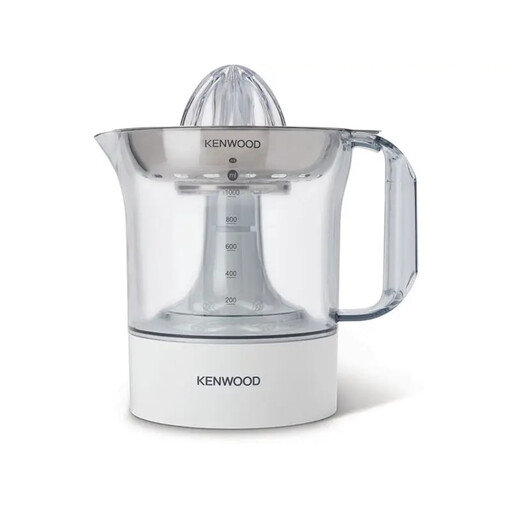
Kenwood JE290A white citrus juicer

Kenwood JE290A Citrus Juicer, White

For lemon juice at breakfast, compare how much you need to serve with this model’s usable collection capacity before choosing it for several people.

If your household wants different pulp levels, confirm whether its filter offers an adjustable setting.

View on Joybuy
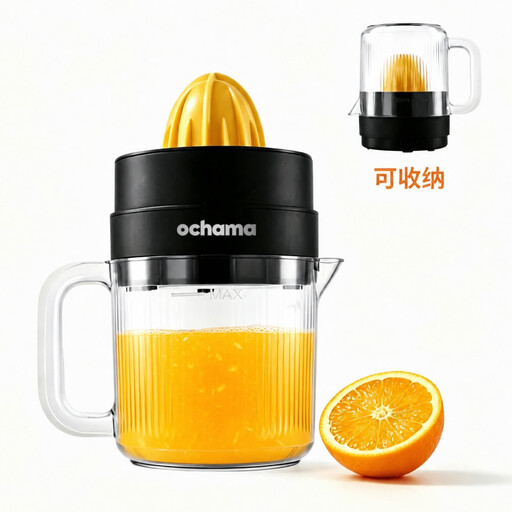
ochama semi-automatic electric citrus juicer, 1.4L, 30W

ochama Semi-Automatic Electric Citrus Juicer, 1.4L, 30W

For several breakfast servings, the stated 1.4L capacity is a starting point, but check the usable juice capacity before planning a full batch.

The product name identifies a semi-automatic citrus press. If different pulp textures matter to your household, confirm whether its filter can be adjusted.

View on Joybuy

Frequently asked questions

What capacity should I look for at a family breakfast?

Choose by the amount of juice you plan to make in one session and check the stated working capacity. Lakeland specifies 600ml for its jug model; a listed 350ml bowl for Braun’s CJ3000 may need emptying during a larger batch.

Can the same juicer handle lemons and larger citrus fruit?

Yes, if the exact model provides a suitable cone or reamer for the fruit you use. Lakeland specifies two cone sizes for its cited model, while Smeg describes a universal reamer for the CJF11; check the manufacturer’s stated fruit compatibility before buying.

What should I check when buying an electric juicer online?

Check the seller and the product’s marking, instructions, warnings and manufacturer details. GOV.UK advises looking for appropriate marking and the manufacturer’s name and address; use information applicable to your UK delivery location.

How should I clean a citrus juicer near the sink?

Unplug the appliance before cleaning and follow its instructions for each removable part. Electrical Safety First advises against touching electrical equipment with wet hands or cleaning an appliance while it is plugged in; confirm dishwasher suitability separately for each component.

What should I do with an old electric citrus juicer?

Look for a suitable reuse or electrical recycling route rather than putting it in general waste. Recycle Your Electricals recommends checking local collection and retailer take-back options for small electrical appliances.