Frequent lemon users short on space
If you regularly prepare lemon drinks, dressings or cooking ingredients, check the exact juicer’s height, footprint and cable reach against the worktop or cupboard you intend to use.


Choose an electric citrus juicer by checking its dimensions and cord reach against your kitchen before judging it by bowl capacity. A bowl model suits small sessions with pulp control, a larger jug suits batches, and a direct-pour press may suit regular use if its height and cleaning arrangements work for you. If you squeeze just one lemon occasionally, a hand juicer may involve less setup and washing up.
If you regularly prepare lemon drinks, dressings or cooking ingredients, check the exact juicer’s height, footprint and cable reach against the worktop or cupboard you intend to use.
If cleaning determines whether you reach for the juicer, look at which parts detach, how they must be washed and whether the pouring arrangement helps contain drips.
If you sometimes make more than a recipe-sized amount, compare pulp controls, cone sizes and collection capacity with the fruit and quantities you usually prepare.
For lemons in a small kitchen, decide whether your primary concern is physical fit, everyday cleanup or control over pulp and batch size.
Consider it when: You usually squeeze a few lemons and want pulp control, as offered by the Braun CJ3000WH.
Allow for: Bowl capacity does not establish whether the appliance fits your shelf or worktop; check the exact dimensions.
Consider it when: You sometimes prepare citrus juice in batches; Lakeland’s 0.6 L model also offers two cone sizes and two filters.
Allow for: A larger collection capacity may be unnecessary for one lemon and says nothing about storage dimensions.
Consider it when: You prefer juice poured directly from the appliance; Smeg specifies a 166 × 166 mm footprint for the CJF11.
Allow for: The CJF11 is 281 mm high and has a 1 m cord, so cupboard clearance and socket position still matter.
| Concern | What to check | Who this matters to |
|---|---|---|
| Kitchen fit | Compare the exact model’s width, depth and height with your available space; check cord reach to the intended socket. | I need the juicer to fit where I will use and store it, without an awkward cable run. Around 42% of consumers put physical fit first. |
| Cleanup | Identify which parts detach and which, if any, are dishwasher-safe; check the pouring arrangement. | When I squeeze lemons regularly, I do not want washing the appliance to take over the task. Roughly 33% of consumers make cleanup their primary concern. |
| Pulp and batch size | Check pulp adjustment, cone sizes and collection capacity against the fruit and amount you usually juice. | I sometimes want a different pulp texture or enough juice for several drinks rather than one recipe. About 25% of consumers prioritise that flexibility. |
Juice capacity does not tell you the juicer’s footprint or height. Smeg specifies the CJF11 at 281 × 166 × 166 mm, illustrating why clearance in all three directions matters.
Measure your worktop or storage space, then compare it with dimensions for the exact model.
Extra capacity and filters are useful only if they suit the amounts you normally make. Lakeland notes that a hand juicer can make more sense for small quantities when you do not want to get out an electric appliance.
Think about your usual session before choosing a jug-style model over a simpler hand juicer.
Cleaning instructions apply to particular models and components, not automatically to every part that comes off.
Check the current instructions for the reamer, filter, bowl and any pusher supplied with the exact variant.
Smeg specifies a Type G plug, 220–240 V supply and 1 m cord for the CJF11; those details should not be assumed for a different-market variant.
Confirm the electrical details of the listing you intend to buy and plan a clear route to a suitable socket.
Braun’s CitrusQuick 1 CJ3000WH is a bowl-style option for consumers interested in pulp adjustment and pressure-start operation.
Lakeland’s electric citrus juicer is relevant when lemon squeezing sometimes becomes a larger batch or involves other citrus fruits.
Smeg’s CJF11 is a direct-pour countertop option with published dimensions for checking a particular space.
These electric citrus juicers cover a jug-style option, a pulp-adjustable model and a press-style model for lemons. Compare each one with your own space and cleaning routine rather than assuming that capacity indicates a compact footprint.
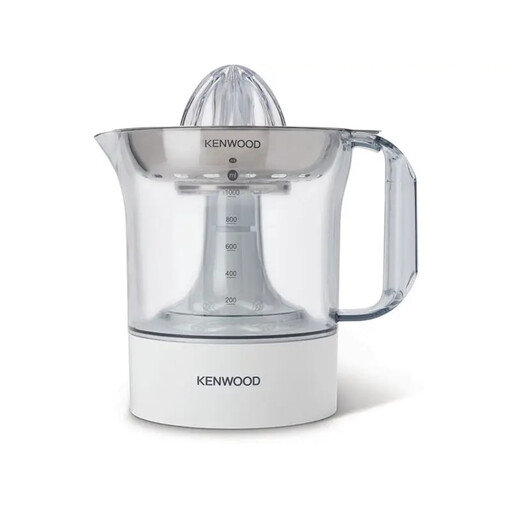 Image unavailable
Consider this jug-style model if you want to prepare lemon juice beyond a small recipe quantity. Compare its listed measurements with your worktop or cupboard, and confirm that the cord reaches your intended socket.
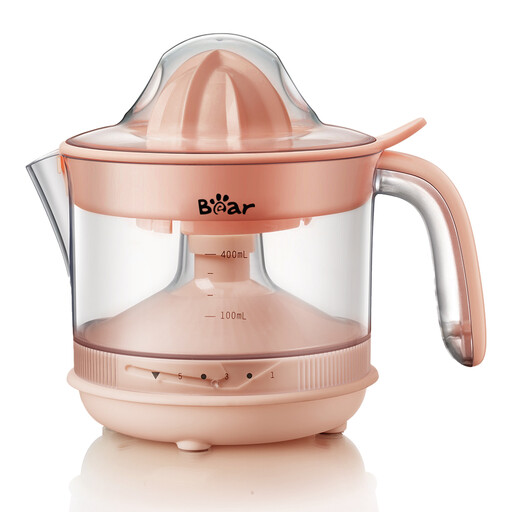 Image unavailable
Consider this model if varying the pulp in lemon juice matters to you; its name specifies five adjustable levels. Check its dimensions, collection capacity and cleaning instructions, and clarify the fruit-preparation instructions before relying on the feed-chute description.
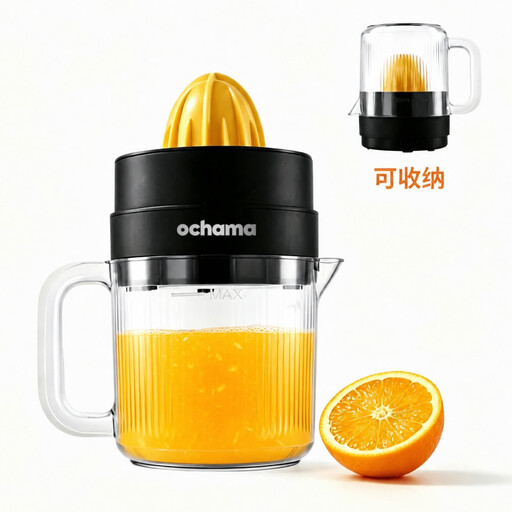 Image unavailable
Consider this press-style model if you squeeze lemons and sometimes want a larger container; its name specifies 1.4 L and 30 W. Container capacity does not indicate worktop fit, so check the appliance dimensions, cord reach and cleaning instructions for its removable parts.
A hand juicer may be more convenient for an occasional small amount. Lakeland points to hand juicers when getting out and cleaning an electric appliance would outweigh the benefit; consider electric operation if repeated squeezing or pulp control matters more to you.
No; dishwasher guidance applies to specific parts of specific models. Smeg identifies dishwasher-safe removable parts for its citrus-juicer line, while the Joybuy listing for Braun’s CJ3000WH names particular removable components. Check the instructions for the exact juicer and parts you are buying.
For products placed on the Great Britain market, GOV.UK guidance dated 21 August 2026 says CE marking continues to be recognised alongside or instead of UKCA marking where the applicable requirements are met. Check the documentation for the product supplied to your market; Great Britain and Northern Ireland can follow different processes.
Look for an appropriate electrical-equipment reuse, recycling or take-back route rather than treating it as ordinary household waste. GOV.UK explains that waste electrical and electronic equipment rules encourage recovery, reuse and recycling; available collection arrangements vary by local authority and retailer.