Cooking several drop scones at once
If you make portions for later meals or family servings, the usable flat surface matters more than the appliance’s overall width. Check how many separate spoonfuls of batter will fit with room to turn them.


Choose an electric pan by its stated cooking surface and the space you can give it: Andrew James lists a 40cm internal diameter for its multi-cooker, while Tower lists a 30cm cooking surface for its skillet. Neither measurement alone tells you how much flat space is available for separate spoonfuls of batter, so check the pan’s shape as well as its heat controls and cleaning instructions before buying. If you already have a suitable hob and do not need a separate appliance, a conventional non-stick pan is another option.
If you make portions for later meals or family servings, the usable flat surface matters more than the appliance’s overall width. Check how many separate spoonfuls of batter will fit with room to turn them.
An electric skillet still needs worktop space while cooking and somewhere to go afterwards. Compare its dimensions with the space you have, and consider whether a pan on your existing hob would be simpler to store.
If cooked batter residue and washing-up are your main concerns, look for a suitable cooking surface and read the exact model’s care instructions. A removable electrical control does not, by itself, mean the pan can be immersed.
Start with the space available for cooking and storing the pan, then consider heat adjustment and cleaning. Plan how you will cool and store the finished batch before deciding how much to make.
| Concern | What to check | Who this matters to |
|---|---|---|
| Cooking area | Compare internal or cooking-surface dimensions, then check how much of that surface is flat. | When I want several small drop scones cooking side by side, room for each spoonful matters more than the outside diameter. Around 36% of consumers put usable cooking area first. |
| Heat control | Look for an adjustable thermostat and follow the model’s preheating instructions; test one portion before filling the pan. | If I am cooking round after round, I want to adjust the heat when the batter sticks or browns differently than expected. Controllable heat comes first for roughly 29% of consumers. |
| Cleaning and storage | Read the exact-model cleaning instructions and measure where the appliance will be kept. | I would rather make a smaller batch than have an appliance that is awkward to put away or clean safely. Around 21% of consumers prioritise handling, cleaning and storage. |
| Storing the batch | Have containers and fridge or freezer space ready; follow appropriate food-storage guidance for the people eating the food. | Making more portions only helps me if I can cool and store them promptly, particularly when preparing food for a young child. Safe storage is the primary concern for approximately 14% of consumers. |
The outside measurement can include space that cannot hold batter. Andrew James lists a 42cm overall diameter but a 40cm internal diameter for its multi-cooker.
Compare stated cooking-surface dimensions, check the shape of the flat area and measure your storage space.
A power rating does not tell you which dial setting will suit your batter. Good Food notes that pancake batter may stick when the pan is not hot enough.
Follow the appliance instructions and cook one small test portion before starting a full batch.
Cleaning restrictions differ by model. Judge’s manual for the JEA23 explicitly says never to immerse the skillet in water.
Read the instructions for the exact pan and let it cool before cleaning it as directed.
For food prepared for babies or young children, NHS guidance says to cool batch-cooked food ideally within 1 to 2 hours, then refrigerate or freeze it.
Set out suitable containers and make space in the fridge or freezer before cooking a large batch.
Portions that cannot be stored promptly may go to waste.
Its 40cm Black Multi Cooker is worth examining when stated internal diameter is a priority and there is room for a large plug-in appliance.
The Cerastone Pro 1500W electric skillet offers a stated 30cm cooking surface for cooks considering a smaller plug-in pan.
The JEA23 electric skillet may suit cooks who want published instructions for its thermostat and care.
These are conventional pans for use on a suitable hob, not self-contained electric frying pans. They are relevant if you can control heat on your existing hob and would rather avoid storing another electrical appliance. A stated pan diameter does not necessarily equal its usable flat cooking area.
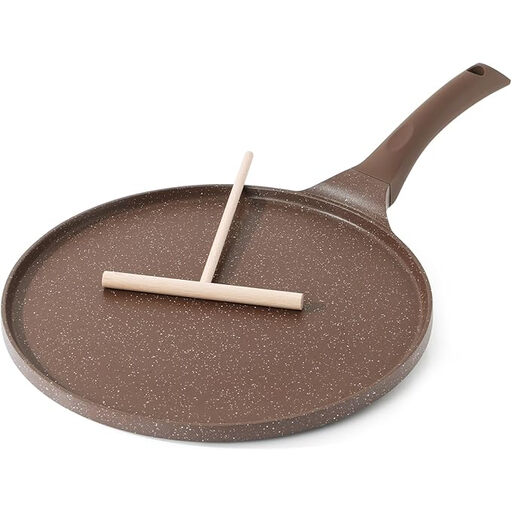 Image unavailable
A hob pan to consider if you prefer a low-sided shape for spooned pancake batter.
The title specifies a 10-inch size, induction compatibility and a stay-cool handle. Check the usable flat area against the number of drop scones you hope to cook at once.
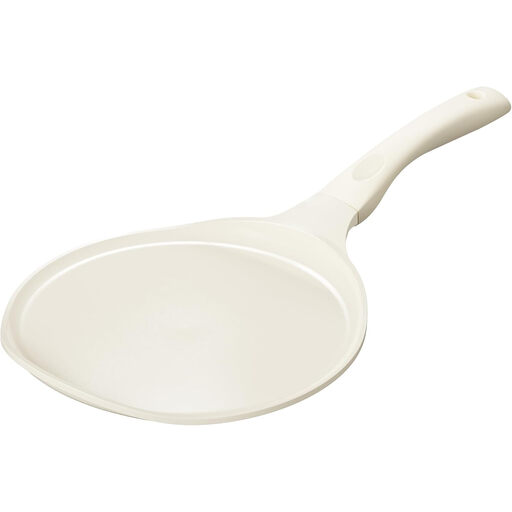 Image unavailable
A conventional pan for making drop scones on an existing suitable hob.
Its stated 26cm size describes the pan, not necessarily the flat area available for separate portions; check that area before planning batch size.
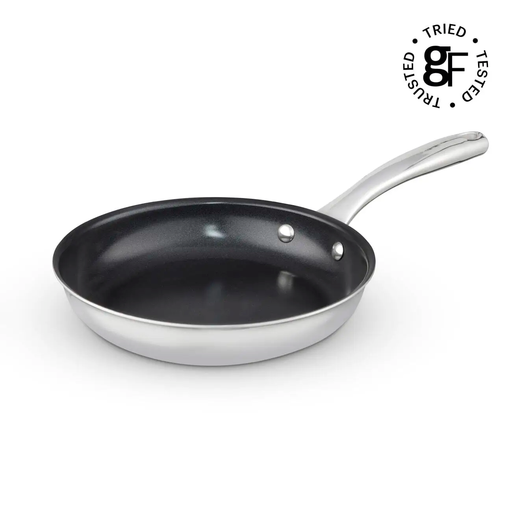 Image unavailable
A 30cm hob-pan option if you have space for a larger conventional frying pan.
The title specifies stainless steel and induction compatibility. Check the current cooking-surface and coating details before deciding whether it suits your batter and batch size.
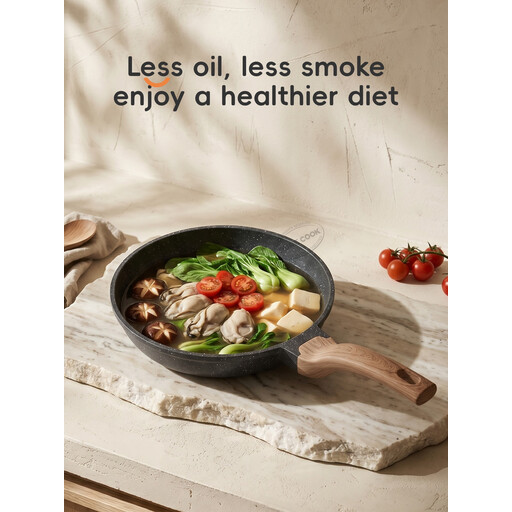 Image unavailable
A smaller conventional pan to consider when hob cooking and storage space matter more than fitting many drop scones in one round.
The title specifies a 9.45-inch size and non-stick coating. Confirm the flat cooking area and follow the pan’s care instructions.
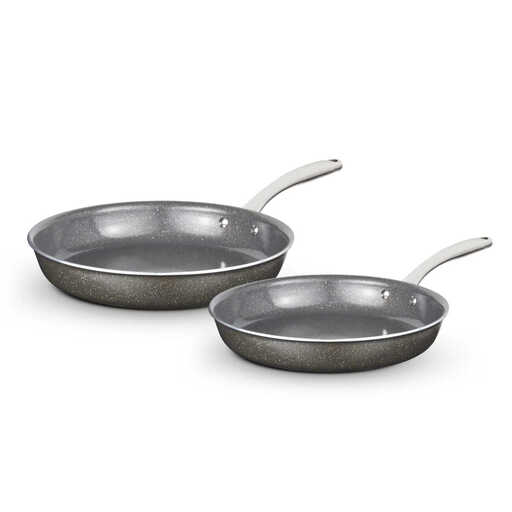 Image unavailable
A hob-pan set to consider if having two pans suits the way you cook successive batches.
These are conventional frying pans, not the Tower Cerastone Pro electric skillet. Check each pan’s flat cooking area, hob compatibility and cleaning instructions before choosing the set.
Choose by the space available for separate spoonfuls of batter, not outside diameter alone. Andrew James states a 40cm internal diameter for its multi-cooker, while Tower states a 30cm cooking surface for its electric skillet; check the flat area and make sure the appliance will fit your worktop and storage space.
Use the setting that cooks a test portion as you want it, following the appliance’s preheating instructions. Dial markings differ between models: Judge’s JEA23 manual, for instance, describes settings 1 to 5, while Good Food notes that pancake batter may stick if the pan is not hot enough.
Follow the instructions for the exact electric skillet rather than assuming it can be submerged. Judge says never to immerse its JEA23 in water and directs users to clean it after cooling with a cloth or kitchen paper dampened with warm soapy water.
NHS guidance for baby food says to cool batch-cooked food ideally within 1 to 2 hours, then refrigerate or freeze it. If refrigerated, the NHS says to use it within 2 days; plan containers and storage space before cooking.