Short-session hobbyists
If you sit down for brief periods and mainly want to take the chill off your desk area, a compact fan heater is worth considering. Its position still needs to leave a clear space around paper, fabric and other materials.


For brief sessions when you want warmth near the desk, consider a compact fan heater; for longer, quieter sessions, an oil-filled radiator is a better fit if you can allow for slower warm-up. If the whole hobby room stays cold, consider a heater with room-level temperature controls instead. Whichever route you take, identify a stable position clear of hobby materials and a suitable socket before choosing a model.
If you sit down for brief periods and mainly want to take the chill off your desk area, a compact fan heater is worth considering. Its position still needs to leave a clear space around paper, fabric and other materials.
If drawing, crafting or other detailed work keeps you in the room for longer, an oil-filled radiator offers warmth without fan-driven airflow. Allow for slower warm-up and enough floor space for the unit.
If the whole hobby room remains cold throughout a session, look at room-level heating and temperature controls rather than focusing only on the desk. The room’s insulation, available space and intended duration of use matter to that choice.
Choose when: You want a quick, occasional boost near the desk.
Trade-off: Fan airflow and noise may distract from quiet, detailed work.
Choose when: Longer sessions make quiet, lingering warmth more useful than an immediate boost.
Trade-off: Warm-up is less immediate, and the radiator needs a suitable floor position.
Choose when: The whole hobby room, rather than just the desk area, needs sustained warmth.
Trade-off: A convector or panel-style option calls for closer attention to room suitability, positioning and controls.
| Concern | What to check | Who this matters to |
|---|---|---|
| Quick desk warmth | Compare heat settings and controls; plan a stable floor position rather than assuming the heater can sit under the desk. | For a short session, I want warmth soon after sitting down, without heating the room for hours. Around 31% of consumers put a quick desk-area boost first. |
| Quiet, sustained warmth | Check for a room thermostat and whether the radiator’s size and weight suit its intended position. | During detailed work, I would rather avoid fan airflow and can wait for the room to warm. Quiet warmth through longer sessions is the primary need for around 25% of consumers. |
| Whole-room control | Match the heater’s intended use to the room and its insulation; compare thermostat and timer controls. | If the room stays cold throughout a session, warming only my immediate desk area will not address what I need. Around 25% of consumers prioritise controllable room-level warmth. |
| Safe placement | Find a flat, stable position at least three feet from flammable materials, away from walkways, with a suitable socket arrangement. | With paper, fabric or stored supplies nearby, I need to know where a heater can stand before choosing one. A safe fit around hobby materials comes first for around 19% of consumers. |
Warwickshire County Council advises keeping portable heaters at least three feet from flammable materials. Electrical Safety First also warns against overloading sockets and extension leads with high-powered appliances such as heaters.
A higher stated output does not establish that a heater suits a close desk position. Dimplex describes its 3kW Qube fan heater as suitable only for well-insulated spaces or occasional use.
Decide whether you need a brief personal boost or sustained room warmth, then compare controls and intended use within that type.
Tip-over or overheat protection does not make placement beside paper, fabric or furniture safe.
Follow Warwickshire County Council’s advice to use a flat, stable surface at least three feet from flammable materials, and keep the heater out of walkways.
Electrical Safety First warns that overloading a socket or extension lead can be dangerous, particularly with high-powered appliances such as heaters.
Identify a suitable socket arrangement before buying and follow the heater manufacturer’s instructions.
De’Longhi describes its Radia S radiator as retaining heat and continuing to release it after switch-off. That characteristic suits longer use, not an immediate fan-driven boost.
If rapid warmth at the start of a short session is your priority, consider the fan-heater route instead.
Its DVSFH15BB illustrates a compact ceramic fan heater for supplementary warmth.
Its Radia S TRRS0715 illustrates the oil-filled route for longer sessions.
Its Qube fan heater and PLXE panel-heater line illustrate different approaches to spot and controlled room heating.
These models cover compact fan heaters for shorter desk sessions and oil-filled radiators for longer periods of warmth. Choose a type before comparing individual controls and the space each heater needs.
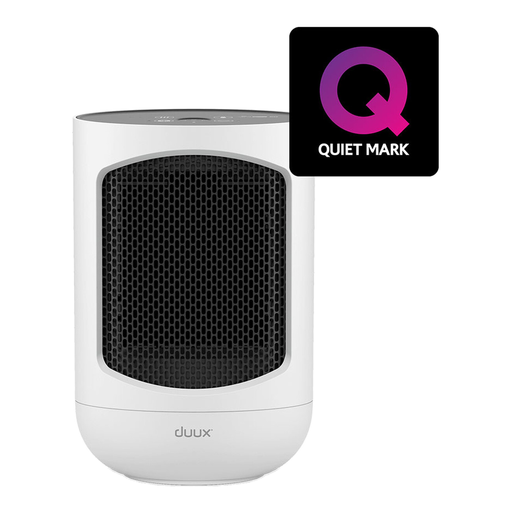 No image available
A compact fan-heater option for short sessions when you want warmth near the desk.
The product name states 1500W, three heat settings and 60-degree oscillation. If quiet work matters, check whether its fan noise will suit you; give it a stable position clear of materials rather than placing it under the desk.
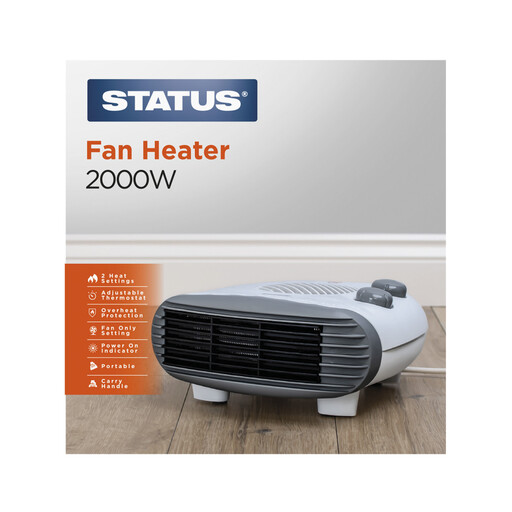 No image available
A portable fan-heater choice for adding warmth during shorter desk sessions.
The product name states 2000W and two heat settings. Check whether fan noise suits your work, and identify a stable, clear floor position before use.
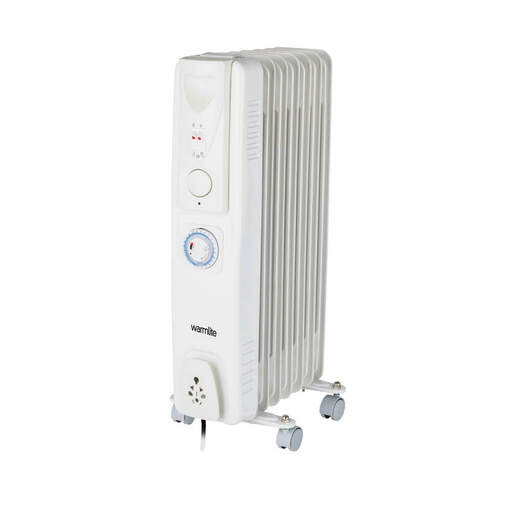 No image available
Consider this oil-filled format for longer hobby-room sessions rather than an immediate desk-area boost.
The product name states 1500W, three heat settings, an adjustable thermostat and a 24-hour timer. Check that the radiator has a suitable clear position before buying.
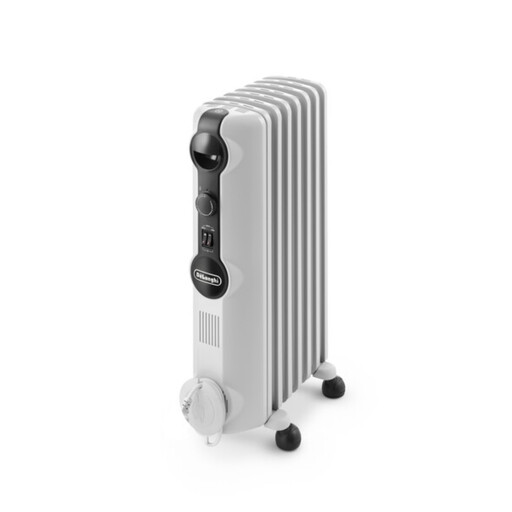 No image available
This oil-filled model suits consideration for longer sessions when avoiding fan airflow matters more than rapid warm-up.
De'Longhi specifies seven fins, a room thermostat and 1500W maximum input for the TRRS0715. Its stated minimum heating power is 700W, while the product listing describes different settings, so confirm the exact controls before buying. De'Longhi states a weight of 9.63kg; plan a clear floor position.
 No image available
A compact fan-heater option to consider for personal warmth near a desk, provided you can place it safely away from materials.
The product name describes two heating modes and a 12-hour timer. Confirm the exact model’s rated power and settings before buying: its stated power figures conflict. Do not take desktop wording as assurance that it is safe on or under your desk.
Do not assume either position is safe. Warwickshire County Council advises placing portable heaters on a flat, stable surface at least three feet from flammable materials; account for paper, fabric, packaging and anything stored around the desk.
Do not use an overloaded socket or extension lead. Electrical Safety First identifies heaters as high-powered appliances for which overloading can be dangerous; check the manufacturer’s instructions and arrange a suitable socket before use.
No. GOV.UK fire-safety guidance says to unplug electric heaters when you go out or go to bed, and not to use them for drying clothes.
Check the exact product identity, manufacturer, supply arrangement and current recall information rather than relying on a generic listing title. GOV.UK describes safety requirements for electrical equipment placed on the Great Britain market, but those requirements alone do not establish whether a particular listing meets them.